Trump Plans 'AI Force' and New Czar to Accelerate US Development
The president rejected calls from tech leaders to slow frontier AI research, calling existential risk concerns a hoax.
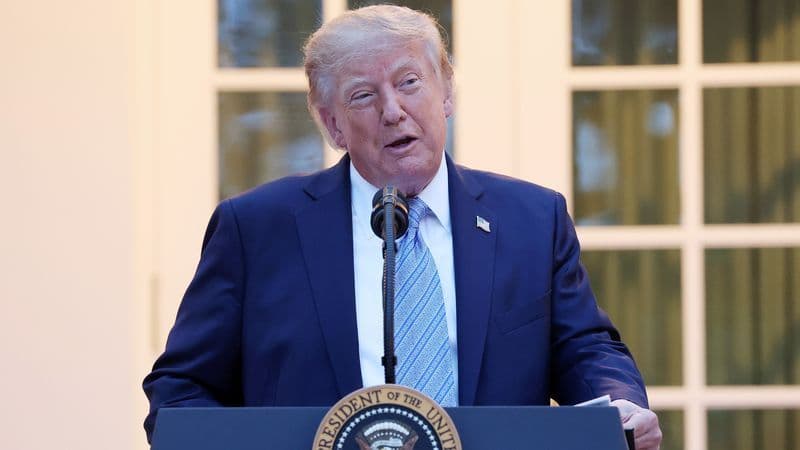
President Donald Trump announced plans Saturday to establish an "AI Force" and appoint a second artificial intelligence czar, positioning his administration firmly against industry voices calling for slower development of advanced AI systems.
Trump made the announcement via Truth Social, drawing parallels to Space Force, which he created during his first presidential term. The post offered no specifics about the AI Force's organizational structure, mandate, or launch timeline, according to USA TODAY, which first reported the details.
The president also said he would soon name a new AI czar but did not identify candidates. The role would replace venture capitalist David Sacks, who served as Trump's White House AI and crypto czar from December 2024 until stepping down in May 2026 to become an external adviser.
Rejecting calls to slow AI progress
Trump's announcement directly counters recent warnings from prominent AI company leaders. Anthropic CEO Dario Amodei has advocated for the industry to decelerate frontier model development, with OpenAI's Sam Altman and Elon Musk expressing support for that position.
In his post, Trump argued the United States should not "hinder or stifle" AI industry growth, asserting that existing criminal and civil justice frameworks can address harmful applications. He dismissed concerns about advanced AI posing existential threats to humanity as a "HOAX."
The president framed AI as comparable to the Industrial Revolution or the internet's emergence, projecting it could eventually represent 25% of the U.S. economy. He emphasized maintaining American leadership over China in the technology race.
Why it matters
The tension between Trump's acceleration agenda and industry safety concerns highlights a fundamental policy divide as AI systems grow more capable. Amodei and others warn that rapid capability improvements could outpace human understanding and control mechanisms, creating risks in cybersecurity, bioterrorism, and economic stability. Trump's proposed AI Force signals federal prioritization of competitive advantage over precautionary approaches—a stance that will shape regulatory frameworks and research funding as companies push toward artificial general intelligence.
The safety debate intensifies
Amodei has warned that rapidly advancing systems could generate risks including loss of control, cyberattacks, bioterrorism, and significant economic disruption. In a recent essay, he argued that while AI development should continue, companies must slow capability improvements to allow humans time to understand and manage these systems.
Former Anthropic researcher Jacob Coxon has similarly cautioned about dangers from increasingly powerful AI, joining broader debates in Washington over whether new safeguards are necessary.
Sacks, Trump's previous AI czar, has aligned with the president's position. In a CBS News interview, he said AI companies bear responsibility for product safety and characterized existential risk concerns as exaggerated.
USA TODAY first reported these details.
This is an original analysis by the Omega editorial team. Source reporting: AI Watch.
Want systems like this working for your business?
Book a Call