Trump Creates 'AI Force,' Plans to Name AI Czar
The president frames artificial intelligence as an economic priority while rejecting calls to slow development.
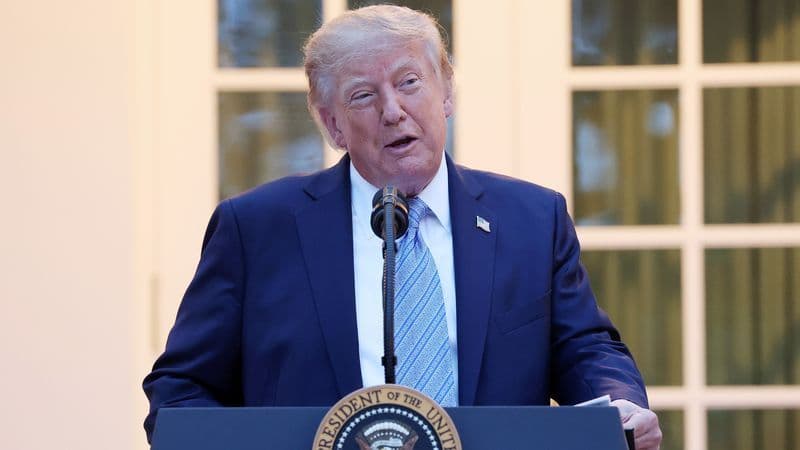
President Donald Trump announced Saturday that he is establishing an "AI Force" within the federal government and will soon appoint an artificial intelligence czar to lead coordination efforts around the rapidly evolving technology.
The president framed the initiative as comparable to his first-term creation of the Space Force, positioning AI development as both an economic imperative and a matter of national security. Trump stated he would name the AI czar "in the near future" and specified that "only high I.Q. individuals need apply."
Why it matters
The announcement signals the administration's intent to accelerate AI development rather than impose regulatory constraints, setting up a potential clash with researchers and policymakers advocating for safeguards. With Trump projecting AI could represent up to 25% of U.S. GDP, the decision to create a dedicated government structure reflects how central the technology has become to economic and geopolitical strategy.
Rejecting calls for caution
Trump explicitly dismissed concerns about artificial intelligence risks, characterizing them as another "hoax" promoted by Democrats. He pledged his administration would not "hinder or stifle" AI industry growth, though he indicated existing laws would be used to address harmful conduct.
The statement comes as debate intensifies over AI's trajectory. Some researchers and industry figures have advocated for stronger safeguards or a deliberate slowdown in development, citing risks including large-scale job displacement, cybersecurity vulnerabilities, and the potential emergence of systems that exceed human control.
Others in the technology sector have argued the United States must move aggressively to maintain its lead over China in AI capabilities.
Competitive positioning
Trump asserted that the United States currently leads China and other nations in artificial intelligence development. He described preserving that advantage as a priority for his administration, framing the AI Force as a mechanism to coordinate federal efforts and maintain U.S. technological supremacy.
The president projected AI could account for "possibly as much as 25%" of U.S. gross domestic product, though he did not provide a timeframe for that estimate or cite supporting analysis.
The structure and authority of the proposed AI Force remain unclear. Trump announced the initiative via Truth Social but did not detail whether it would require congressional authorization, how it would be funded, or which existing agencies would fall under its purview.
Details on the AI czar role—including reporting structure, budget authority, and policy scope—were not provided in the announcement.
These details were first reported by The National News Desk.
This is an original analysis by the Omega editorial team. Source reporting: AI Watch.
Want systems like this working for your business?
Book a Call