Nissan Uses AI Cameras to Monitor Worker Ergonomics, Save $34M
The automaker's Canton plant deploys computer vision to detect unsafe movements and redesign workstations, not eliminate jobs.
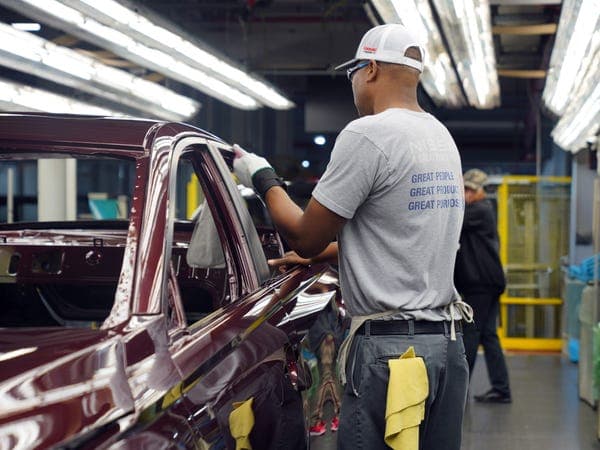
Nissan has installed AI-powered cameras throughout its Canton, Mississippi assembly plant that continuously track how factory workers move their bodies during vehicle production.
The system monitors employees building the Altima sedan and Frontier pickup, analyzing joint angles and body positions to identify movements that could cause repetitive strain injuries. When a worker bends too far or holds an unsafe posture too long, the technology alerts supervisors, who can then adjust workstations or redistribute tasks.
Why it matters
As manufacturers face an aging workforce and struggle to transfer decades of institutional knowledge to new hires, AI monitoring represents a double-edged solution: it can genuinely reduce workplace injuries and accelerate training, but it also introduces persistent surveillance that raises questions about worker autonomy — even when framed as a safety tool.
How the monitoring works
Chi Amaechi, a Nissan process engineer who implemented the system, explained that each job at Canton has a "golden cycle" — a standardized sequence that defines component installation order, expected completion time, and optimal body mechanics.
The AI identifies worker joints and compares real-time movements against these safety parameters. According to Amaechi, this approach eliminates the inconsistency of manual observation, where employees often modify their behavior when they know someone is watching.
Victor Taylor, Nissan's divisional vice president of manufacturing for the Americas, told Business Insider the company initially evaluated the technology for efficiency gains and training support. The ergonomic applications emerged as an unexpected benefit. "We weren't originally looking for that," Taylor said. "It just kind of shown itself as, this is the biggest win."
Addressing workforce concerns
Taylor acknowledged that employees initially worried the cameras could threaten their jobs. Nissan involved workers early through plant safety committees and positioned the system as a safety and training resource rather than a productivity enforcement mechanism.
"We're not talking about job elimination," Taylor said. "What we're referring to are mundane tasks that are really antiquated for a human being to be performing."
The technology also addresses knowledge transfer as experienced workers retire. "We have employees that have been in the plant 20, 30-some odd years, and they want to retire," Taylor noted. "You can't replace 20, 30 years of know-how."
Taylor said the system has contributed to approximately $34 million in safety and health-related savings at Canton. The technology currently operates only at that facility, with plans to expand to Nissan's Smyrna, Tennessee plant after completing the Canton rollout.
Broader context
Nissan's deployment comes as the automaker works through a difficult recovery period. The company replaced its CEO in April 2025 after abandoning merger talks with Honda, then introduced a recovery plan involving job cuts and reduced manufacturing capacity. Canton was affected when Nissan canceled a $500 million electric vehicle manufacturing plan for the plant in May.
Despite these challenges, Nissan reported its first quarterly net profit in two years on Monday, supported by cost reductions and a nearly 10% increase in U.S. sales during the quarter.
These details were first reported by Business Insider.
This is an original analysis by the Omega editorial team. Source reporting: AI Watch.
Want systems like this working for your business?
Book a Call