Microsoft Research: Offloading Robot AI to Cloud Boosts Performance
New study challenges onboard GPU orthodoxy, showing edge and cloud inference extends battery life and enables more capable models.
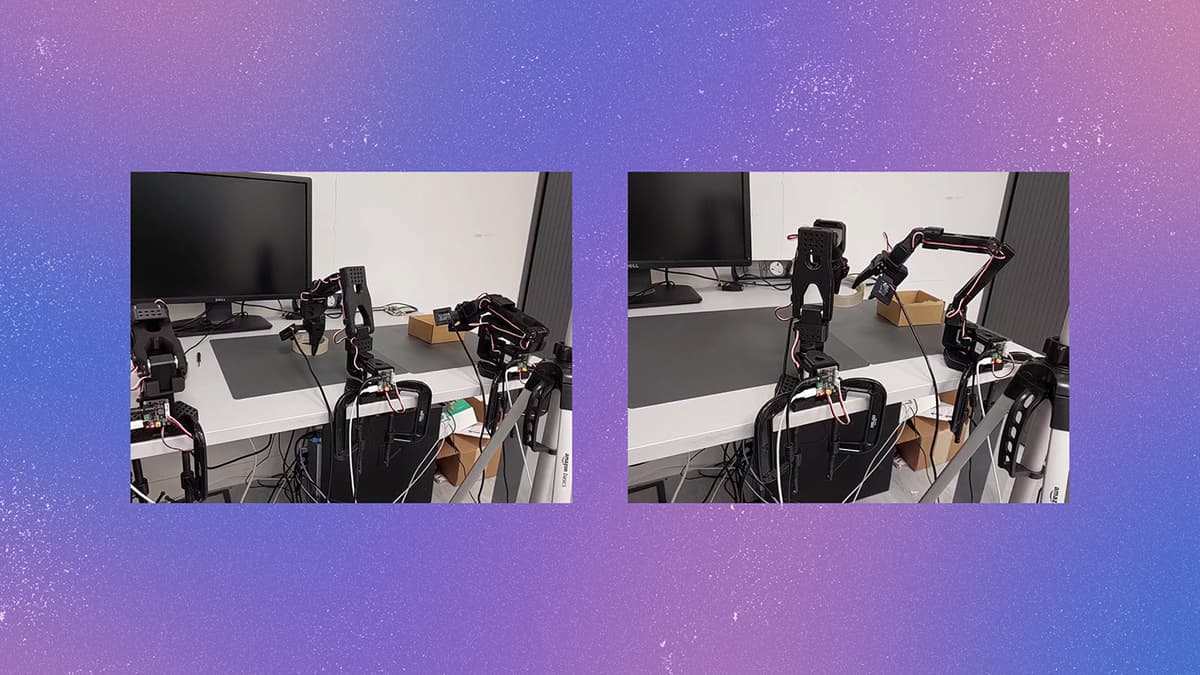
Rethinking where robots think
Microsoft researchers have published findings that challenge a fundamental assumption in robotics: that AI inference must run on GPUs physically mounted to the robot. Their systematic study of mobile manipulation workloads reveals that offloading inference to edge servers or cloud infrastructure can significantly improve performance, extend operating time, and enable deployment of larger, more capable AI models.
The research, first reported by Microsoft Research, focused on representative tasks like "check for rubbish in the kitchen and put it in the trash"—scenarios requiring semantic mapping, navigation planning, and physical manipulation. Across these workloads, robots using offloaded inference consistently outperformed those relying solely on onboard compute.
Performance gains across the board
The performance differences proved substantial. Mapping and planning operations slowed by up to 383% on smaller onboard GPUs compared to offloaded A100 infrastructure, limiting robots' ability to respond in dynamic environments. Navigation systems showed a 30% drop in timely obstacle detection when constrained to lighter onboard hardware. Vision-language-action models experienced accuracy drops of 50% when forced to run on resource-limited onboard GPUs.
Some smaller GPU configurations couldn't even accommodate the full mobile manipulation software stack, making certain tasks impossible regardless of performance trade-offs.
The battery life problem
Beyond computational performance, onboard GPUs create a significant power drain. Microsoft's testing showed that larger onboard units like the Jetson Thor consumed enough power to reduce battery life by up to 160%—translating to several hours of lost operating time. Replacing onboard GPUs with lightweight hardware like a Raspberry Pi 5 and routing inference to remote infrastructure substantially extended how long robots could work between charges.
Why it matters
This research arrives as physical AI applications move from labs into manufacturing floors, warehouses, and homes. The conventional wisdom that robots need powerful onboard compute stems from an era of simpler models and more predictable environments. As AI models grow larger and tasks become more complex, the constraints of onboard hardware increasingly limit what robots can accomplish. Microsoft's findings suggest the industry may need to rethink infrastructure assumptions that have shaped robot design for years—particularly as organizations weigh the trade-offs between upfront hardware costs, operational battery life, and the ability to deploy cutting-edge models.
New tooling for distributed inference
Alongside the research, Microsoft has added inference offloading capabilities to its Physical AI Toolchain, an open-source framework integrating Azure services with NVIDIA's physical AI stack. The new Kubernetes-based tooling allows developers to containerize robotics workloads and distribute them across robot hardware, edge infrastructure, and cloud resources using declarative specifications.
The system integrates with robotic simulators, LeRobot, and ROS2, and includes example projects for offloading inference on robots including the SO-101 and UR10e platforms. Microsoft demonstrated the capability by offloading its Rho model—designed for dual-arm robots—to a Jetson Thor GPU controlling a Mobile Aloha robot.
The research and accompanying tools are available through Microsoft's Physical AI Toolchain repository. Details of the study methodology and specific hardware configurations appear in Microsoft's technical report.
This is an original analysis by the Omega editorial team. Source reporting: AI Watch.
Want systems like this working for your business?
Book a Call