F5 Automates TLS Certificate Management as 47-Day Lifespans Loom
Partnership with Encryption Consulting brings automated certificate lifecycle management to BIG-IP environments ahead of industry mandate.
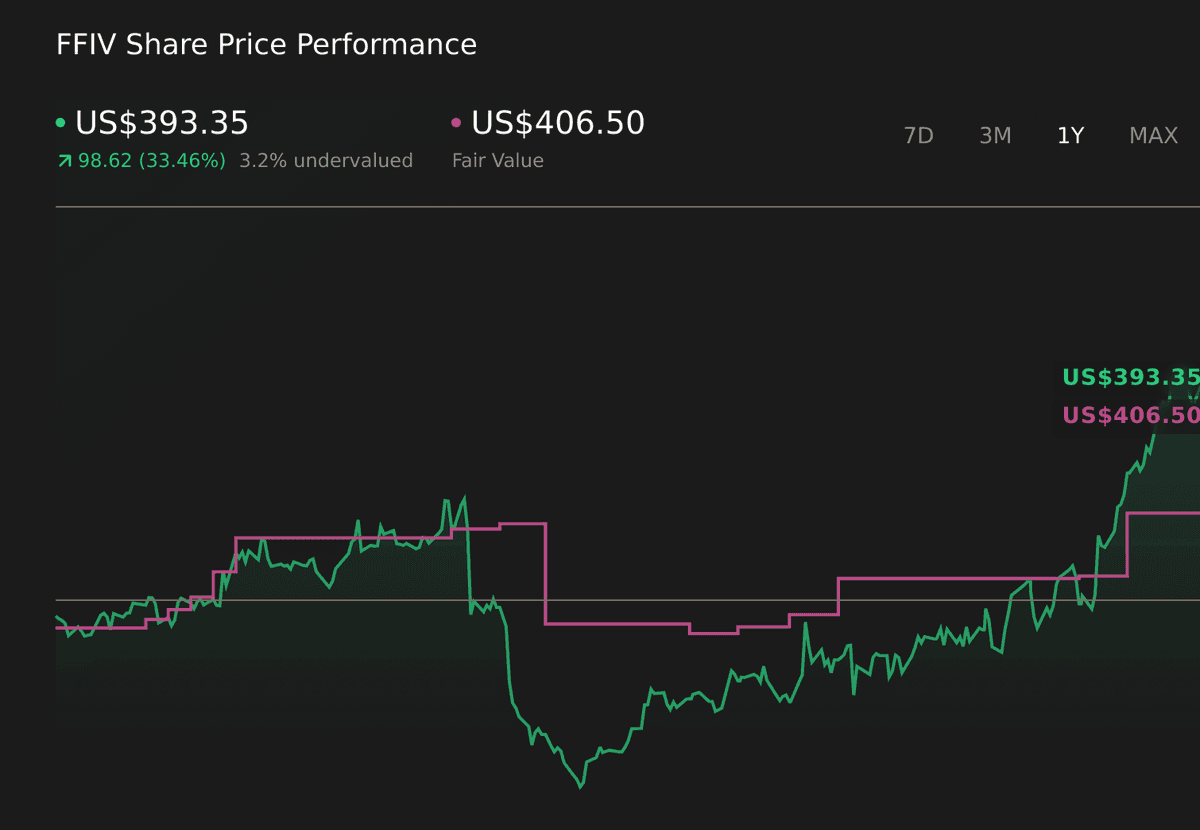
F5 Inc. has integrated automated certificate lifecycle management into its BIG-IP platform through a partnership with Encryption Consulting LLC, positioning itself ahead of an industry shift toward mandatory 47-day TLS certificate lifespans.
The integration, announced in early June 2026 according to Simply Wall St, deploys Encryption Consulting's CertSecure Manager Orchestrator to eliminate manual certificate renewal and deployment steps. For enterprises running large application and API portfolios on F5 infrastructure, the automation addresses a looming operational challenge: dramatically shorter certificate validity periods that would otherwise multiply manual workload and increase the risk of expired certificates causing outages.
Why it matters
As certificate lifespans compress from months to weeks, manual management becomes operationally untenable at scale. Automating this process reduces both labor costs and the security exposure from expired or misconfigured certificates—a meaningful capability for F5 customers managing hundreds or thousands of endpoints. The move also reinforces F5's positioning in multicloud security as enterprises consolidate tooling.
Software growth remains the core thesis
The certificate automation capability supports but does not fundamentally alter F5's investment narrative, which centers on growing higher-margin software and SaaS revenue while defending against cloud-native competitors. F5 raised its full-year 2026 revenue growth guidance to 7–8 percent, backed by second-quarter revenue of $811.7 million and improved profitability, Simply Wall St reported.
Management is leaning on application security, AI-related offerings, and recurring software revenue to drive growth. The company's narrative projects $3.9 billion in revenue and $904.2 million in earnings by 2029, requiring 6.8 percent annual revenue growth.
Risk remains in hardware cycles
Despite software momentum, F5 retains meaningful exposure to cyclical hardware refresh patterns. The most cautious analyst forecasts project only 3.9 percent annual revenue growth and earnings of approximately $819.3 million by 2029—nearly $85 million below the consensus narrative.
Investors evaluating F5 must weigh whether automation capabilities like certificate management can accelerate the software mix shift enough to offset volatility in hardware-driven sales cycles. The TLS integration adds incremental value to the platform but does not eliminate the fundamental tension between F5's legacy hardware business and its software-first ambitions.
These details were first reported by Simply Wall St.
This is an original analysis by the Omega editorial team. Source reporting: Automation Watch.
Want systems like this working for your business?
Book a Call
