China Deploys 43,000 Smart Factories with AI Benchmarks
Four-tier system now requires AI capabilities for top-tier manufacturing facilities as industrial automation evolves toward autonomous decision-making.
China establishes tiered smart factory framework
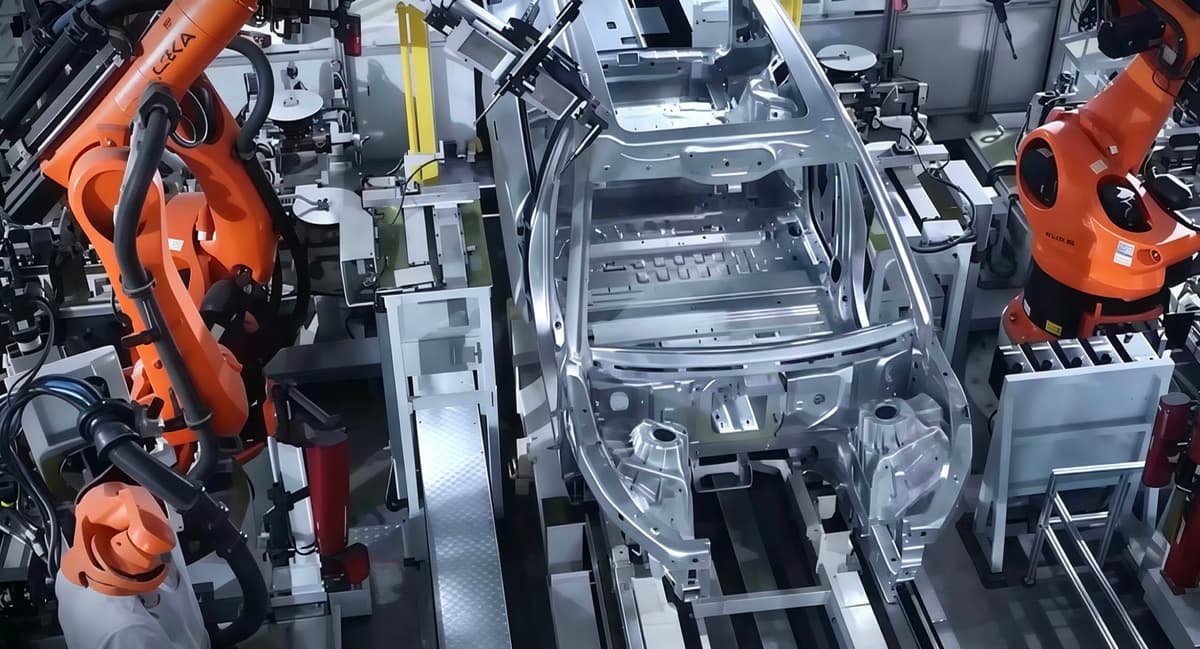
China has deployed more than 43,000 smart factories organized into a four-tier classification system that now incorporates artificial intelligence as a mandatory benchmark for top-performing facilities, according to state broadcaster CCTV.
The framework includes 35,000 Basic-level factories, more than 8,200 Advanced-level facilities, over 500 Excellence-level plants, and 15 companies in the Leading Smart Factory Cultivation Program. The Ministry of Industry and Information Technology reports that participating factories have achieved a 47% reduction in average product defect rates while cutting product development cycles by 38%.
AI application capability has been formally integrated into assessment criteria for Excellence and Leading tier factories, with performance thresholds scheduled to increase over time as the technology matures.
Why it matters
This systematic deployment of AI-enabled manufacturing infrastructure represents a coordinated industrial policy that goes beyond isolated automation projects. By making AI capabilities a formal requirement for top-tier certification, China is creating institutional pressure for manufacturers to adopt advanced technologies while establishing technical standards that could influence global supply chains. The reported efficiency gains—particularly the 47% defect reduction—suggest these systems are delivering measurable operational improvements rather than serving as technology demonstrations.
From automation to autonomous systems
Recent deployments show manufacturing equipment evolving beyond conventional automation toward systems capable of independent analysis and decision support.
At TBEA Shenyang Transformer Group's Excellence-level facility, an integrated digital platform connects simulation, scheduling, execution, and monitoring functions. The company has developed algorithms that continuously evaluate transformer health using real-time operational data, issuing status warnings eight to twelve hours before potential failures. The facility reports a 21% reduction in product development cycles and a 40% increase in production efficiency.
Similar capabilities are emerging in shipbuilding. At Hengli Shipbuilding in Dalian, digital systems link design, planning, procurement, supply chains, production, and finance. Planning tasks that previously required two specialists working for more than two weeks can now be completed by AI software in approximately 30 minutes, with human personnel focusing on verification and adjustments.
MIIT officials indicated that future development will emphasize industrial foundation models, sector-specific AI applications, and high-quality industrial datasets. The ministry plans to accelerate the evolution of robots, machine tools, and industrial control systems toward more autonomous "intelligent agent" functions.
New energy vehicles lead deployment
New energy vehicles represent a priority sector for future Leading factory designations and large-scale industrial AI deployment. China's automotive sector has become a showcase for advanced manufacturing, with facilities like Avatr's 5G AI-enabled factory producing one vehicle every 60 seconds through highly automated processes. Xiaomi's EV factory has attracted public attention, with factory tours becoming popular destinations for observing large-scale automated vehicle production.
Beyond automotive, MIIT's roadmap covers rail transit equipment, aerospace, high-tech shipbuilding, steel, and petrochemicals. Official data show that China's intelligent manufacturing equipment, industrial software, and system solutions industry has exceeded 4.5 trillion yuan ($665 billion USD), while the system integration services market has surpassed 770 billion yuan ($114 billion USD).
These details were first reported by CCTV and covered by Automation Watch.
This is an original analysis by the Omega editorial team. Source reporting: Automation Watch.
Want systems like this working for your business?
Book a Call