Amazon Blocks Meta's Muse AI Agent Over Shopping Access Dispute
The e-commerce giant cites security and transparency concerns as it fights to control how AI agents interact with its platform.
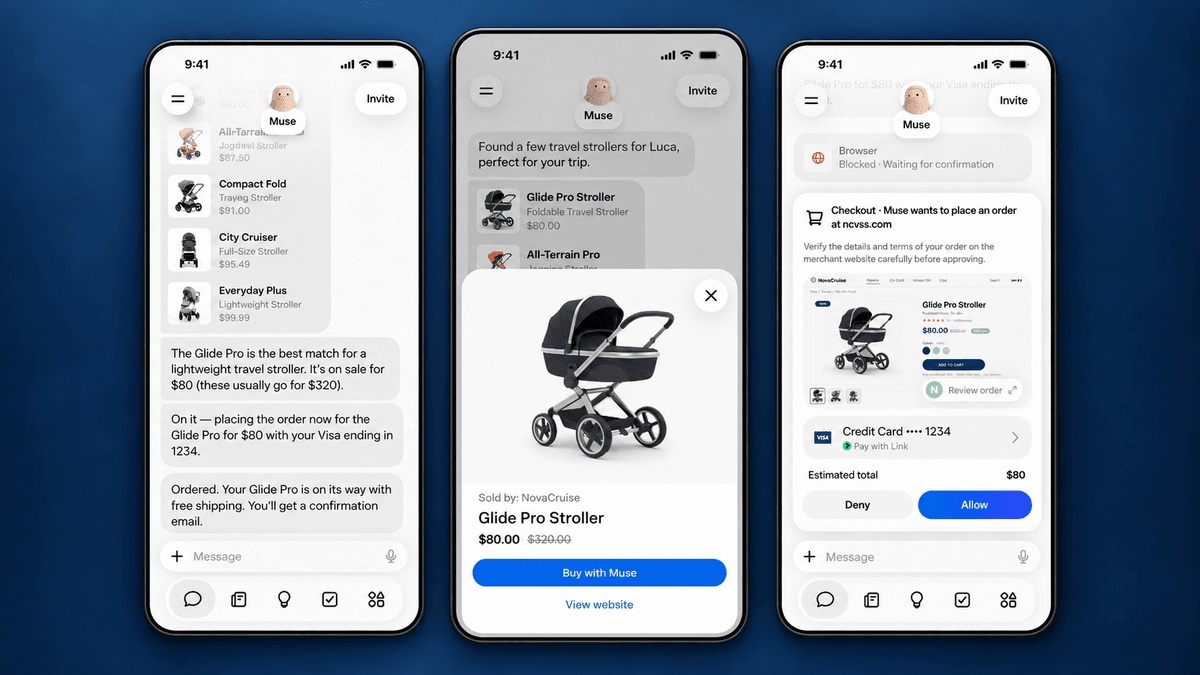
Amazon has blocked Meta's newly launched Muse AI assistant from accessing its e-commerce platform, marking the latest flashpoint in an escalating battle over how artificial intelligence agents interact with online retailers.
Users attempting to shop on Amazon through Muse now encounter a message stating that "continued access by an unauthorized AI agent violates Amazon's Conditions of Use." The block went into effect over the weekend, according to details first reported by GeekWire.
The core dispute
Amazon says Meta never informed it that Muse would access its store or sought authorization. The company claims Muse captures and stores customer credentials, scrapes account data, and browses without identifying itself as an automated agent.
"We think it's fairly straightforward that third-party applications that offer to make purchases on behalf of customers from other businesses should operate openly and respect service provider decisions about whether or not to participate," an Amazon spokesperson said.
The standoff is particularly striking given the companies' existing business relationship. Amazon products have been available for purchase within Facebook and Instagram since 2023, and Meta signed a multibillion-dollar cloud computing deal with Amazon in April specifically for agentic AI workloads. Meta did not respond to requests for comment.
Why it matters
This conflict reveals the fundamental tension emerging as AI agents become shopping intermediaries. Amazon generated over $68 billion in advertising revenue last year—a business model built on customers browsing its pages and viewing sponsored products. AI agents that complete purchases without users seeing those ads threaten that revenue stream while potentially accessing sensitive account information without retailer oversight. The outcome of this dispute could set precedents for how AI assistants interact with e-commerce platforms across the industry.
A pattern of resistance
Amazon has systematically worked to keep outside AI agents off its platform over the past year. The company sued Perplexity over its Comet browser and has moved to block shopping agents from Google and OpenAI. While Amazon initially won a preliminary injunction against Perplexity in March, the Ninth Circuit overturned it in August, ruling that users—not AI companies—were accessing Amazon's systems under federal anti-hacking law.
That legal setback left Amazon pursuing claims based on contract terms and conditions of use, which is the approach now being applied to Muse.
How Muse operates
Meta launched Muse on September 8 as a U.S.-only personal AI agent designed to handle multi-step tasks across email, calendar, payments, dining, and shopping. The assistant runs on what Meta describes as a secure virtual machine with its own browser.
For services with public APIs, Muse connects using user-provided credentials. For services without APIs, Meta says the agent "can use the service through a browser the way you would." This browser-based approach is precisely what Amazon now objects to.
Muse gained rapid traction, becoming the top free app in Apple's U.S. App Store within a week of launch, surpassing ChatGPT. Users have reported the assistant switching insurance policies, finding discount codes, and filling grocery carts.
Amazon operates its own agentic shopping feature called Buy for Me, which retrieves items from external brand sites. The company emphasizes that Buy for Me identifies itself and allows brands to opt out—a transparency standard it says Muse fails to meet.
Amazon confirmed it is in direct conversation with Meta about the issue but declined to comment on potential legal action.
GeekWire first reported these developments.
This is an original analysis by the Omega editorial team. Source reporting: AI Watch.
Want systems like this working for your business?
Book a Call