AI
AI typhoon forecasts beat physics models in Japan trials
Machine learning systems accurately predicted Typhoon Champi's path days before traditional supercomputer simulations, but intensity forecasting remains a challenge.
Key takeaways
- AI typhoon track forecasts showed 30% less deviation than physics-based models across 26 storms analyzed by Japanese weather service Weathernews.
- AI correctly predicted Typhoon Champi would curve near Okinawa while conventional models projected a Taiwan-China trajectory.
- Machine learning excels at forecasting large-scale atmospheric flows but struggles with typhoon intensity prediction, limiting rainfall and wind speed accuracy.
- Private weather services in Japan are already providing commercial AI typhoon forecasts to paid subscribers for agricultural and business planning.
- Japan's Meteorological Research Institute acknowledges AI models "cannot be ignored" and is researching operational integration for disaster prevention.
Artificial intelligence models are proving more accurate than traditional physics-based systems at forecasting typhoon tracks, according to recent performance in Japan where AI correctly predicted the path of October's Typhoon Champi while conventional models projected an incorrect trajectory.
The development marks a significant shift in meteorological forecasting, with private weather services already deploying AI predictions commercially and Japan's official weather agency pursuing research into operational use.
How the systems differ
Conventional forecasting relies on supercomputers running physics-based models that calculate atmospheric behavior using temperature, pressure, and water vapor data processed through physical laws. AI systems take a fundamentally different approach, training on vast historical weather datasets to identify patterns and regularities, then matching current conditions to similar past scenarios.
The Japan Meteorological Agency continues to use physics-based models as its primary tool while referencing external AI forecasts for comparison.
The Champi test case
Typhoon Champi formed over the Pacific on October 15 and initially traveled westward. By October 19, physics-based forecasts from Japan's weather agency and international institutions predominantly projected the storm would approach Taiwan before turning toward China.
AI models instead forecast a northward track near Okinawa with a curve over the East China Sea. The typhoon ultimately curved sharply after approaching the Nansei Islands, validating the AI prediction.
"AI excels at forecasting large-scale atmospheric flows, including the Pacific high-pressure system and westerlies that affect typhoon tracks, and accurately predicted the timing of the turn," said Munehiko Yamaguchi of the Meteorological Research Institute's Department of Typhoon and Severe Weather Research.
Commercial deployment underway
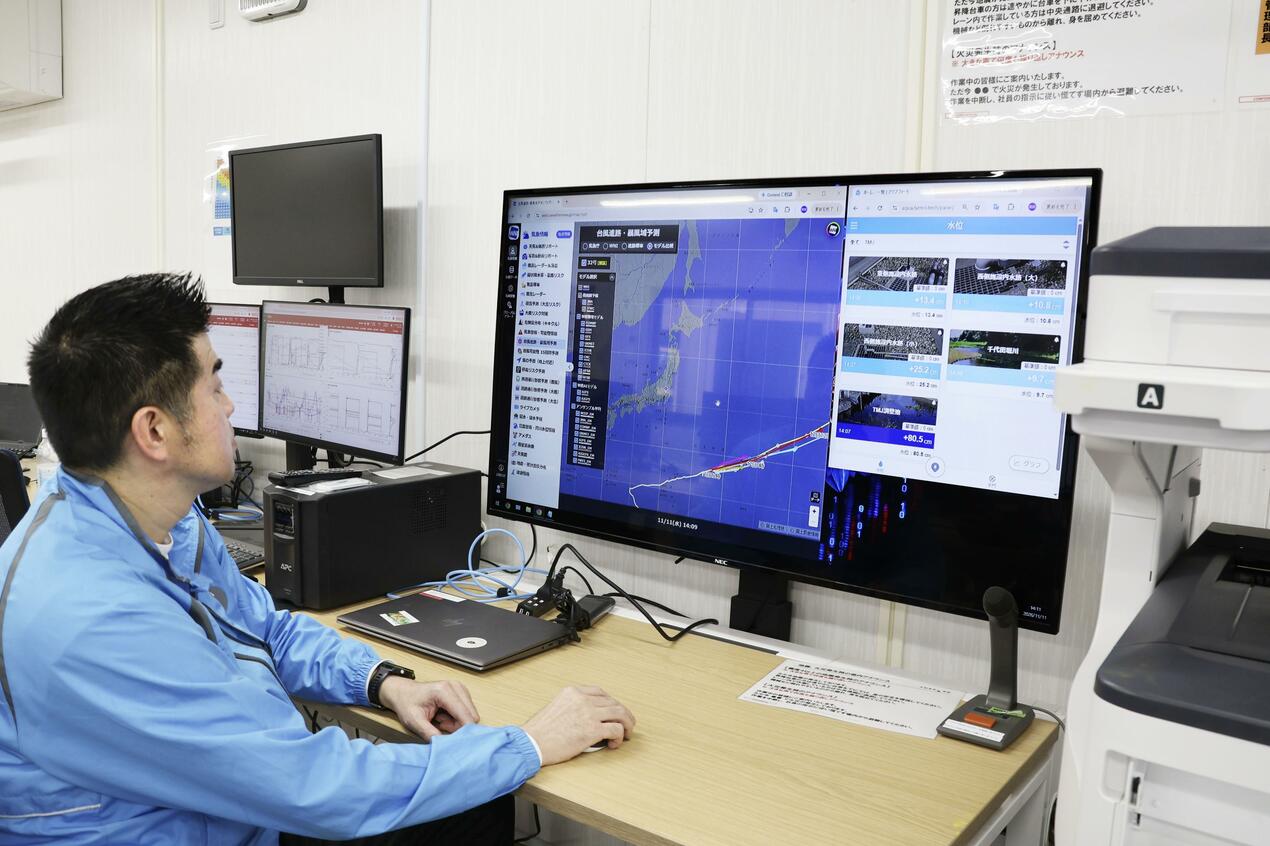
Weathernews Inc., a private weather service, has provided AI-generated typhoon track forecasts to paid subscribers since last year. The company reports track deviations approximately 30 percent lower than physics-based models across the first 26 typhoons of the previous year.
Naoto Yamada, vice president of agricultural corporation Tanemaki Joso, relies on these AI forecasts for operational planning. When Typhoon Dujuan approached the Kanto region in September, AI models indicated a potential Tokyo-area impact while the official agency forecast projected tracks toward western Japan or Okinawa. The AI forecast proved correct, enabling the company to install flood barriers and arrange staffing a week in advance.
Remaining limitations
Despite superior track forecasting, AI models struggle with intensity prediction, making accurate rainfall and wind speed forecasts difficult. Yamaguchi noted this represents a significant operational constraint for disaster preparedness.
However, rapid technological improvements may address these limitations soon. "AI models cannot be ignored," Yamaguchi said. "We need to consider how to use them to help provide disaster prevention information."
Why it matters
Accurate typhoon forecasting directly impacts evacuation decisions, infrastructure protection, and economic planning across industries from agriculture to logistics. A 30 percent improvement in track accuracy translates to days of additional preparation time and more targeted resource deployment. As climate change intensifies storm activity, the ability to leverage AI's pattern-recognition capabilities alongside physics-based understanding could significantly reduce disaster losses. The technology's current weakness in intensity forecasting, however, means human meteorologists remain essential for comprehensive storm assessment.
These details were first reported by Kyodo News.