Automation
AI in Accounting: Why Technical Skills Matter More, Not Less
A joint panel of auditors and their clients reveals how automation is compressing learning curves and elevating communication to a core competency.
Key takeaways
- Astec Industries reduced a three-hour inventory accounting task to five minutes using a bot, freeing staff for higher-value work requiring judgment.
- AI has compressed the learning curve for new accountants, making strong technical fundamentals more critical from day one rather than less.
- Communication skills have become a hard requirement as junior accountants face clients earlier in their careers due to AI handling preparation work.
- Accountants must own AI-generated results and understand the work well enough to verify outputs, as errors can lead to audit issues.
- The profession now expects graduates to master technical accounting, AI fluency, and communication simultaneously rather than developing them gradually.
The three-hour task now takes five minutes
Astec Industries built a bot to handle work-in-process inventory accounting—matching and filtering records that previously consumed three hours of staff time per cycle. The automation now completes the job in roughly five minutes. But the real value isn't the time saved. It's what the accounting team does with those recovered hours.
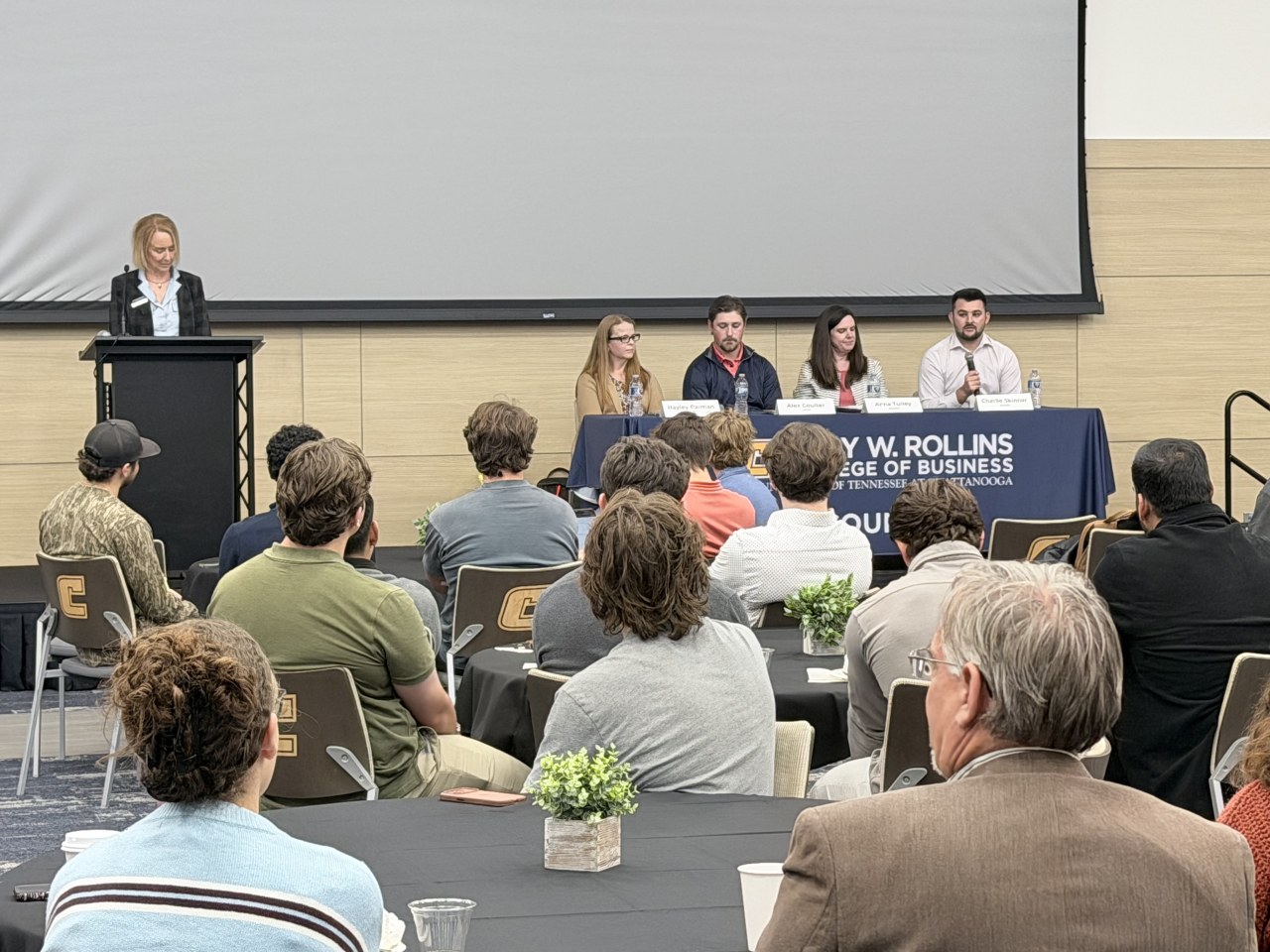
That example anchored a panel discussion at the University of Tennessee at Chattanooga's Gary W. Rollins College of Business, where representatives from Deloitte and Astec Industries sat together to discuss artificial intelligence in accounting. The setup was unusual: auditor and client in the same room, openly discussing the same technology and its implications for financial reporting and assurance.
"It is very unusual to have both sides of the table collaborate in this type of environment," said Dr. Rebecca Shortridge, head of the accounting department, as reported by UTC's Gary W. Rollins College of Business.
Why it matters
Accounting has historically offered new graduates a multi-year runway to develop technical judgment. AI is collapsing that timeline while simultaneously pushing junior staff into client-facing roles earlier in their careers. Firms now expect day-one competency in areas that used to develop gradually—a shift that changes what accounting education must deliver and how students should prepare for the profession.
The counterintuitive reality: fundamentals became more critical
The assumption might be that AI reduces the need for deep technical knowledge. If the system can retrieve the answer, why memorize the standard?
All four panelists rejected that logic. Graduates used to have roughly three years to mature from entry-level hires into experienced staff accountants, building technical judgment incrementally. That development window has compressed. Students now transition from college seniors to firm seniors faster than previous generations did.
"Learning fundamental accounting skills may be more important now than before," Shortridge said, capturing the panel's consensus. "They don't have time to build up their skills over time."
AI didn't eliminate the need for expertise. It eliminated the grace period for acquiring it.
Communication became a technical requirement
With AI handling more preparation work, young accountants face clients much earlier in their careers. That shifts what the role demands on day one.
"They must be able to communicate and add value to the discussions," Shortridge noted.
A first-year accountant now needs to run an analysis and explain its implications in a room of decision-makers. The interpersonal skill has become a hard requirement, not a soft advantage.
What the work actually looks like
The Astec example is instructive precisely because it's mundane. The company didn't build a bot to replace accountants. They built one to handle record matching so the team could focus on decisions requiring judgment.
That pattern held across both organizations: AI absorbs repetitive, verifiable tasks while people move into analysis, interpretation and client conversation.
Alex Coulter, a senior cost accountant at Astec, sees it most often in data analysis. "I often format large reports into usable information," he said. "And I find the AI does very well with doing this in a timely manner."
But speed introduces risk. "Although AI may be doing the task, we have to own the results," Coulter said. "This also means that understanding the work you or the AI is performing is crucial. Relying only on AI and not being able to check its work could lead to spreading bad information. In accounting, this could lead to audit issues."
The new graduate profile
Shortridge encourages students entering the workforce to master three capabilities: technical accounting knowledge, comfort with AI and technology, and communication ability.
The profession has become less forgiving about gaps in any of those areas. For students willing to build all three while still in school, the job on the other side looks more dynamic than it used to. Accountants spend less time producing numbers and more time explaining what they mean.
Coulter, who graduated just as AI arrived in the profession and learned it on the job, was impressed by current students' fluency. "I was surprised with how advanced most of the students' knowledge is already about AI," he said. "I feel I learned as much from them as they did from me. The passion to learn AI now in college will set these students up for fast success in real-world job scenarios."
These details were first reported by the University of Tennessee at Chattanooga's Gary W. Rollins College of Business.