AI Cameras Replace Human Fire Lookouts in Oregon Forests
After nearly 90 years of human surveillance, automated systems with artificial intelligence are taking over wildfire detection duties at remote mountain stations.
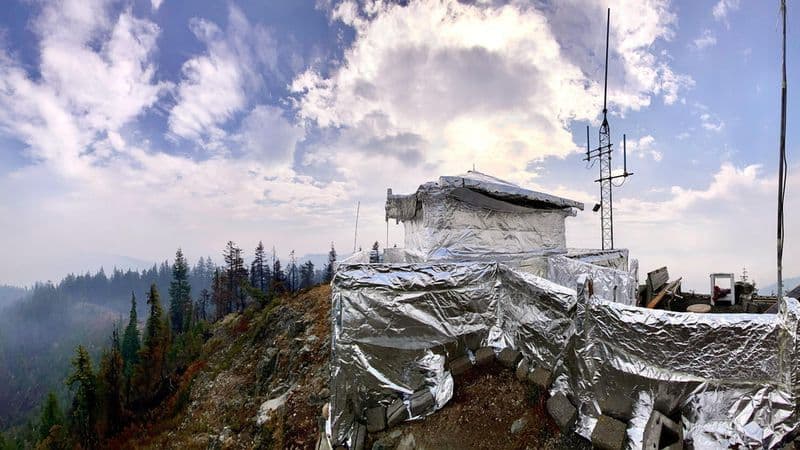
Human watchers give way to automated surveillance
Oregon's fire lookout towers, some operational for nearly a century, are being phased out in favor of AI-driven camera systems that provide continuous wildfire monitoring. The shift marks a fundamental change in how forests are protected, replacing human observers stationed in remote mountaintop structures with automated technology that never sleeps.
Dani Trotman, a fire lookout at Huckleberry Lookout in the Willamette National Forest, represents a vanishing profession. Her tower has monitored Oregon forests for almost 90 years, offering panoramic views across miles of terrain. But as the number of staffed lookouts declines, questions arise about whether these historic positions still serve a purpose in modern fire management.
How AI cameras work
The University of Oregon's Hazards Lab has developed camera systems that operate year-round, capturing 360-degree panoramic images every two minutes. Artificial intelligence algorithms analyze these images to identify potential fire signatures before they become major incidents.
"In some ways the digital cameras we provide directly replace towers," said Leland O'Driscoll, Director of the Oregon Hazards Lab, according to KVAL. The cameras maintain constant vigilance without the limitations of human schedules or seasonal staffing constraints.
The technology offers clear advantages: 24/7 operation, consistent coverage regardless of weather or time of day, and the ability to monitor multiple locations simultaneously. As these systems have expanded, the number of active human lookouts has steadily decreased.
Why it matters
The transition from human to automated fire detection reflects broader workforce changes driven by AI across industries. While the technology may prove more cost-effective and reliable, it eliminates specialized jobs that require deep environmental knowledge and situational judgment. The debate over whether efficiency gains justify the loss of human expertise will likely intensify as AI systems expand into other monitoring and safety roles.
A complementary approach
Trotman doesn't view the technology as competition. She sees human observers and AI cameras as complementary tools in fire detection, each with distinct strengths. Cameras capture what falls within their field of view, but human lookouts bring experience and contextual understanding to their observations.
"A camera can show you a lot, but it's going to show you exactly what the camera can see," Trotman told KVAL. "I can bring a little bit of experience to that. But again, we are just two puzzle pieces that click together. The goal, of course, is just early detection."
The road to Huckleberry Lookout passes through the Cedar Creek Fire burn scar, where miles of blackened trees serve as a stark reminder of wildfire's destructive power. For Trotman, the view reinforces why early detection matters, regardless of whether it comes from human eyes or digital sensors.
Despite acknowledging the inevitability of technological change, Trotman argues that lookouts remain worth preserving. "There's so much history in these spaces," she said. "There's a reason we still do some of the things that we do - because they work."
These details were first reported by KVAL.
This is an original analysis by the Omega editorial team. Source reporting: AI Watch.
Want systems like this working for your business?
Book a Call
