Xi Jinping brings chip wins to White House as AI leverage
Huawei and Alibaba chip releases ahead of the summit signal Beijing's case that U.S. export controls can slow but not stop Chinese AI development.
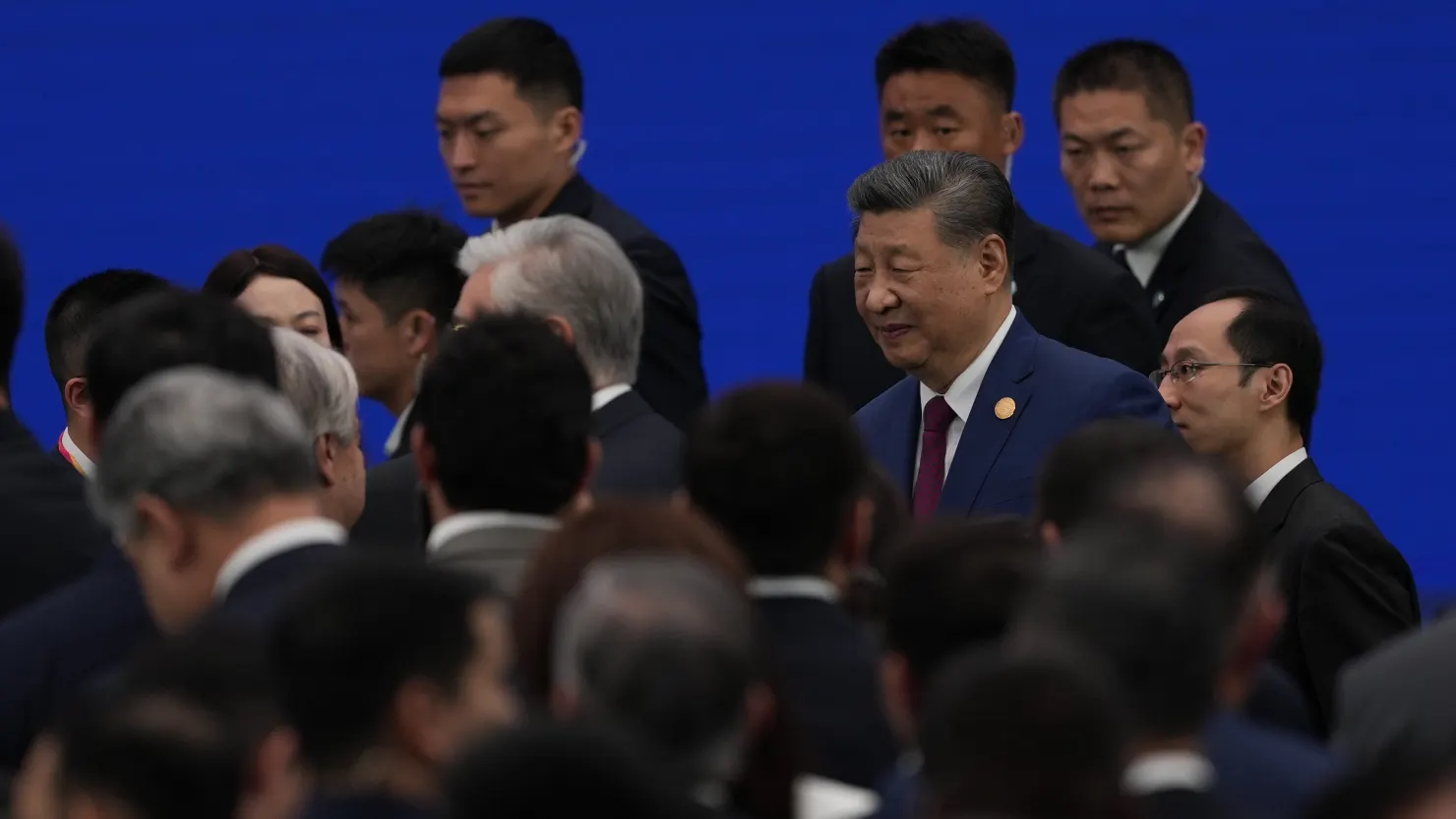
Chinese President Xi Jinping has arrived for his first U.S. state visit in over a decade armed with fresh evidence that American technology restrictions have not halted China's AI ambitions. A wave of chip and model announcements from Huawei Technologies and Alibaba Group in recent days has sharpened Beijing's negotiating position ahead of the leaders' summit.
Why it matters
The timing of these releases suggests China is using technological progress as diplomatic leverage. If Beijing can demonstrate that export controls merely delay rather than prevent AI development, it weakens Washington's primary policy tool for maintaining technological advantage while potentially forcing a reassessment of the restrictions' strategic value.
Accelerated timelines signal confidence
At its Huawei Connect conference last week, Huawei announced its Ascent 960DT chip would ship in the first quarter of 2027—three quarters ahead of the original schedule. Days later at the Apsara Conference, Alibaba's chip unit unveiled the Zhenwu V900 processor, which triples its predecessor's performance and will go on sale in early 2027. DeepSeek, the startup whose low-cost model disrupted markets last year, has reportedly assembled the largest known cluster of Huawei chips to date.
"For Xi, the leverage is not 'we have caught up with you' — it's 'you can't simply technologically choke us off,'" Lizzi Lee, a fellow at the Asia Society Policy Institute, told CNBC.
George Chen, partner at The Asia Group, described Xi's confidence in China's technology capabilities as being "at a historic high." He characterized the timing of the announcements as a "deliberate" confidence boost before the summit.
Gaps remain despite progress
While the releases demonstrate momentum, significant limitations persist. Huawei's latest SuperPoD computing architecture links far fewer processors than originally planned, and each chip delivers roughly half the compute power of Nvidia's advanced offerings. Huawei Chairman Eric Xu acknowledged the company may not be able to meet domestic demand.
Chris Miller, a Tufts University professor and author of "Chip War," noted that U.S. models remain ahead on technical benchmarks and profitability. American firms like Anthropic and OpenAI generate 50 to 100 times the revenue of comparable Chinese companies, he said. Chinese firms remain "highly dependent on the U.S. for advanced chips," Miller added, relying on smuggling or accessing data centers outside China.
Xiaomeng Lu, a director at Eurasia Group, was more blunt: "Chinese chip companies haven't made any groundbreaking progress in the past few years. The fundamental competitive landscape hasn't changed."
Export controls off the agenda
Despite the technological backdrop, chip export controls appear unlikely to feature in summit discussions. Treasury Secretary Scott Bessent and U.S. Trade Representative Jamieson Greer met with Vice Premier He Lifeng over the weekend and established a formal AI channel for incident warnings, but Greer explicitly stated that export controls on advanced chips and chipmaking equipment were not on the agenda.
Beijing's immediate priorities may focus elsewhere. Lyle Morris, a senior fellow at the Asia Society Policy Institute, suggested Xi is likely to press Trump on Taiwan alignment and may offer help on Iran, including restoring shipping access in the Strait of Hormuz.
"The recalibration of U.S.-China tech relations takes a lot of substantial work," Lee said. "Not a summit deliverable, I am afraid — at least not this time."
These details were first reported by CNBC.
This is an original analysis by the Omega editorial team. Source reporting: AI Watch.
Want systems like this working for your business?
Book a Call