Warehouse Automation Creates New Lithium Battery Fire Risks
A multi-day blaze at a Coupang facility in South Korea exposes gaps in fire safety standards as logistics centers deploy hundreds of battery-powered robots.
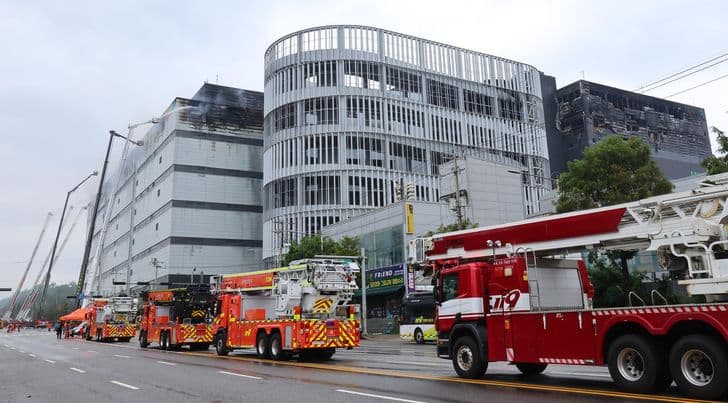
A fire that burned for more than 60 hours at a Coupang logistics center in Incheon, South Korea has exposed critical gaps in fire safety protocols as warehouses adopt battery-powered automation at scale.
Fire officials prioritized preventing flames from reaching the facility's fifth floor, which housed hundreds of lithium-ion battery-powered warehouse robots with combined capacity equivalent to roughly 20 electric vehicles. The fire, which started Saturday on the sixth floor, was brought under initial control after 61 hours and fully extinguished Wednesday.
The automation wave
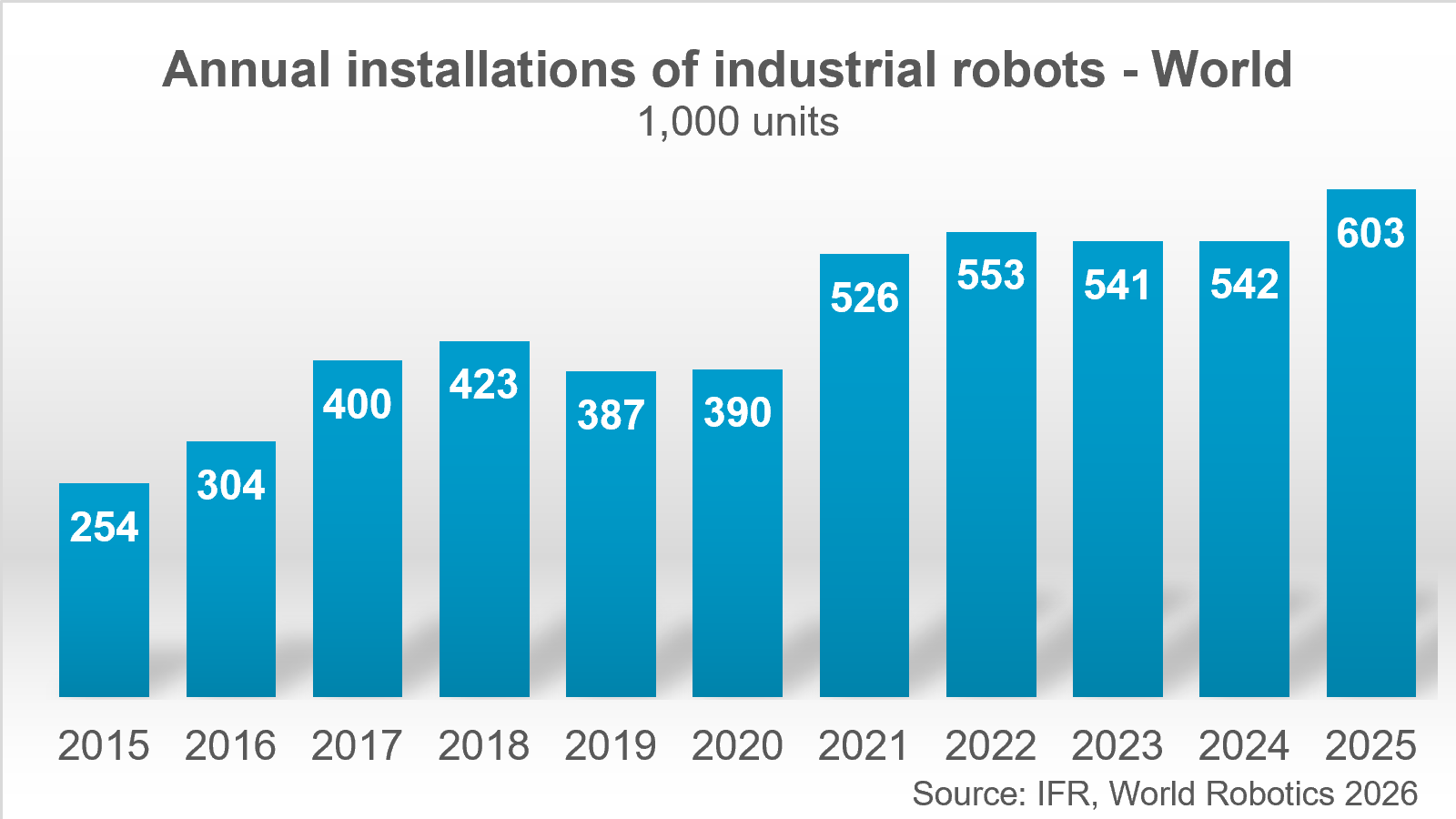
Major South Korean retailers have rapidly automated their logistics operations. Coupang operates automated guided vehicles at its Daegu fulfillment center. Lotte Mart is constructing a robot and AI-powered facility in Busan with British partner Ocado. Market Kurly is testing autonomous robots, while Hyundai Home Shopping has deployed robotic arms and automated sorting equipment.
This expansion of physical AI systems—including autonomous mobile robots, automated guided vehicles, and automated storage and retrieval systems—has dramatically increased the number of lithium-ion batteries concentrated in industrial facilities.
Why it matters
As warehouses become automated nerve centers for e-commerce and logistics, the concentration of lithium-ion batteries creates compounding fire risks that existing safety frameworks weren't designed to address. Thermal runaway events can trigger chain reactions that repeatedly reignite fires, and current regulations exempt rechargeable lithium-ion batteries despite their industrial proliferation. Companies investing in warehouse automation face potential operational disruptions and liability if safety standards don't evolve alongside the technology.
The thermal runaway problem
Lithium-ion batteries pose distinct fire hazards. When exposed to heat or physical damage, internal separators can fail, causing short circuits and explosions, according to Lee Duck-hwan, a chemistry professor at Sogang University. Thermal runaway can trigger chain reactions that complicate firefighting efforts through repeated reignition.
"The higher the state of charge, the greater the likelihood of a battery catching fire on its own," Lee said. He recommended using high-quality batteries, maintaining lower charge levels when possible, and establishing emergency protocols including water immersion containers for burning batteries.
Regulatory gaps
South Korea tightened rules for primary lithium batteries following a deadly 2024 fire at an Aricell plant, but rechargeable lithium-ion batteries were excluded due to their widespread use in consumer electronics, electric vehicles, and industrial equipment.
The National Fire Agency strengthened warehouse fire safety standards in 2024, requiring greater water storage and higher-capacity sprinkler systems for new facilities. However, existing warehouses—including the Incheon Coupang site—were built before these rules took effect and aren't subject to the updated requirements.
Experts argue that fire safety measures must evolve beyond conventional warehouse protection to include dedicated battery charging areas, thermal runaway mitigation systems, and emergency response procedures designed specifically for automated facilities.
Lee Young-ju, a fire safety professor at Kyungil University, noted that warehouses remain inherently vulnerable due to large quantities of combustible goods in high-density rack systems that trap heat and impede firefighter access. He emphasized the importance of early detection and initial response systems.
Following the incident, South Korea's Ministry of Land, Infrastructure and Transport announced plans to review safety rules for large logistics facilities. A joint task force will develop strengthened safety management measures after investigators complete their analysis of the Coupang fire.
These details were first reported by The Korea Times.
This is an original analysis by the Omega editorial team. Source reporting: Automation Watch.
Want systems like this working for your business?
Book a Call