Walmart Commits $1.3B to Automated Fulfillment Center in Georgia
The 1.5 million-square-foot facility in Carnesville marks the retailer's sixth next-generation warehouse as it accelerates same-day delivery expansion.
Walmart is investing $1.3 billion to build a next-generation automated fulfillment center in Carnesville, Georgia, marking the retail giant's most significant supply chain expansion in the southeastern United States.
The 1.5 million-square-foot facility represents Walmart's sixth planned high-tech warehouse designed to accelerate same-day and next-day delivery capabilities. Construction is expected to begin in late 2026, with the site projected to employ 1,000 workers once operational.
Doubling capacity through automation
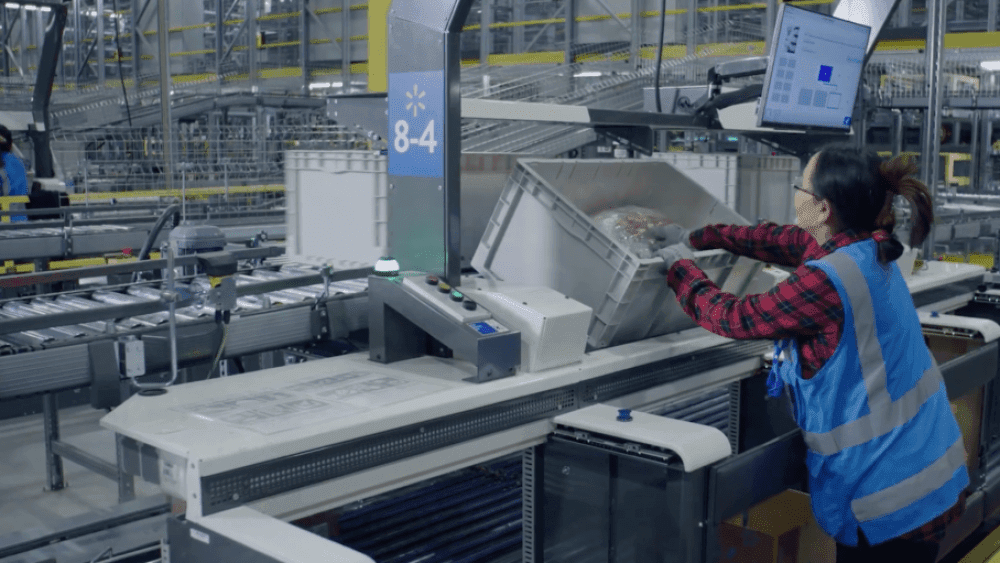
These next-generation facilities leverage high-density storage and automated order flow systems that double both storage capacity and daily order throughput compared to traditional fulfillment centers. Four such warehouses are already operational in Joliet, Illinois; McCordsville, Indiana; Lancaster, Texas; and Greencastle, Pennsylvania. A fifth location in Stockton, California, is scheduled to open later this year and reach full operation by early 2027.
The facilities typically employ robotics solutions and storage systems from Knapp that compress a manual twelve-step fulfillment process into five automated steps: unloading, receiving, picking, packing, and shipping. The Knapp Evo Shuttle system can store nearly 2 million containers in a single facility, accommodating ten times as many SKUs as traditional fulfillment centers. According to Knapp, lead time from order receipt to shipping now averages approximately 30 minutes.
Why it matters
Walmart's aggressive automation push reflects how logistics infrastructure is becoming a competitive differentiator in retail. The company now processes more than 50 percent of its e-commerce fulfillment volume through automated facilities, and 23 of its 42 regional distribution centers are being retrofitted with automation. Every regional distribution center is expected to be upgraded by 2030. This investment cycle, which Walmart CEO John Furner said will peak in 2026 and 2027, directly supports the retailer's ultra-fast delivery expansion—the company doubled its 30-minute delivery volume last quarter and now offers sub-30-minute service in 38 U.S. markets.
Unified control platform
At the core of each facility is Walmart's Control Services platform, which integrates solutions from multiple vendors including Knapp, Symbotic, Packsize, and Ranpak under a unified control framework. This vendor-agnostic orchestration layer allows Walmart to connect different systems without building separate integrations for each, providing flexibility to test, deploy, and scale new automation across its fulfillment network.
The Georgia announcement follows Walmart's recent proposal for another 1.5 million-square-foot fulfillment center in Wallkill, New York. That facility, designed to support e-commerce distribution throughout the northeast region, would employ approximately 1,500 associates and include a 41,000-square-foot truck maintenance garage.
Karisa Sprague, senior vice president of supply chain at Walmart U.S., said the investments help the company deliver the speed, convenience, and reliability customers expect while creating career opportunities in local communities.
The Georgia project was announced jointly with state partners including the Georgia Department of Economic Development, the Franklin County Industrial Building Authority, Georgia EMC, and Georgia Quick Start, according to details first reported by Sourcing Journal.
This is an original analysis by the Omega editorial team. Source reporting: Automation Watch.
Want systems like this working for your business?
Book a Call