Two Seattle AI Startups Take Different Paths to Weed Control
TerraClear maps individual weeds for precision spraying while Carbon Robotics deploys laser-equipped robots to eliminate them without chemicals.
Competing visions for AI-powered agriculture
Two Seattle-area companies are demonstrating how artificial intelligence can address one of farming's oldest challenges — weeds — through fundamentally different approaches that reveal competing philosophies about agricultural technology adoption.
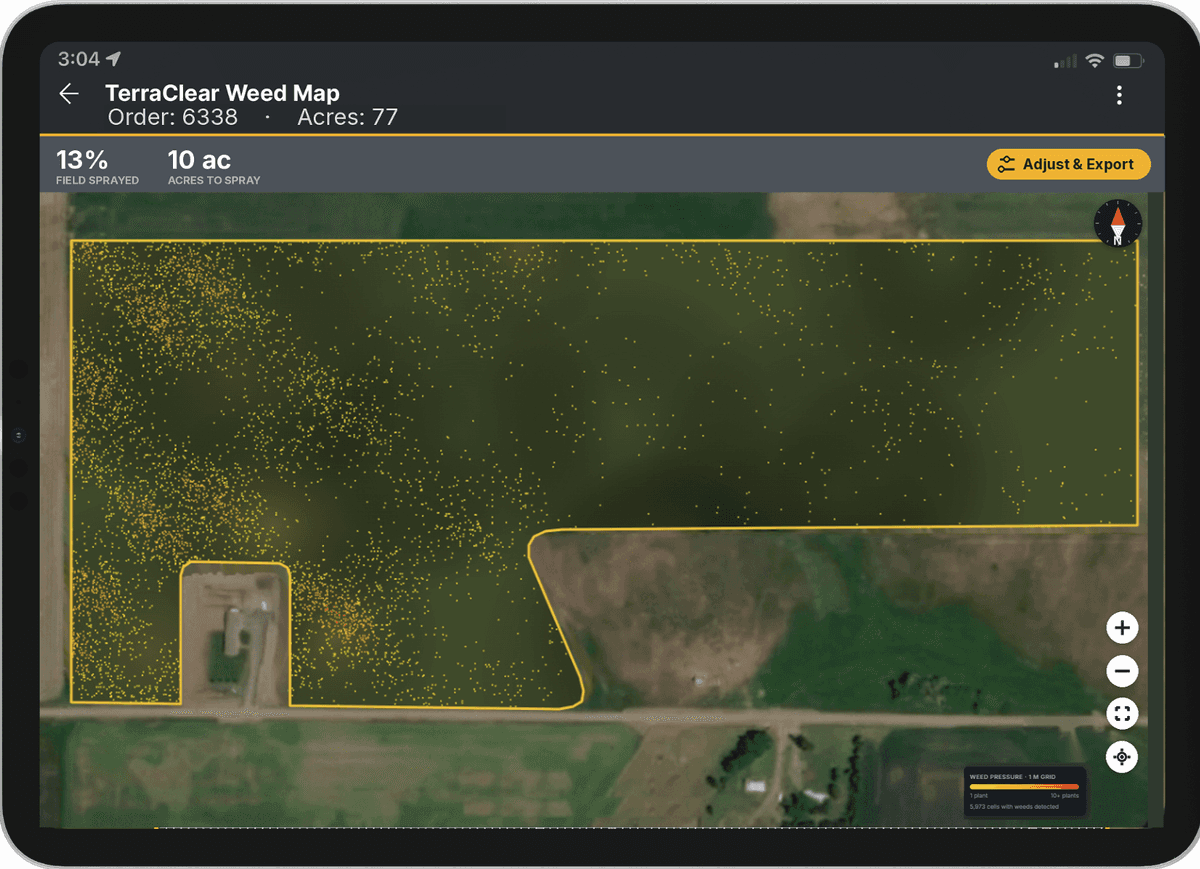
Issaquah-based TerraClear announced Tuesday a system called Weed Maps that uses ultra-high-resolution imagery and machine learning to identify individual weeds as small as a quarter-inch across entire corn and soybean fields. The technology captures images at 1.5-millimeter resolution and produces geo-referenced maps that farmers can upload directly to existing precision sprayers.
Meanwhile, Seattle-based Carbon Robotics has developed the LaserWeeder, an autonomous machine that uses computer vision to identify weeds and destroys them with high-powered lasers — no chemicals required. The company announced in February that its Large Plant Model was trained on 150 million labeled plants, creating what it describes as the largest agricultural plant dataset of its kind.
Why it matters
Both approaches could significantly reduce herbicide and pesticide use in American agriculture, a priority that gained federal backing when President Trump committed $1 billion earlier this year to modernize farming and reduce agricultural chemicals. TerraClear estimates its mapping technology alone could cut chemical use by up to 80%. As regulatory and consumer pressure mounts around pesticide use, these AI systems offer farmers economically viable paths to more sustainable practices while maintaining crop yields.
The economics of adoption
The fundamental difference between the two companies lies in their business models and target markets. TerraClear CEO Devin Lammers describes his company's approach as sidestepping "the capital problem entirely." Rather than requiring farmers to purchase expensive new equipment, TerraClear sells maps that work with sprayers already sitting in equipment sheds.
"Modern grain and oilseed sprayers already have individual nozzle control and RTK positioning — the actuation hardware is sitting in the shed," Lammers explained. "We just hand the sprayer a shapefile of individual weed locations and it turns the nozzle on only where a weed actually is."
For large-scale commodity crop operations farming thousands of acres at lower revenue per acre, this matters. Lammers noted that Carbon's laser technology works well for specialty crops and organic operations, but represents "a very different P&L" for grain and oilseed producers.
TerraClear collects field imagery using its TerraScout autonomous robot and aerial drones, capturing more than 4 billion image samples per acre. The company says it can map over 1,000 acres daily under favorable conditions and deliver maps the next day, allowing farmers to act while weeds are still small.
Building agricultural intelligence
Beyond their immediate weed-control applications, both companies are accumulating massive datasets that could prove more valuable than their current products. Every camera pass collects information about plants, soil conditions, crop health and growing patterns — data valuable to farmers, seed producers, researchers and equipment manufacturers.
Carbon Robotics has deployed machines globally and used that experience to develop its Large Plant Model, which allows farmers to customize what the system recognizes by showing it a handful of images. This addresses a persistent challenge in agricultural AI: systems that need retraining for every new weed species or field condition.
"When our robots can understand any plant in any field immediately and adapt behavior in real-time, farmers immediately get maximum value from the machines," Carbon Robotics CEO Paul Mikesell said.
Founded in 2017, TerraClear has raised $53 million and grown to approximately 50 employees serving nearly 1,000 customers. The company initially focused on robotic rock removal before expanding into weed mapping. Carbon Robotics, founded in 2018, has raised $177 million and employs about 260 people across offices in Seattle and a manufacturing facility in Richland, Washington.
These details were first reported by GeekWire.
This is an original analysis by the Omega editorial team. Source reporting: AI Watch.
Want systems like this working for your business?
Book a Call