Policy
Trump threatens penalties on U.S. firms building AI data centers abroad
The president's pledge to tax overseas infrastructure investments comes as public opposition to domestic data centers grows and AI stocks tumble.
Key takeaways
- Trump announced plans to impose 'tremendous penalties' on U.S. companies that build AI data centers overseas, though implementation details remain unclear.
- The president's pro-data center stance conflicts with majority American opinion, as voters in recent midterms overwhelmingly backed candidates promising to limit such facilities.
- The announcement came during a broader market downturn, with the S&P 500 down approximately 9% since November 4 amid concerns about AI stock sustainability.
- Trump acknowledged he had not yet briefed his staff on the foreign data center restrictions before announcing them to reporters.
- The policy creates tension between federal infrastructure goals and local resistance to data center construction in communities nationwide.
President Donald Trump announced Friday that his administration plans to restrict U.S. companies from building data centers overseas, threatening to impose significant taxes on firms that pursue foreign infrastructure investments.
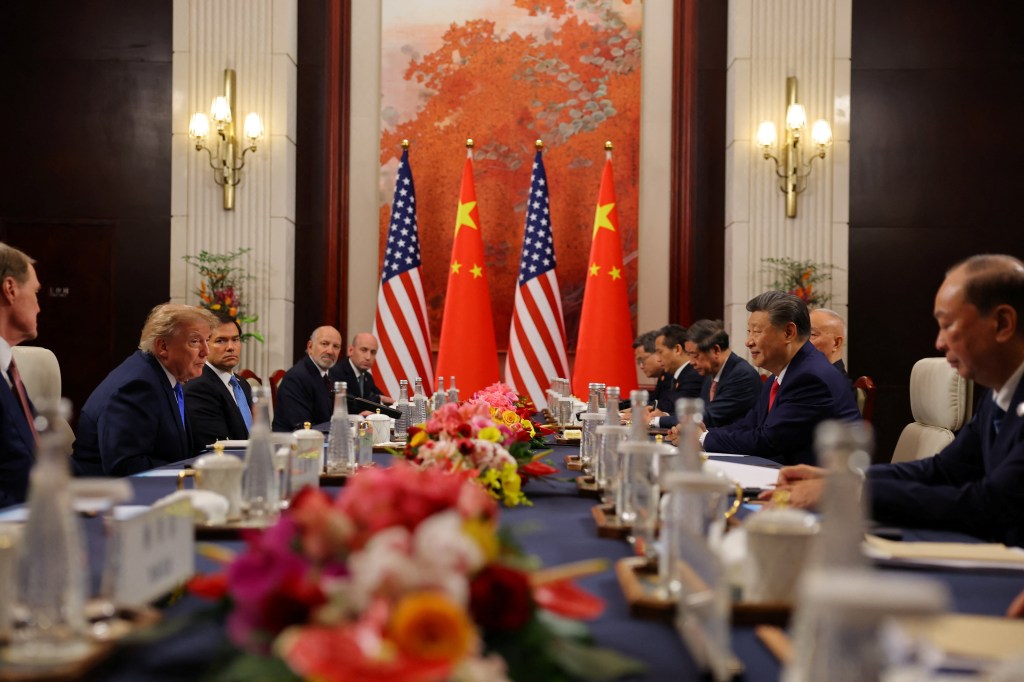
Speaking to reporters at the White House after returning from Asia, Trump framed the restrictions as necessary to prevent artificial intelligence infrastructure from leaving American soil. "We're not going to allow our companies to build data centers outside of our country," he said, drawing parallels to chip manufacturing that he characterized as "very destructive to our country."
The president indicated that companies attempting to build data centers abroad would face "tremendous penalties," though he acknowledged he had not yet briefed his staff on the specifics. "I haven't even said that to my people," Trump said during the briefing. "I'm telling them now."
Why it matters
The announcement creates fresh uncertainty for AI companies already navigating volatile market conditions and public backlash. Trump's position puts federal policy on a collision course with local sentiment: during recent midterm elections, voters overwhelmingly supported candidates who promised to limit data center construction in their communities. This disconnect between federal promotion and local resistance could complicate infrastructure planning for major tech firms investing billions in AI computing capacity.
Market and political context
The comments came on a day when stock markets declined sharply, with major technology companies experiencing significant drops. According to NBC News, which first reported the remarks, even Anthropic's record-setting IPO earlier in the week failed to calm investor concerns about AI stock sustainability.
Since November 4, the S&P 500 has fallen approximately 9%, though multiple factors have contributed to the sell-off. The recent midterm elections saw Democrats who pledged to restrict data center proliferation win decisively, adding pressure to an already struggling AI stock trade.
Clash with public opinion
Trump's advocacy for data center construction stands in stark contrast to majority American sentiment. During the midterms, data centers emerged as a key issue, with voters backing candidates who promised to curb their expansion.
The president has previously criticized state and local efforts to limit data center development. In August, he suggested communities that block such facilities "want to end up being backwards and poor," urging them to "let Data Reign" if they want success and lower taxes.
On Friday, he reiterated this position: "You ought to take advantage of the data centers. Make them pay you. Make them pay your community, but take advantage. Don't shut them off."
Implementation questions
How the administration would enforce restrictions on overseas data center construction remains unclear. A White House representative did not immediately respond to requests for comment on implementation details, NBC News reported.
The proposal represents another instance of Trump using tariff threats and penalties to shape corporate behavior on infrastructure investments, though the legal and practical mechanisms for such restrictions have not been detailed.
These details were first reported by NBC News.