Policy
U.S. and China Agree Humans Must Control Military AI Decisions
Treasury Secretary Scott Bessent says Trump and Xi reached accord on human oversight of battlefield AI, even as chip export restrictions tighten.
Key takeaways
- U.S. and China agreed humans must be involved in all major military decisions using artificial intelligence, with no autonomous AI operations permitted.
- The accord is separate from ongoing U.S.-China competition for AI supremacy and won't affect chip export restrictions.
- Nvidia's H200 chip remains the most advanced semiconductor China can purchase under current U.S. licensing rules.
- Commerce Department implemented new restrictions Monday targeting Chinese access to AI chips through overseas data center rentals.
- Treasury Secretary Bessent says Chinese chip development efforts are likely years behind U.S. capabilities.
The United States and China have reached an agreement requiring human involvement in military decisions that rely on artificial intelligence, Treasury Secretary Scott Bessent said Friday, marking a rare point of consensus between the competing superpowers.
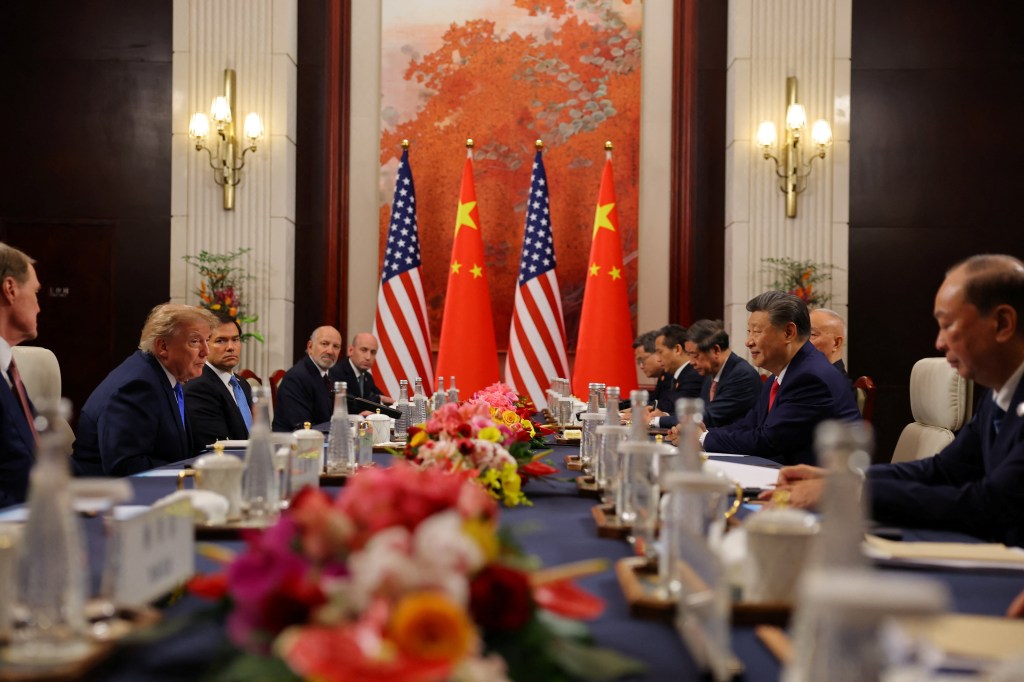
Bessent disclosed the understanding following President Donald Trump's meeting with Chinese President Xi Jinping in Shenzhen, China. Speaking to CNBC, Bessent characterized the agreement as a major outcome of Trump's Asia trip.
Human oversight requirement
"I think it was very important that President Trump and President Xi agreed that humans should always be involved in any military decisions that SI makes, and the SI should not be allowed to be autonomous for major military actions," Bessent said, using the Trump administration's preferred terminology of "super intelligence" for advanced AI systems.
The Treasury Secretary emphasized that this bilateral agreement on military AI safeguards would remain separate from the ongoing technological competition between the two nations. He noted that U.S. AI laboratories must maintain their lead as the best defense against what he termed "dangerous" Chinese AI models currently deployed in cyberattacks.
Chip export restrictions continue
Bessent confirmed that Nvidia's H200 chip remains the most advanced semiconductor China can purchase under current licensing rules, following what he described as Trump taking a "very firm line" on technology exports. He said Chinese orders for H200 chips have been limited as China attempts to develop its own semiconductor capabilities, adding that Chinese efforts are "probably many years behind" U.S. technology.
The Commerce Department on Monday implemented additional restrictions on China's access to advanced AI chips, including measures targeting overseas data centers where Chinese entities can rent computing power. Bessent said the administration would ensure "proper chip restrictions are in place, and the remote access has been curtailed."
Nvidia controversy not discussed
Bessent said allegations involving former Nvidia CEO Jensen Huang and espionage concerns related to a Chinese national did not arise during the Trump-Xi bilateral meeting. He downplayed reported disagreements between Treasury and Commerce Secretary Howard Lutnick regarding AI chip restrictions, stating that administration officials are "all committed to following President Trump's instructions."
Why it matters
The agreement establishes a framework for preventing fully autonomous military AI systems from making critical battlefield decisions without human oversight—a concern that has grown as both nations race to integrate AI into defense operations. While the accord doesn't slow the U.S.-China technology competition, it represents a mutual acknowledgment that AI-driven weapons systems pose unique risks requiring international guardrails. The parallel tightening of chip export controls shows the U.S. is pursuing both diplomatic agreements and unilateral restrictions to manage military AI risks.
These details were first reported by Defense News.