Policy
Trump Backs Chip Sales to China Despite Nvidia Scandal
The president defends his commerce secretary's cautious approach to export controls, prioritizing US tech dependence over aggressive restrictions.
Key takeaways
- Trump is defending Commerce Secretary Lutnick's cautious approach to chip export restrictions, prioritizing Chinese dependence on US technology over aggressive bans.
- An Oval Office meeting addressed tensions between Lutnick and Treasury Secretary Bessent over the pace of restricting Megaspeed, a company suspected of intelligence ties.
- Trump directed development of a new rule targeting Chinese firms that lease compute power from Southeast Asian data centers rather than physically importing chips.
- The Commerce Department suspended aggressive use of the "affiliates rule" after Chinese retaliation and a trade truce between Trump and Xi Jinping.
- Megaspeed obtained billions in Nvidia H200 chips through a California subsidiary of blacklisted Chinese firm Inspur, hosting servers abroad to rent compute to Chinese companies.
President Donald Trump is defending Commerce Secretary Howard Lutnick's measured approach to restricting advanced AI chip exports to China, revealing a strategic preference for keeping Chinese firms dependent on American technology rather than imposing aggressive export bans.
The position comes amid political controversy surrounding former Nvidia CEO Jensen Huang's relationship with Alice Huang, a former Megaspeed executive suspected by some US government officials of being a Chinese intelligence asset. Megaspeed obtained advanced Nvidia AI chips through intermediary companies connected to Inspur, a blacklisted Chinese server manufacturer, according to reporting by The New York Times.
Why it matters
The administration's approach signals a fundamental tension in US technology policy: whether to cut off China's access to advanced chips entirely or maintain controlled sales that preserve American market dominance and boost tech stocks. This debate will shape how aggressively the US enforces export controls and could determine whether Chinese firms accelerate development of domestic chip alternatives.
Internal administration tensions
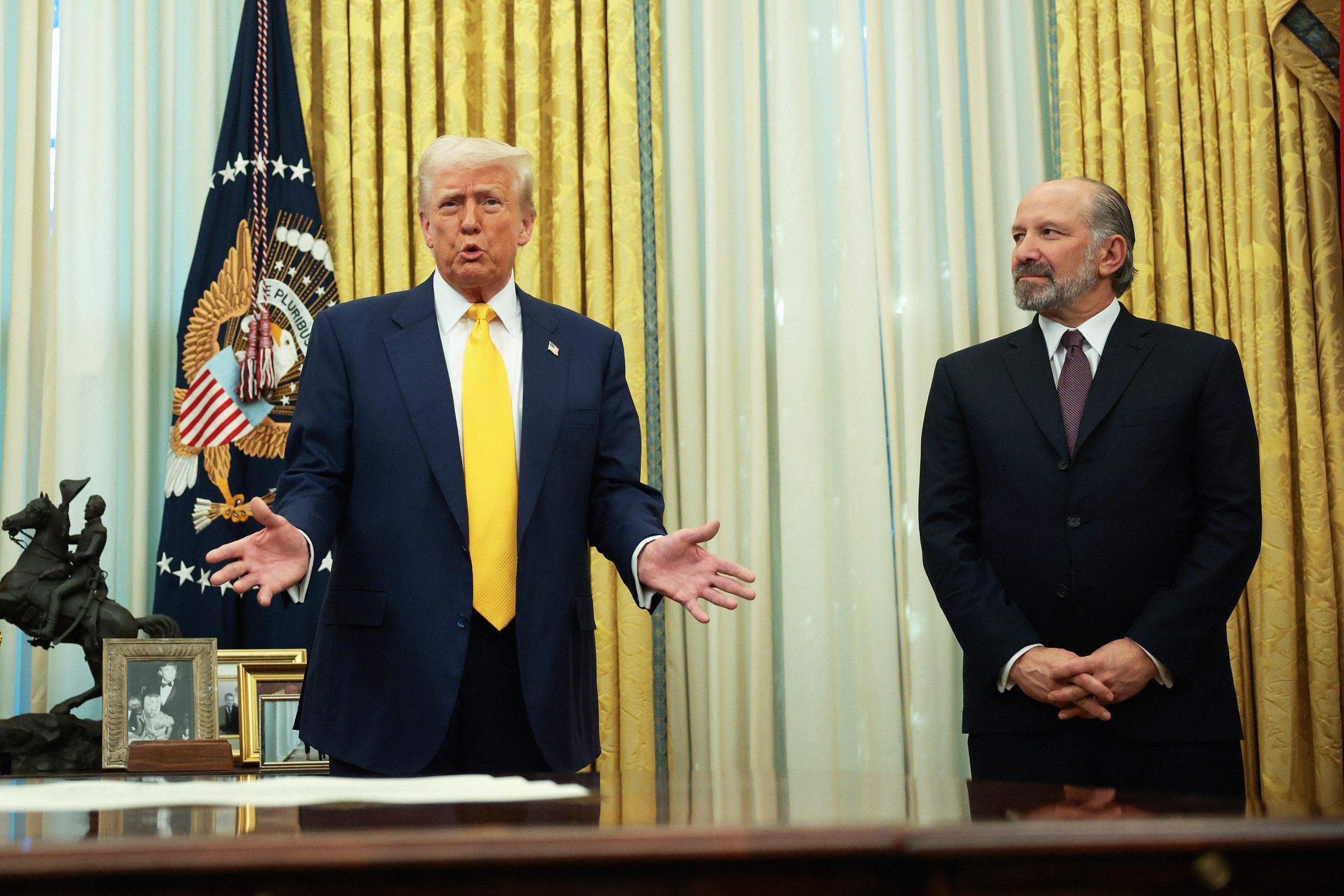
Treasury Secretary Scott Bessent publicly criticized Lutnick for not moving faster to impose export restrictions. The dispute escalated to an Oval Office meeting on November 5, where Bessent questioned why Megaspeed hadn't been added to the entity list more quickly, despite agreement from Secretary of State Marco Rubio and US Trade Representative Jamieson Greer.
Lutnick told the meeting he would defer to Trump's judgment on adding Megaspeed to the restricted list. Trump instead directed Lutnick to develop a new interim trade rule targeting a different problem: Chinese AI labs accessing advanced chips remotely by leasing compute power from data centers in Southeast Asia.
The Megaspeed operation
Megaspeed acquired billions of dollars worth of restricted Nvidia chips, including H200 models built on Hopper architecture, through Aivres, a California-based subsidiary of Inspur. Because Aivres operated as a US company, it could legally purchase restricted chips without triggering export bans and ship them internationally.
Rather than physically importing chips into China, Megaspeed hosted servers at data centers in Malaysia and Indonesia, then rented compute capacity to major Chinese companies. A White House official emphasized that Trump remains firm on preventing Chinese access to the newest Blackwell and Rubin chip architectures, distinguishing them from the older H200 chips Megaspeed obtained.
Policy whiplash on export controls
Lutnick's caution reflects recent policy turbulence. In September 2025, the Commerce Department's Bureau of Industry and Security began aggressively applying the "affiliates rule," which automatically extends trade restrictions to companies that are 50 percent owned by entities already on US restricted lists.
China retaliated by suspending exports of critical rare earth metals, prompting internal criticism that Commerce had sparked a trade war. After Trump and Chinese President Xi Jinping agreed to a trade truce at the Busan summit in late October 2025, the White House instructed Commerce to halt use of the affiliates rule and seek advance approval for new export controls.
That suspension may have created openings for companies like Megaspeed to operate, according to one person familiar with the deliberations. Trump justified Lutnick's approach by citing the need to avoid "a blowup with China," noting the US currently has "a very good relationship with China."
These details were first reported by WIRED.