Trade School Enrollment Surges as AI Fears Reshape Career Choices
Vocational programs see double-digit growth while computer science and communications decline, driven by concerns over white-collar job security and college costs.
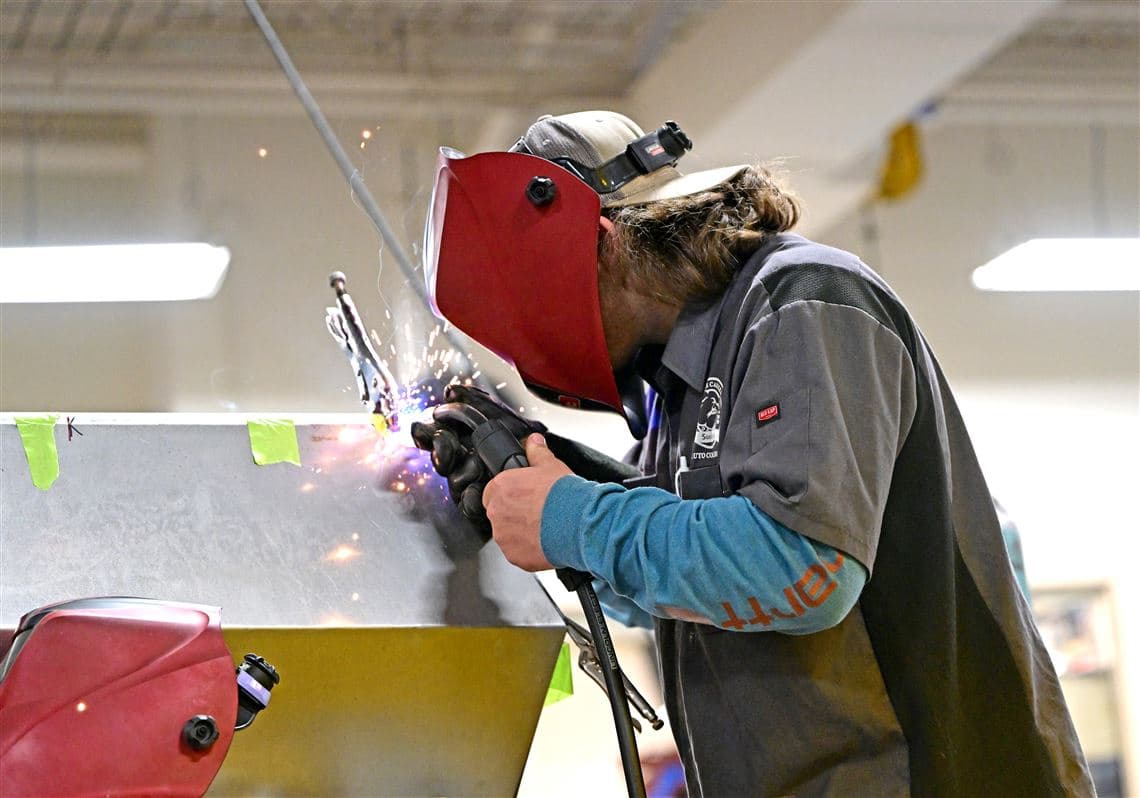
Trade programs hit record enrollment
Vocational education is experiencing a dramatic resurgence. Rosedale Technical College in Kennedy Township, Pennsylvania, enrolled 838 students this past academic year—its highest number in the institution's history. The school has grown from three programs to nine over two decades, with year-over-year enrollment climbing 30% in 2024 and 15% in 2025.
This growth mirrors a national pattern. Public two-year colleges with strong vocational focuses saw enrollment increase nearly 3% this spring, following gains of 18% and 12% in spring 2024 and 2025 respectively, according to the National Student Clearinghouse. Programs in mechanic and repair technologies, security services, engineering technologies, and construction trades are all expanding.
Meanwhile, enrollment in communications, computer science, foreign languages, and literature is declining nationwide.
AI anxiety drives career recalculation
Artificial intelligence concerns are reshaping how young people think about their futures. Dennis Wilke, who has led Rosedale Tech for 21 years, points to AI as a major factor in the shift. While trades aren't immune to technological disruption, they're "AI compatible" rather than replaceable—AI can generate deck designs, but it can't swing a hammer.
When prominent AI executives like Anthropic CEO Dario Amodei predict that artificial intelligence will eliminate half of all white-collar jobs, students are reconsidering traditional career paths. Wilke notes that students who would have pursued computer science or engineering a decade ago are now enrolling in technical programs.
The demographic shift at Rosedale Tech illustrates this change: About half of current students qualify for need-based Pell grants, down from 80% two decades ago. More students from college-prep backgrounds are choosing vocational training over four-year degrees.
Economics favor skilled trades
The financial calculus increasingly favors technical education. Wages in skilled trades have increased 30% since 2022, while confidence in traditional higher education continues to fall and tuition costs rise annually.
At the A.W. Beattie Career Center in McCandless, Pennsylvania, every program is either nearly full or wait-listed. The center, which serves nine northern Allegheny County school districts, has seen enrollment jump nearly 50% since 2018 to approximately 1,030 students across 19 programs.
Eric Heasley, the center's executive director, attributes much of this growth to doubts about the value proposition of four-year degrees. "Truly, the cost of a traditional post-secondary education has really become out of hand," he said.
Why it matters
This enrollment shift signals a fundamental recalibration in how Americans view career preparation and economic mobility. As AI reshapes knowledge work and student debt burdens an entire generation, technical education offers a tangible alternative: shorter training periods, lower costs, and careers less vulnerable to automation. For businesses, this trend means a growing pipeline of skilled workers in trades facing severe labor shortages—but also potential gaps in fields like computer science that have traditionally attracted top students.
These details were first reported by the Pittsburgh Post-Gazette.
This is an original analysis by the Omega editorial team. Source reporting: AI Watch.
Want systems like this working for your business?
Book a Call