ServiceTitan AI Agent Converts 90% of Calls to Booked Jobs
HVAC contractor reports measurable revenue gains and reduced seasonal hiring needs from automated call handling.
ServiceTitan delivers quantified AI automation results
ServiceTitan has published a customer case study showing its AI Agent converted more than 90% of over 1,300 inbound calls into booked jobs at Bill Joplin's Air Conditioning and Heating, with most calls handled without human intervention. The HVAC contractor reported higher revenue, lower operating costs, and reduced seasonal hiring requirements directly attributable to the AI system.
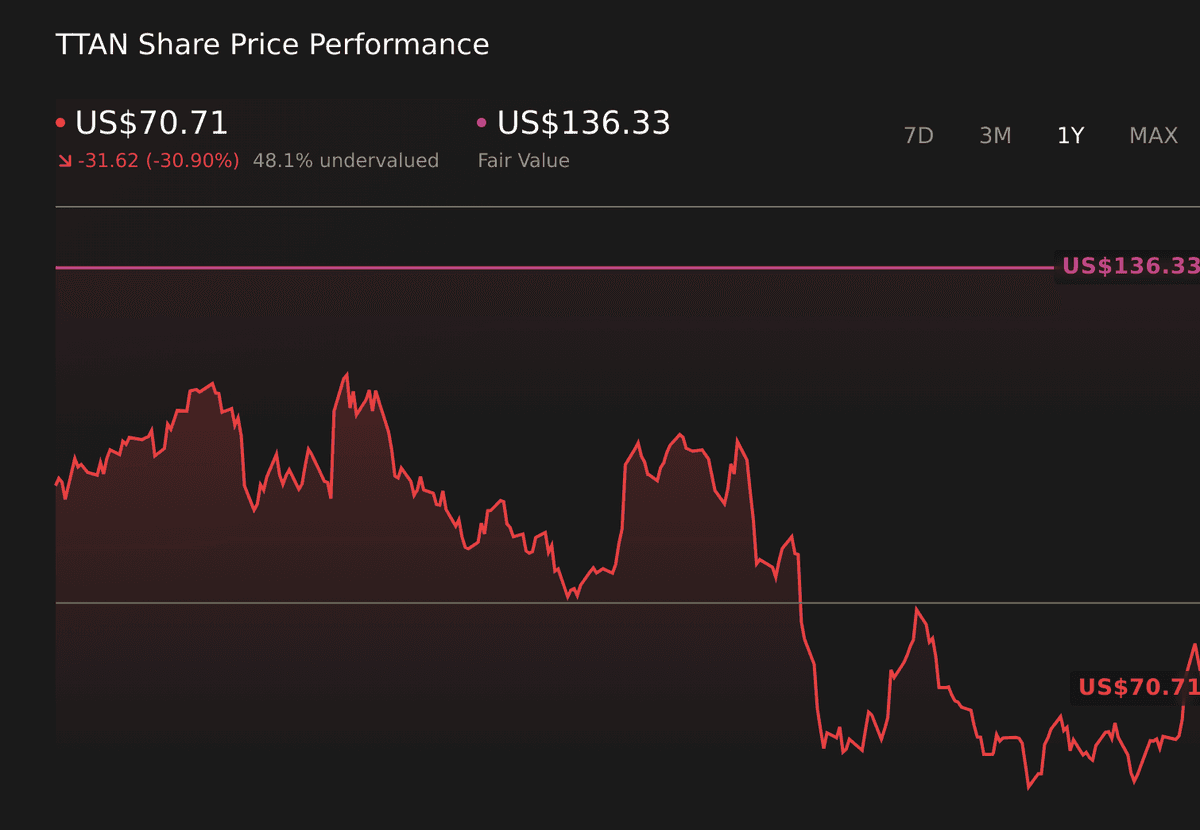
The data point arrives as ServiceTitan trades at $71.39, down 29.7% year-to-date and 31% over the past year. For a company still reporting net losses—$22.82 million in Q1 2027 compared to $46.36 million a year earlier—the case study provides concrete evidence that its AI products are handling core business workflows rather than serving as experimental features.
Why it matters
Enterprise AI investments often lack clear ROI metrics. This case study offers rare, quantified proof that AI agents can automate complex service workflows from initial call through job booking. For ServiceTitan investors weighing AI-driven growth potential against ongoing losses and recent insider selling, customer-reported cost savings and revenue gains provide tangible validation of the company's automation strategy. The reduced seasonal hiring requirement suggests AI is addressing structural labor costs, not just incremental efficiency gains.
Financial context and competitive pressure
ServiceTitan reported Q1 2027 revenue of $268.82 million versus $215.69 million a year earlier. Management has linked stronger adoption of its Max platform and virtual agents to improved financial performance and raised full-year guidance. The Joplin's case study adds operational detail to those statements, showing how AI adoption translates into customer P&L improvements.
The company faces competition from Salesforce, ServiceNow, and Oracle in workflow and service software. How quickly these competitors deploy comparable AI-powered field service capabilities will determine whether ServiceTitan's current automation advantage proves durable.
What remains uncertain
ServiceTitan remains unprofitable, and analysts do not forecast profitability within the next three years. The investment thesis depends on future margin improvement materializing from AI-driven automation—an outcome not yet visible in GAAP results. Recent insider activity has skewed toward selling, which some investors interpret as caution from management despite positive guidance and AI milestones.
Analysts note the stock trades below some fair value estimates and average price targets, even after Q1 results and raised guidance exceeded expectations. Revenue growth supported by Max platform adoption and virtual agents provides one side of the equation; whether that growth translates into sustainable profitability remains the central question.
Forward indicators
Investors should monitor whether additional customers report similar outcomes—high AI-handled call volumes, conversion rates, and operating cost reductions. The share of jobs and calls managed by Max and virtual agents, changes to full-year guidance, and insider trading patterns will signal whether the Joplin's case represents an outlier or a replicable model. Competitive moves from established enterprise software providers into AI-powered field service will test ServiceTitan's differentiation.
These details were first reported by Simply Wall St.
This is an original analysis by the Omega editorial team. Source reporting: Automation Watch.
Want systems like this working for your business?
Book a Call
