UiPath Stock Falls 10.8% as OpenAI Presence Raises Competition Fears
The enterprise automation platform's shares dropped after OpenAI launched a rival AI agent deployment system, though key product differences remain.
Competitive Pressure Hits Enterprise Automation Leader
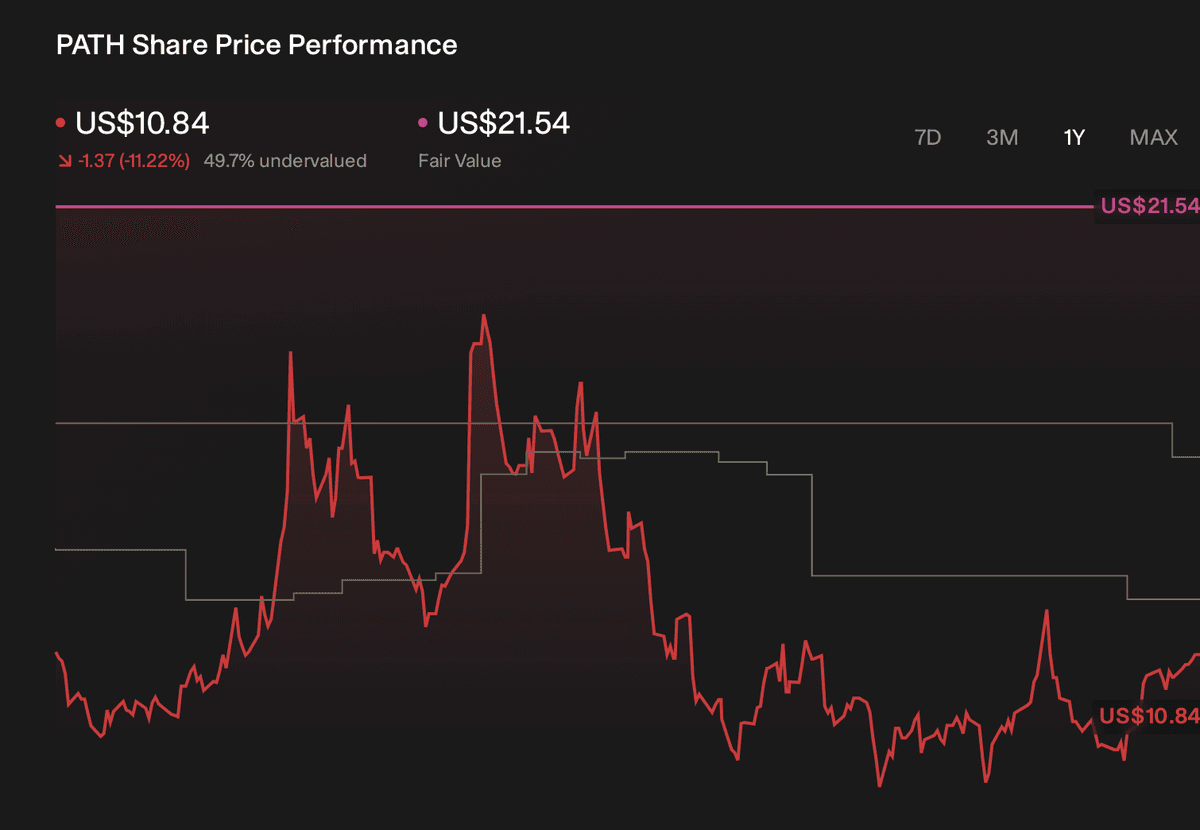
UiPath shares fell 10.8% this week after OpenAI unveiled Presence, a new AI agent deployment platform targeting enterprise automation workflows. The announcement intensified investor concerns about competition in a market where UiPath has established itself as a coordination layer between traditional software bots and emerging AI agents.
The sell-off reflects immediate market anxiety rather than a fundamental shift in UiPath's competitive position. The company's Maestro platform distinguishes itself by orchestrating both AI agents and legacy robotic process automation (RPA) bots while maintaining model agnosticism—meaning it can work with AI models from multiple providers rather than locking customers into a single ecosystem.
Platform Differentiation and Strategic Positioning
UiPath recently launched Maestro Case, an AI-native case management capability designed to handle long-running, exception-heavy processes that require human oversight and governance. This extends the platform beyond simple, rules-based automation into complex workflows where judgment calls and compliance matter.
The strategic bet is that enterprises will need a unified platform to manage both structured automation tasks and more sophisticated AI agent interactions across their operations. This positioning aims to prevent UiPath from being relegated to simpler back-office automation as AI agents handle more complex work.
Financial Outlook and Analyst Expectations
UiPath's investment narrative projects $2.1 billion in revenue and $287.5 million in earnings by 2029, requiring 8.1% annual revenue growth. However, this forecast anticipates an earnings decline from the current $327.4 million—a $39.9 million decrease that reflects ongoing platform investment costs.
Some analysts had projected more aggressive targets of approximately $2.2 billion in revenue and $516.8 million in earnings, but the OpenAI Presence launch has prompted reassessment of those bullish assumptions. Fair value estimates for the stock center around $13.31, suggesting roughly 23% upside from current trading levels.
Why it matters
The market's reaction to OpenAI Presence highlights a critical inflection point in enterprise automation: whether companies will adopt specialized AI agent platforms from frontier model providers or prefer orchestration layers that coordinate multiple automation technologies. UiPath's near-term performance will depend less on headline competition and more on execution around annual recurring revenue growth and customer adoption of its agentic capabilities. The bigger risk remains enterprise budget caution and deal timing rather than immediate displacement by new entrants.
These details were first reported by Simply Wall St in their analysis of UiPath's competitive positioning following the OpenAI announcement.
This is an original analysis by the Omega editorial team. Source reporting: Automation Watch.
Want systems like this working for your business?
Book a Call
