Agentic AI Reaches Industrial Scale at Service Desks and Factories
Automation Anywhere's billion-request milestone and new self-programming robots from Yaskawa and KUKA mark a shift from pilot projects to production deployments.

Agentic AI Reaches Industrial Scale at Service Desks and Factories
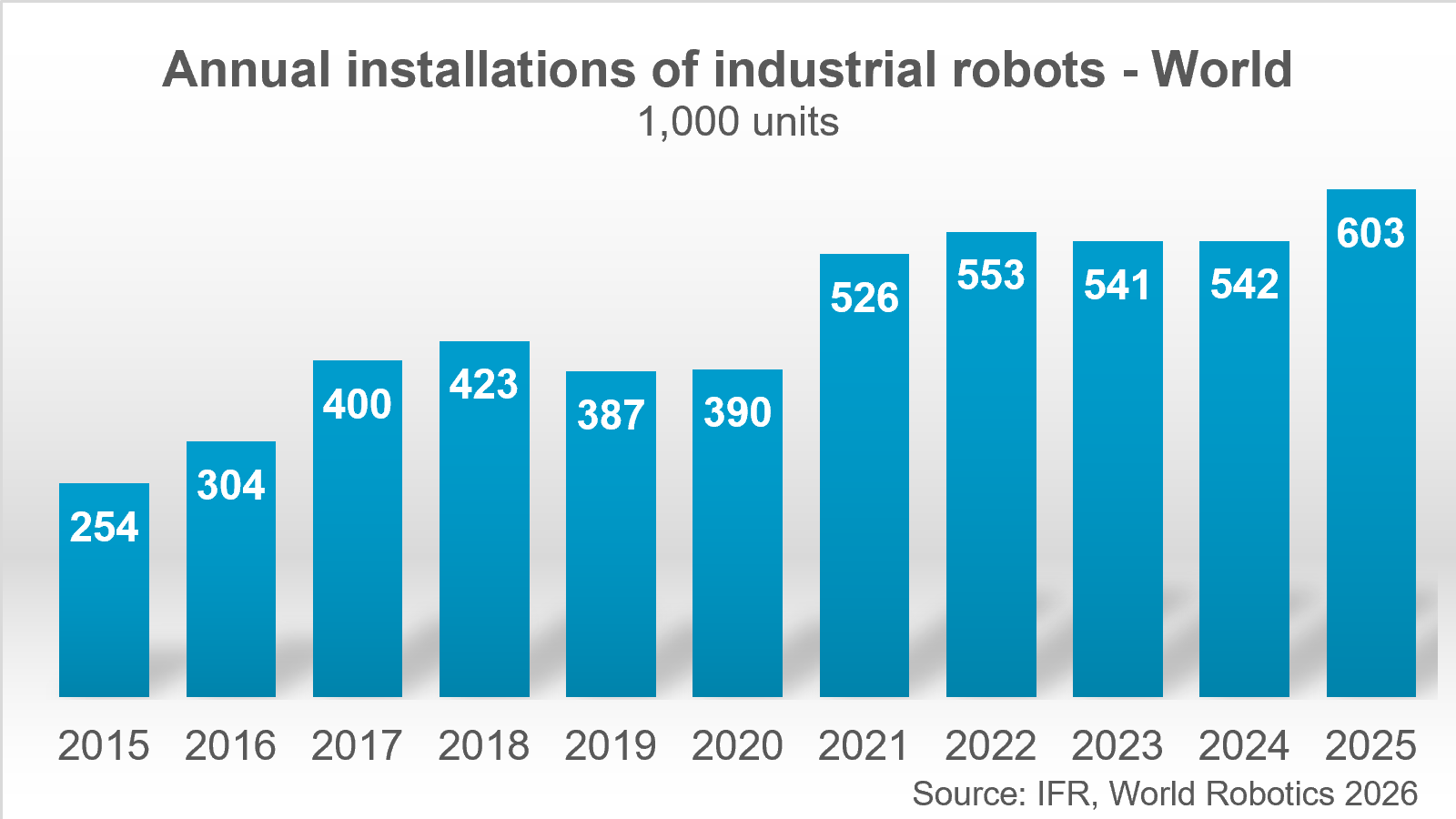
Agentic artificial intelligence has moved from experimental deployment to operational infrastructure across enterprise IT and manufacturing environments. Three major announcements in early July demonstrate the technology's maturation: Automation Anywhere disclosed that its Autonomous Service Desk has processed more than one billion IT service requests with an average auto-resolution rate exceeding 80 percent, Yaskawa Electric introduced a robot that writes and executes its own work procedures using Google DeepMind's Gemini, and KUKA released an operating system designed to unify collaborative robot fleets across production lines.
The convergence of these developments signals that AI agents have transitioned from research concepts to production assets requiring procurement decisions and governance frameworks from operations leaders.
Why it matters
The 80-percent auto-resolution benchmark across more than a billion service requests establishes a new performance baseline for enterprise automation platforms. Organizations evaluating service desk solutions now have documented metrics to use as minimum thresholds rather than aspirational targets. Meanwhile, self-programming industrial robots address the reprogramming costs that have historically limited flexible automation in high-variability manufacturing environments.
Enterprise service desk automation hits billion-request milestone
Automation Anywhere reported first-quarter fiscal 2027 results showing double-digit growth in Annual Recurring Revenue, total revenue, and Current Remaining Performance Obligations, according to details first reported by MarketScale. The number of enterprise customers carrying more than one million dollars in ARR grew 25 percent year over year, while ARR from that cohort increased 27 percent—indicating customers are expanding platform use into additional business functions beyond initial deployments.
A large consulting firm using the Autonomous Service Desk platform achieved auto-resolution rates above 80 percent, improved productivity by more than 70 percent, and projected nearly two million dollars in cost savings without expanding service desk headcount. Separately, Oasis Investment, part of the Al Shirawi Group, deployed Automation Anywhere's Autonomous Finance solution to centralize workflows across 52 companies, improving governance and auditability as transaction volumes scaled.
Research from DeskDay cited in the announcement found that 87 percent of managed service providers plan to increase AI investments, expecting service desk automation to reduce ticket volumes by 40 to 60 percent. This creates pressure for IT procurement teams to shift from seat-license pricing models to outcome-based contracts—a structure Automation Anywhere is already executing, including what the company described as the largest outcome-based transaction in its history during the first quarter.
Self-programming robots and unified operating systems arrive on factory floors
Yaskawa Electric has developed a robot integrating Google DeepMind's Gemini that assesses on-site conditions, assembles work procedures, and executes them without requiring a programmer to code responses to variability. The system reasons about observed conditions and adapts independently—a meaningful operational distinction from conventional industrial robots that require manual reprogramming when conditions change.
KUKA expanded its LBR iisy collaborative robot line with the iiQKA.OS2 operating system, designed to enable flexible automation across diverse production environments. A unified operating system across cobot fleets reduces the integration overhead that often emerges after purchase orders are signed, when disparate controllers and software versions turn straightforward deployments into extended integration projects.
Mitsubishi Electric is combining predictive maintenance, deterministic networking, and machine vision to advance connected manufacturing capabilities, with particular relevance for quality-sensitive production lines where latency in defect detection carries direct cost implications.
Edge computing fills infrastructure gaps in legacy facilities
Several hardware announcements address facilities lacking network infrastructure for real-time cloud data transmission. Igus released its i.Cee² industrial edge module for data acquisition and condition monitoring, designed to bypass traditional digital infrastructure complexity. The platform targets manufacturers with aging equipment that generates useful condition data but cannot easily connect to enterprise IoT platforms without significant IT involvement.
Aetina extended its NVIDIA Jetson Thor portfolio with support for new Jetson T3000 and T2000 modules, with upcoming DeviceEdge AIE-KT and fanless AIE-PT systems designed for robotics and industrial edge applications where power efficiency and form factor constrain compute hardware installation.
NEC Corporation, working with Keio University, developed an AI system that generates detailed 3D models in one minute from standard smartphone footage. The capability enables maintenance and facilities teams to update 3D site models for as-built documentation and change verification without specialized scanning hardware.
These developments were first reported by MarketScale's Automation International coverage.
This is an original analysis by the Omega editorial team. Source reporting: Automation Watch.
Want systems like this working for your business?
Book a Call