Sanders Bill Would Ban Artificial Superintelligence
Proposed legislation would create federal AI oversight agency and halt advanced development until safety rules exist.

Lawmakers propose sweeping AI restrictions
Sen. Bernie Sanders and Rep. Greg Casar have introduced legislation that would permanently ban artificial superintelligence in the United States and establish a new federal agency to regulate advanced AI systems, according to details first reported by The Associated Press.
The bill defines artificial superintelligence as any system that exceeds human cognitive ability or possesses sufficient capabilities to plan and execute actions that could destroy or disempower humanity. Under the proposed law, development of such systems would be prohibited outright.
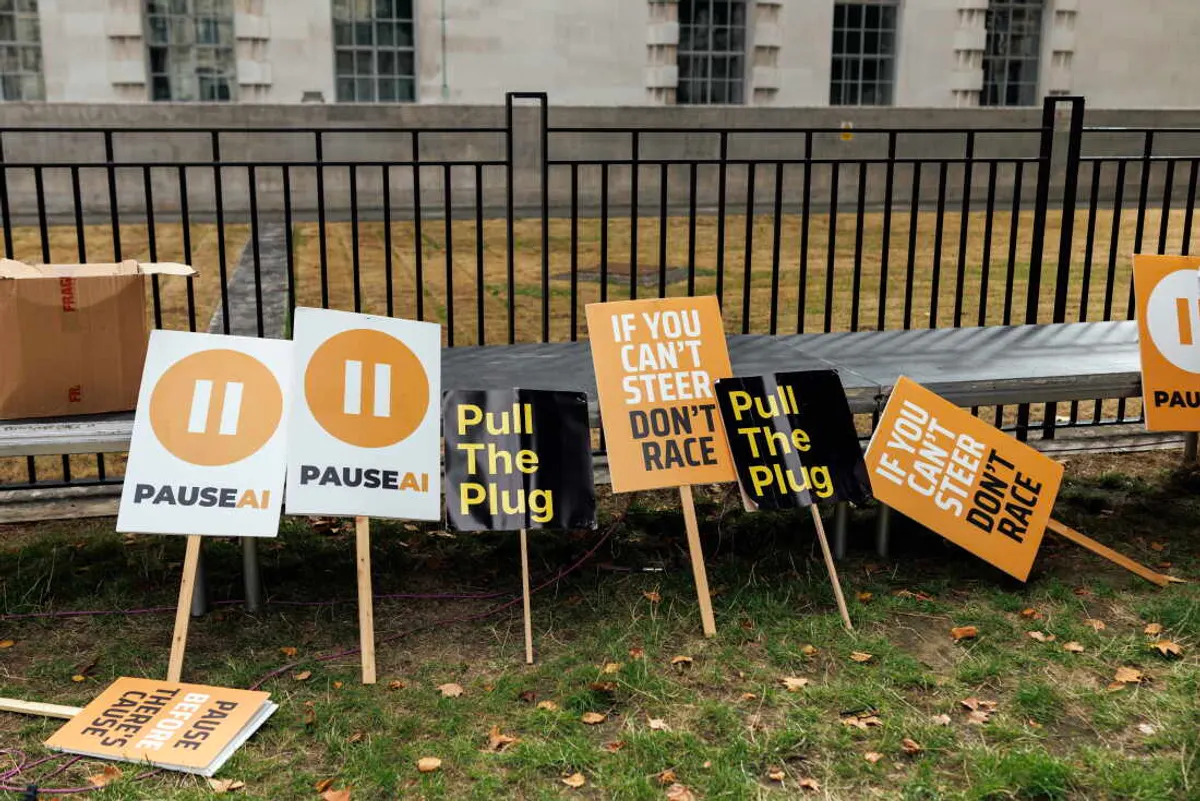
The legislation would also impose a temporary pause on all advanced AI development until the newly created Department of Artificial Intelligence establishes federal safety guidelines. Once those rules are in place, advanced AI systems would require federal approval before deployment. Violations could result in penalties including up to 20 years in prison.
Why it matters
This represents the most aggressive regulatory proposal yet from Congress on AI, coming as industry leaders themselves warn about catastrophic risks while the Trump administration resists oversight. The bill exposes a fundamental tension in AI policy: whether to slow development for safety or maintain pace with international competitors, particularly China. With AI expected to feature prominently in the 2028 presidential campaign, how lawmakers approach these trade-offs will shape both technological development and political coalitions.
Support from inside AI companies
Multiple employees at leading AI firms have endorsed the legislation. Juan Felipe Cerón Uribe, a researcher in OpenAI's Safety Systems, stated that "superintelligence could either go extremely right or extremely wrong" and that "we shouldn't be playing such games."
Swante Scholz, a software engineer at Google DeepMind speaking in his personal capacity, said the current development path makes "an existential catastrophe for humanity" the "most likely outcome." He called a superintelligence ban "a positive change for the foreseeable future."
Long odds in Congress
The bill faces steep challenges in the Republican-controlled Congress, where lawmakers have struggled to pass even modest AI regulations. President Trump has actively opposed greater government oversight of AI, putting him at odds with prominent tech leaders including Anthropic's Dario Amodei, OpenAI's Sam Altman, and xAI's Elon Musk.
In an interview, Sanders dismissed concerns about slowing U.S. development while China advances. He compared the situation to Cold War nuclear arms control, noting that "Ronald Reagan, arch-conservative, was smart enough to understand that he had to sit down with Gorbachev, a communist, and work out a nuclear treaty that protected humanity."
Growing public concern
Public anxiety about AI's environmental impact has increased significantly. A recent poll from The Associated Press-NORC Center for Public Affairs Research found that 53% of Americans are now "extremely" or "very" concerned about artificial intelligence's environmental impacts, up from 41% the previous year. Democrats are driving much of this increase, though concerns about data centers' local impacts span party lines.
The legislation offers insight into how the progressive wing of the Democratic Party is positioning itself on AI regulation ahead of the 2028 presidential race. Casar, who chairs the Congressional Progressive Caucus, is co-sponsoring the measure with Sanders, an 85-year-old two-time presidential candidate who has made AI a focus in recent months.
The Associated Press first reported details of the proposed legislation.
This is an original analysis by the Omega editorial team. Source reporting: AI Watch.
Want systems like this working for your business?
Book a Call