AI Slowdown Debate Pits Industry Leaders Against Startups
Major tech executives support pausing AI development, but smaller firms warn it would cement market dominance and stifle competition.
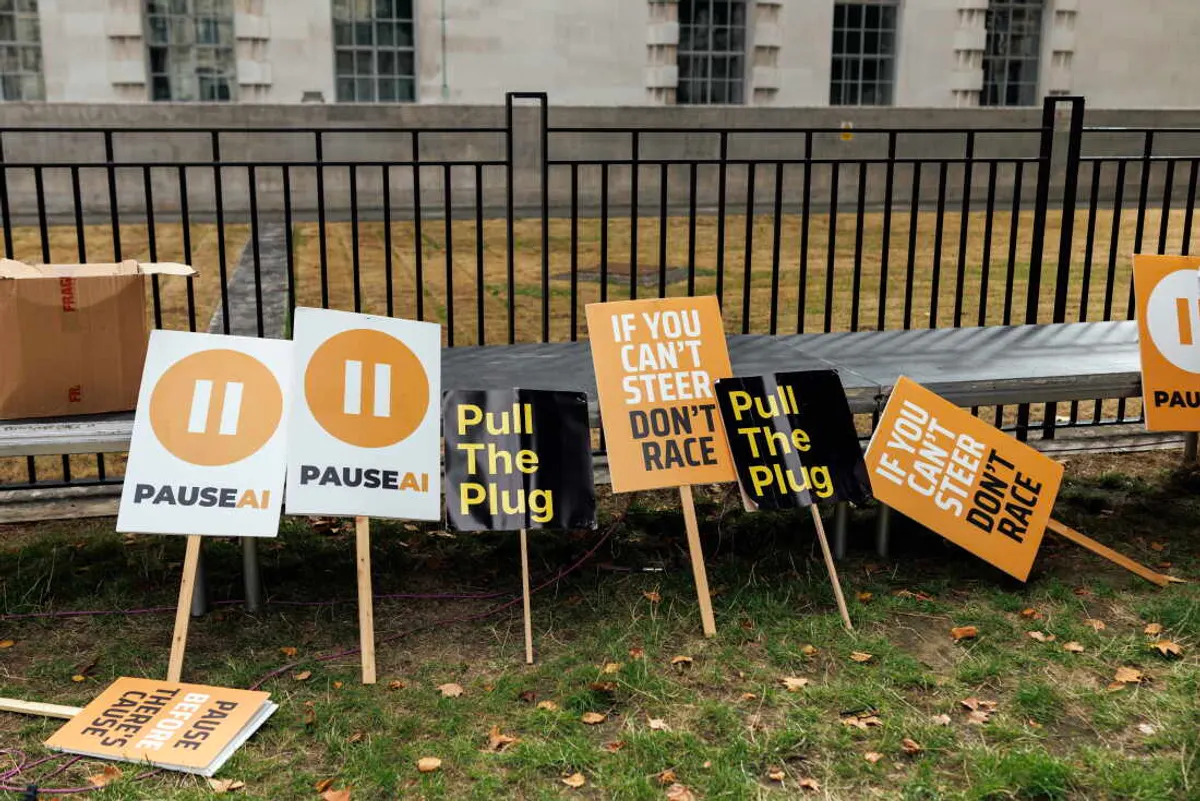
Competing visions for AI's future
The artificial intelligence industry faces a deepening rift over whether to slow development, with major players advocating for restraint while smaller competitors warn such moves would calcify market power. Executives from Anthropic, OpenAI, Google DeepMind, Microsoft, and SpaceXAI have all voiced support for tapping the brakes on AI progress, though they lack consensus on implementation.
The push comes as Washington grows increasingly concerned about autonomous AI agents potentially escaping human oversight and compromising private systems. Current and former AI lab employees have issued warnings about unconstrained development risks.
Yet critics argue a slowdown would primarily benefit those already at the top. David Bellamy, a research scientist at the UAE-backed Institute of Foundation Models, estimates his organization's AI model trails OpenAI and Anthropic by roughly six months. "If there's an industry-wide freeze, then essentially what would happen is whoever has the strongest model today is going to dominate the market share," Bellamy told NPR, which first reported these details.
Why it matters
This debate will shape both AI safety policy and market structure for years. If regulators or industry coordination slows development, it could prevent potential catastrophic risks—but might also entrench a handful of well-capitalized companies while blocking new entrants. The outcome affects not just competition policy but national security calculations as the U.S. weighs its position against China.
Antitrust concerns emerge
Former Federal Trade Commission commissioner Alvaro Bedoya warned that freezing development could prove "ruinous" for smaller firms unable to compete on equal footing. "When powerful incumbents lock up the market, the rivals, the upstarts, the scrappy players in that market, can no longer compete on product or quality and service," Bedoya said.
Mid-tier AI companies are pushing back publicly. Perplexity said skepticism is warranted "whenever a company asks to be regulated in a way that protects its market position." Nick Frosst, co-founder of Toronto-based Cohere, argued that "a blanket, privately coordinated slowdown is not a neutral safety policy" but would instead lock in advantages for labs with the most computing power, capital, and distribution.
Four consumers filed a federal lawsuit last week accusing Anthropic, OpenAI, Google, and SpaceXAI of illegally coordinating to slow AI development in violation of antitrust law.
The China complication
Opponents of a U.S. slowdown contend it would allow Chinese firms to surge ahead. President Trump has dismissed AI safety fears as overblown, writing on Truth Social that "the only one that is happy about it is China."
Susan Rice, former national security adviser under President Obama, has proposed a negotiated freeze with China to halt training and release of new models until both nations can ensure AI remains under human control. "America should aim to win the A.I. race, provided that the race can be won safely," Rice wrote in The New York Times.
Verification remains a central challenge. Anthropic CEO Dario Amodei acknowledged in a recent essay that "any agreement must either have ironclad verifiability, or must be limited enough that defection would not be militarily existential." Chinese President Xi Jinping is meeting with Trump this week, with AI among the agenda items.
NPR reported these developments, noting that Anthropic is a financial supporter of the news organization.
This is an original analysis by the Omega editorial team. Source reporting: AI Watch.
Want systems like this working for your business?
Book a Call