Rockwell Automation Debuts FactoryTalk Orchestration Software
New platform coordinates material flow and production processes across factory floors, delivering 70% space efficiency gains in pilot deployment.
Rockwell Automation Debuts FactoryTalk Orchestration Software
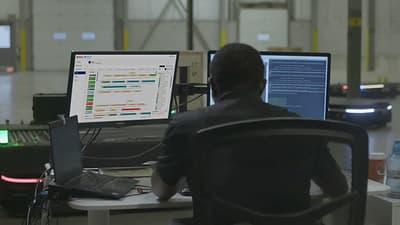
Rockwell Automation unveiled FactoryTalk Orchestration software at the Automate trade show in Chicago, introducing a platform designed to coordinate material flow and production processes across manufacturing operations. The solution connects automated equipment, OTTO autonomous mobile robots (AMRs), and enterprise systems through real-time production signals.
Built on Rockwell's FactoryTalk Optix platform, the software aims to standardize connectivity across the company's automation portfolio. The platform enables manufacturers to move beyond deploying isolated automation technologies toward integrated, coordinated operations that respond dynamically to production demands.
Pilot Results Show Significant Space Savings
Rockwell tested the software at its Twinsburg, Ohio manufacturing facility, where the platform enabled autonomous operations across key production processes. The deployment improved drop-off zone space utilization by 70% and reduced overall material handling space requirements by 50%.
Following these results, Rockwell plans to expand FactoryTalk Orchestration to additional manufacturing sites worldwide. The company demonstrated the software live at Automate alongside Emulate3D digital twin software and OTTO AMRs.
Why it matters
As manufacturers increase investments in robotics and automation, the challenge shifts from implementing individual technologies to orchestrating them as unified systems. Fragmented automation creates bottlenecks and inefficiencies that limit return on investment. Coordination software that connects machines, material handling, and production processes addresses a critical gap—enabling manufacturers to extract greater value from existing automation investments while improving responsiveness to demand changes and operational disruptions.
Coordinating Automated Operations
According to Ara Surenian, Production Logistics Business Manager at Rockwell Automation, the software addresses an emerging manufacturing priority. "As manufacturers continue investing in automation and robotics, the opportunity is shifting from deploying individual technologies to coordinating them across the operation," Surenian stated.
The platform is designed to help manufacturers improve throughput, reduce bottlenecks, and respond faster to disruptions. By connecting machines, material handling systems, and production processes into a unified operation, the software enables real-time orchestration that simplifies factory floor management.
Rockwell Automation, headquartered in Milwaukee, Wisconsin, employs approximately 26,000 people across more than 100 countries. The company positions itself as a global leader in industrial automation and digital transformation.
These details were first reported by Rockwell Automation in a company announcement.
This is an original analysis by the Omega editorial team. Source reporting: Automation Watch.
Want systems like this working for your business?
Book a Call