AI Workflows Transform Plant Floors From Rule Followers to Decision Makers
Intelligent automation layers machine learning and agentic reasoning onto industrial systems, enabling real-time adaptation that traditional programmable controllers cannot match.
From fixed sequences to adaptive intelligence
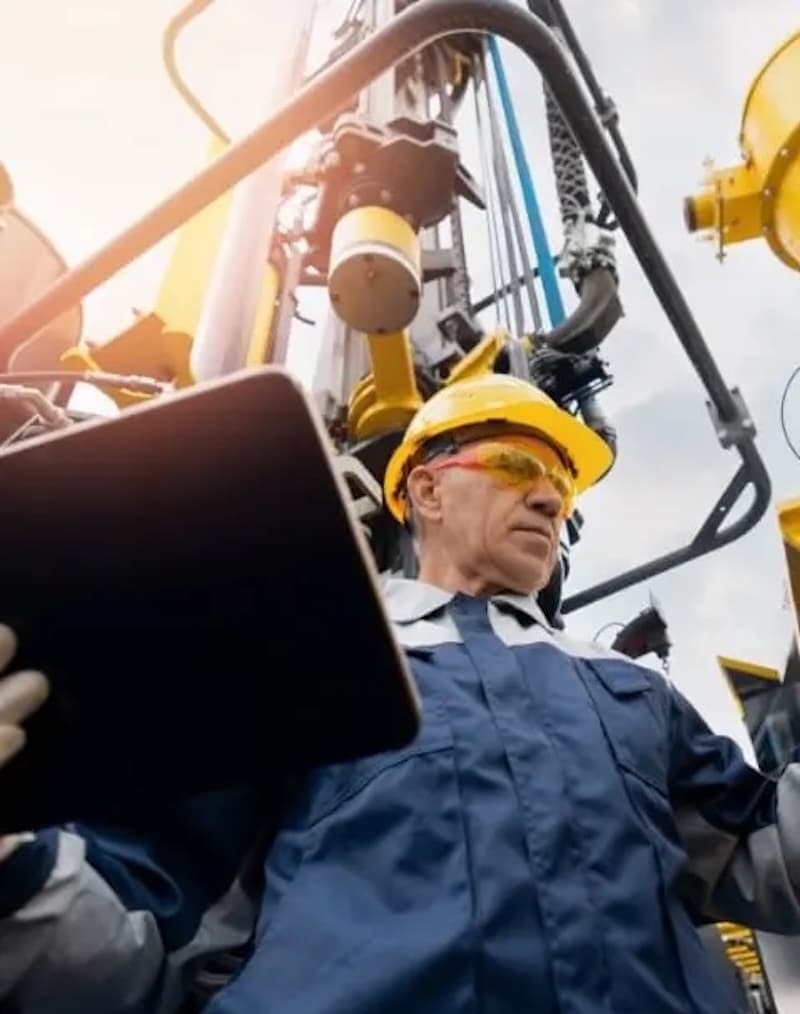
For generations, factory automation meant programming machines to execute the same sequence with precision and speed. A robotic welder hit its marks, conveyors ran at set speeds, and programmable logic controllers followed rules an engineer coded months prior. That approach built the industrial economy, but it cannot handle the variable, judgment-intensive work that still dominates manufacturing environments.
Intelligent automation changes the equation by adding perception and reasoning to mechanical capability. Instead of following a fixed script, these systems combine computer vision, machine learning, and predictive analytics to sense conditions and respond. A production line adjusts parameters when sensors detect drift. A quality station learns new defect patterns. A scheduling system reroutes work when a supplier shipment runs late. The machinery remains familiar; the intelligence layered on top represents the shift.
Robotics & Automation News reports this evolution marks a fundamental transition from conventional rule-based systems toward self-optimizing platforms capable of retrieval, reasoning, and autonomous decision-making.
Where the business case proves itself
Predictive maintenance delivers the clearest returns. AI models analyze vibration, temperature, and performance data to forecast equipment failures before they occur. Industry data shows maintenance costs drop 25 to 30 percent while unplanned downtime falls 35 to 45 percent. For plants where an hour of unscheduled stoppage carries six-figure costs, those numbers command board-level attention.
Quality control follows closely. AI-powered vision systems catch defects early, when fixes cost pennies instead of dollars, and eliminate the waste from discovering problems three production steps too late. The pattern holds across use cases: the intelligence surrounding machines often generates more value than the machines themselves.
Convergence creates the platform
Intelligent automation rarely arrives as a standalone product. It emerges when connected sensors, machine learning, and physical automation converge into a unified system. IoT devices supply continuous data streams—every temperature reading, cycle time, and energy draw. AI layers convert that data into forecasts and decisions. Robotics execute the actions. When these three elements function as one, a plant stops behaving like a collection of independent machines and starts operating as a responsive system.
This convergence also reshapes production economics. Traditional mass manufacturing optimized for making millions of identical units. Adaptive intelligent lines make personalized or small-batch output economically viable at scales that previously required mass production, because systems reconfigure themselves rather than waiting for human retooling.
Agentic AI raises the stakes
The newest development involves agentic AI—systems that plan and execute multi-step processes with minimal human intervention. Rather than simply flagging an impending machine failure, an agent schedules the maintenance window, orders replacement parts, reroutes production around the affected cell, and notifies supervisors while documenting its reasoning at each step. This represents automation that manages workflows, not just motions.
That capability demands rigorous governance. Agents acting autonomously on plant floors need clear boundaries, human oversight for high-consequence decisions, and auditable logs of actions and rationale. Leading manufacturers build these disciplines from the start, treating trust and safety as design requirements rather than afterthoughts.
Why it matters
Intelligent automation represents a fundamental shift in what production systems can do economically. The ability to adapt in real time, learn from operational data, and execute complex workflows autonomously enables manufacturers to compete on flexibility and reliability simultaneously—a combination traditional automation could not deliver. For industries where downtime costs are measured in millions per hour, the business case for AI-driven decision-making on the plant floor has moved from experimental to essential.
Starting focused, scaling deliberately
Successful deployments avoid sprawling "smart factory" programs that promise everything and deliver pilots that never scale. The proven approach targets one production line or asset class, focuses on a metric with obvious cost impact—unplanned downtime, scrap rate, energy consumption—and demonstrates ROI there. A focused win builds the data foundation, internal capabilities, and executive confidence needed to expand.
The challenge extends beyond technology. Operators must trust system recommendations, maintenance teams need new skills, and leadership must communicate the transformation clearly to internal and external stakeholders. The manufacturers who succeed will be those who deploy with focus, govern with discipline, and treat intelligence—not just automation—as the objective.
These details were first reported by Robotics & Automation News.
This is an original analysis by the Omega editorial team. Source reporting: Automation Watch.
Want systems like this working for your business?
Book a Call