U.S. Job Cuts Drop 46% as AI-Driven Tech Layoffs Continue
July marked the lowest monthly layoff total in two years, while hiring plans jumped 25% year-over-year despite ongoing workforce restructuring.
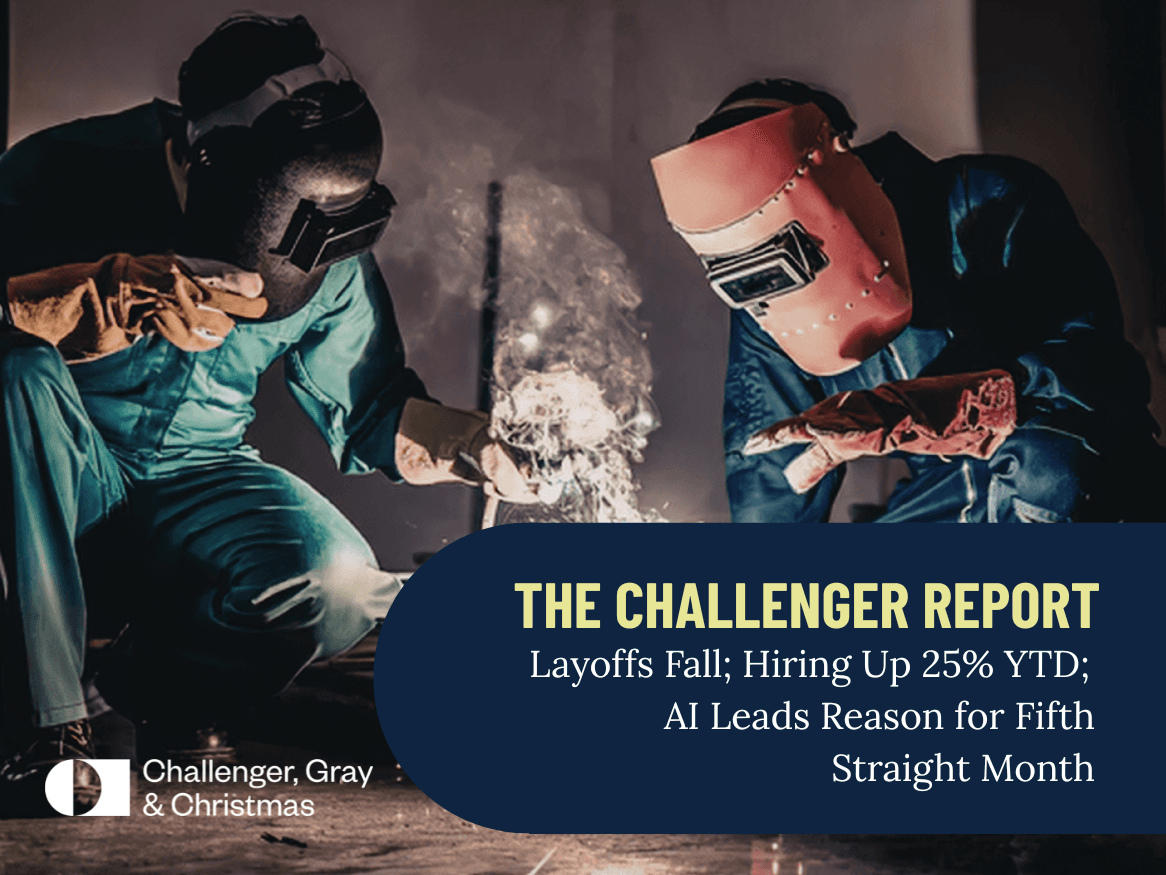
Layoff announcements hit two-year low
U.S. employers announced 33,429 job cuts in July 2026, representing a 46% decline from the 62,075 cuts announced in July 2025 and marking the lowest monthly total in two years, according to data released by Challenger, Gray & Christmas. The figure also represents a 27% drop from June's 45,849 announced cuts.
Through the first seven months of 2026, employers have announced 477,033 job cuts, down 41% from the 806,383 cuts announced during the same period in 2025. This marks the fifth consecutive month where cuts fell below the corresponding month from the previous year.
Technology sector drives AI-related workforce changes
The technology sector continued to lead all industries in job cut announcements, with 9,867 cuts in July bringing the year-to-date total to 149,023—a 67% increase from the 89,251 cuts announced through July 2025. Technology now accounts for 31% of all job cuts announced this year.
Artificial intelligence remained the leading reason cited for job cuts for the fifth consecutive month. Employers attributed 10,970 cuts to AI in July alone, representing 33% of the month's total. For 2026 through July, AI has been cited in 112,713 job cut announcements, approximately 24% of all cuts. Since Challenger began tracking AI as a distinct category in 2023, it has been cited in 184,538 job cut announcements.
"Tech remains the center of gravity for this year's cuts, and AI is still the reason companies give," said Andy Challenger, chief revenue officer for Challenger, Gray & Christmas.
Why it matters
The data reveals a complex labor market transformation where AI-driven efficiency gains are reshaping workforces primarily in technology, yet overall employment disruption is declining and hiring is accelerating. This suggests organizations are becoming more strategic about workforce restructuring rather than conducting broad layoffs, with job growth concentrated in manufacturing, aerospace, and energy sectors where physical presence remains essential. The 25% increase in hiring plans signals that AI adoption is reconfiguring rather than eliminating employment opportunities.
Tracking AI's impact grows more complex
The attribution of job cuts to AI has become increasingly ambiguous. Visa announced a 7% workforce reduction explicitly tied to AI-driven efficiency initiatives. However, a Bronx hospital system's elimination of 12 nursing positions after adopting Datavant software sparked dispute—union representatives characterized it as AI replacement while hospital leadership disputed that framing. Challenger categorized these cuts as "Technological Update (possibly AI)," a designation used when AI is implied but not directly confirmed. This category accounted for 20,219 cuts in 2025.
"Naming AI in a layoff announcement can win over investors while pushing current and prospective employees away," Challenger noted. "As regulations start to take shape, companies will be even more careful in their announcements, which would make tracking the impact of AI on jobs more opaque."
Hiring accelerates across manufacturing sectors
Employers announced plans to hire 16,095 workers in July, up 47% from June and substantially above the 3,200 announced in July 2025. Year-to-date hiring plans reached 107,500 workers, up 25% from the 86,132 plans announced through July 2025.
Aerospace and defense led hiring announcements in July with 4,625 positions, followed by technology with 2,470 and automotive with 2,068. For the full year through July, technology leads with 17,231 announced hires, followed by automotive with 14,704 and aerospace/defense with 12,516.
"Employers are hiring more than they were at this point last year, which bucks the trend we've seen since 2020," said Challenger. "The demand is showing up in aerospace, energy, and manufacturing, work that happens on a floor rather than a screen."
The details were first reported by Challenger, Gray & Christmas in their monthly job cut report.
This is an original analysis by the Omega editorial team. Source reporting: AI Watch.
Want systems like this working for your business?
Book a Call