PTC Adds Natural Language to CAD Automation Workflows
The shift from scripting to voice-driven commands raises new questions about governance, validation, and who can trigger production changes.
PTC Adds Natural Language to CAD Automation Workflows
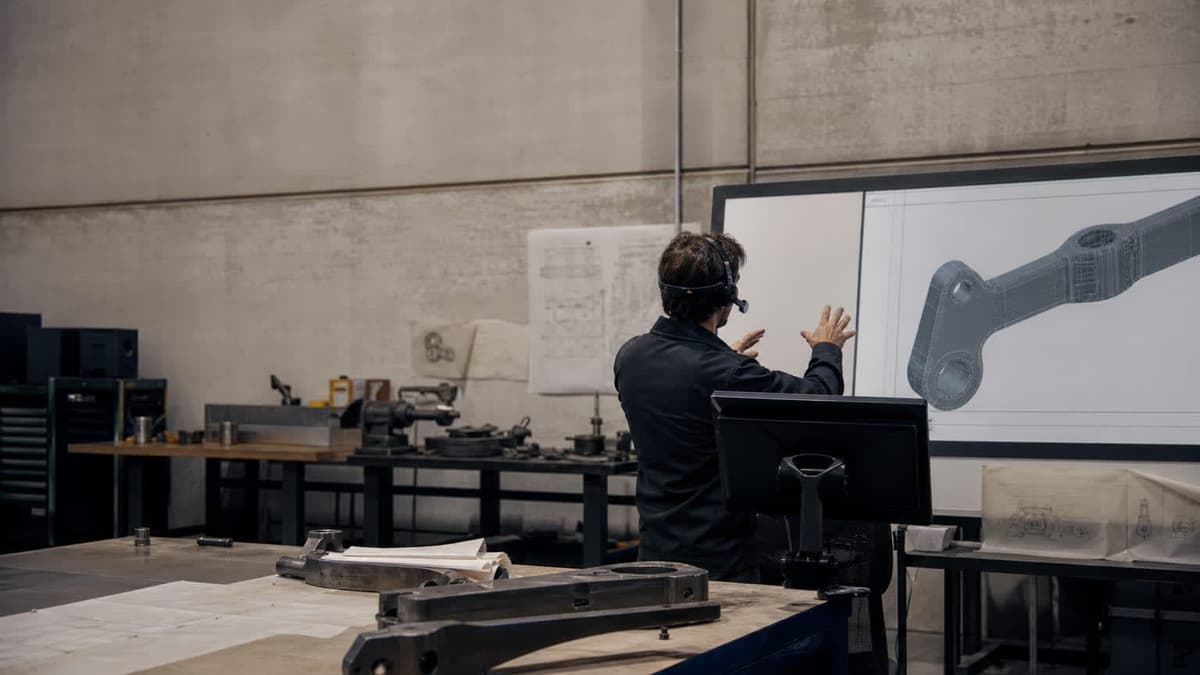
PTC is integrating natural language processing directly into its CAD automation infrastructure, moving beyond assistive text generation to enable engineers to create reusable automation scripts through conversational commands. According to Automation International, the company is connecting language models to proprietary programming structures within its cloud-based design ecosystem, allowing outputs that map to sanctioned automation objects rather than one-off code snippets.
The operational significance lies in the word "reusable." Once automation scripts become shared production assets rather than individual productivity tools, they require the same lifecycle controls as any engineering standard: versioning, access management, validation protocols, and clear ownership chains.
Why it matters
Natural language interfaces compress the distance between intent and execution, which means less time to catch problematic changes before they reach production systems. For organizations with tightly controlled CAD-to-PLM handoffs, AI-generated scripts that alter metadata, naming conventions, or export parameters can create downstream variation even when model geometry remains unchanged. The challenge shifts from "can we do this" to "how do we govern it."
Voice interfaces are setting new expectations
Parallel developments in consumer hardware are normalizing voice as a primary control surface. TechCrunch reporter Theresa Loconsolo covered Sandbar, a maker of AI wearable rings designed around voice capture. These devices record spoken input and generate meeting summaries and action items, training users to expect voice-initiated workflows.
For manufacturing engineering leaders, the pattern is clear: workers increasingly expect to capture observations verbally and have them converted into structured work. In environments where engineers move between meetings, line-side troubleshooting, and design changes, "open the CAD tool and write the macro" loses to "state the intent, then review the output."
Three governance controls that matter now
Once natural language can generate CAD automation, three operational controls become critical:
Script provenance: Can the system record that a script was AI-generated, which model version was used, and what prompt produced it? Audit trails become essential when investigating downstream issues.
Change management: Does the organization have a defined promotion path—personal workspace to team repository to validated production library—with clear approvals and rollback procedures?
Scope guardrails: Can scripts be constrained to approved operations so natural-language requests cannot inadvertently access sensitive parameters or external integrations?
Automation International notes that PTC's approach aims to make generated automation structurally compatible with its platforms, but compatibility does not eliminate the need for local controls.
Treating AI-generated scripts as software supply chain artifacts
Even when automation lives inside a vendor's cloud ecosystem, generated scripts function as software artifacts that can alter downstream systems. Engineering operations teams should apply existing software governance playbooks: code review, signing, testing environments, and monitoring.
For organizations with coupled CAD-to-PLM workflows, the immediate planning step is deciding where AI-generated automation can run. Pilot programs in non-production libraries allow validation of repeatability before promoting scripts to standard libraries that affect production handoffs.
Procurement teams will also need to address these capabilities in contract language, seeking clarity on data handling, tenant isolation, and administrative controls for enabling or disabling natural language features by group or project.
Questions for CAD renewal discussions
Engineering operations leaders should ask vendors:
- Where can admins enforce review and approval before a natural-language-generated script becomes reusable across teams, and what logging supports audits?
- What rollback mechanisms exist if a script changes metadata or export behavior and causes PLM issues?
- If voice capture becomes an automation entry point, will inputs route through enterprise transcription and identity layers, or allow device-level capture that may fall outside retention policies?
- Which teams can generate automation scripts, and is access enforced through role-based controls or project boundaries?
Details of PTC's natural language CAD integration were first reported by Automation International. TechCrunch's coverage of Sandbar and voice-first wearables provided context on the broader shift in user interface expectations.
This is an original analysis by the Omega editorial team. Source reporting: Automation Watch.
Want systems like this working for your business?
Book a Call