Potato Industry Turns to Automation Amid Labor Shortages
Optical sorting and autonomous equipment are reshaping operations, but experienced workers remain essential for managing integrated systems.
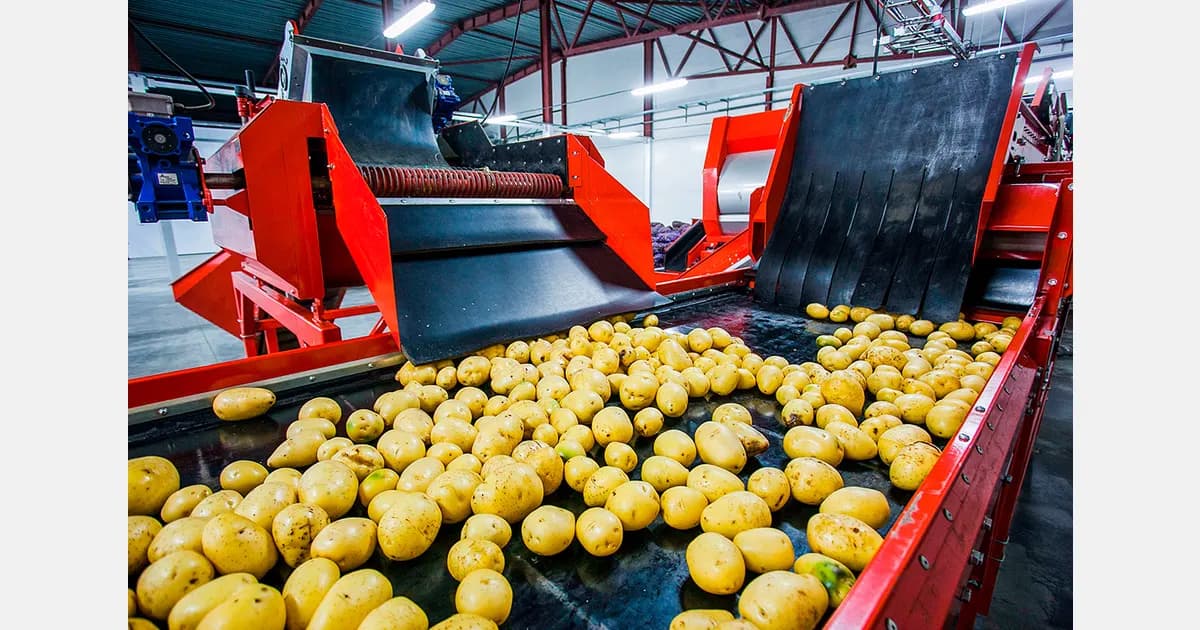
Labor constraints reshape potato operations
The global potato industry is accelerating investment in automation technologies as labor shortages intensify across production and processing operations. Optical sorting systems, autonomous field equipment, connected sensors, and data-driven processing lines are moving into roles that traditionally required human judgment, according to a report from Automation Watch.
While potato production already relies heavily on mechanized planters, harvesters, and grading systems, the current wave of automation targets more nuanced tasks including defect detection, quality grading, storage management, and real-time equipment adjustment.
Optical sorting delivers measurable gains
Camera-based systems using laser, near-infrared, and other sensor technologies now assess color, shape, size, surface condition, and foreign material contamination. AI models classify defects according to predetermined specifications, reducing reliance on manual inspection.
Flikweert Vision reported in August 2026 that some operations using its QualityGrader system achieved processing capacity increases between 10 and 20 percent. The company noted that actual results vary based on line design, crop condition, defect types, system settings, maintenance protocols, and the quality of training data.
Field autonomy faces complexity
Harvesting automation presents greater technical challenges due to variable field conditions. Soil composition, moisture levels, stones, slopes, vine density, tuber depth, and weather can shift dramatically within a single field. The industry is pursuing supervised autonomy as a near-term solution, where equipment handles routine controls while operators monitor performance and manage exceptions.
Storage facilities are integrating temperature, humidity, carbon dioxide, airflow, refrigeration, and remote monitoring into unified control systems. Processing plants are deploying automated production lines alongside predictive maintenance tools, machine vision inspection, and digital dashboards that provide real-time operational visibility.
Why it matters
This automation shift fundamentally changes workforce requirements rather than simply eliminating jobs. Operations need fewer workers for repetitive manual tasks but face growing demand for electrical and mechanical technicians, automation specialists, data analysts, and process engineers capable of managing integrated systems. The transition creates a skills gap that threatens to limit automation benefits if not addressed through targeted workforce development.
Institutional knowledge remains critical
Experienced employees continue to provide value that automated systems cannot yet replicate. Workers often identify equipment problems by sound, recognize subtle changes in crop behavior, or understand how storage conditions affect final quality. Combining this institutional knowledge with digital skills becomes essential for successful automation deployment.
For smaller growers and packers, investment decisions hinge on labor costs, throughput requirements, downtime risks, rejection rates, equipment utilization, financing availability, and access to technical support. Cooperative ownership, machinery sharing arrangements, mobile equipment, and contract services offer alternatives to full individual capital investment.
The details were first reported by Automation Watch, which noted that the evolving potato operation will likely employ fewer workers in manual roles while increasing demand for personnel capable of monitoring automated systems and managing exceptions that fall outside programmed parameters.
This is an original analysis by the Omega editorial team. Source reporting: Automation Watch.
Want systems like this working for your business?
Book a Call
