Port of New Orleans deploys AI to route oversized cargo
Digital twins and predictive modeling aim to speed logistics for wind turbines and data center equipment, but US maritime adoption remains cautious.
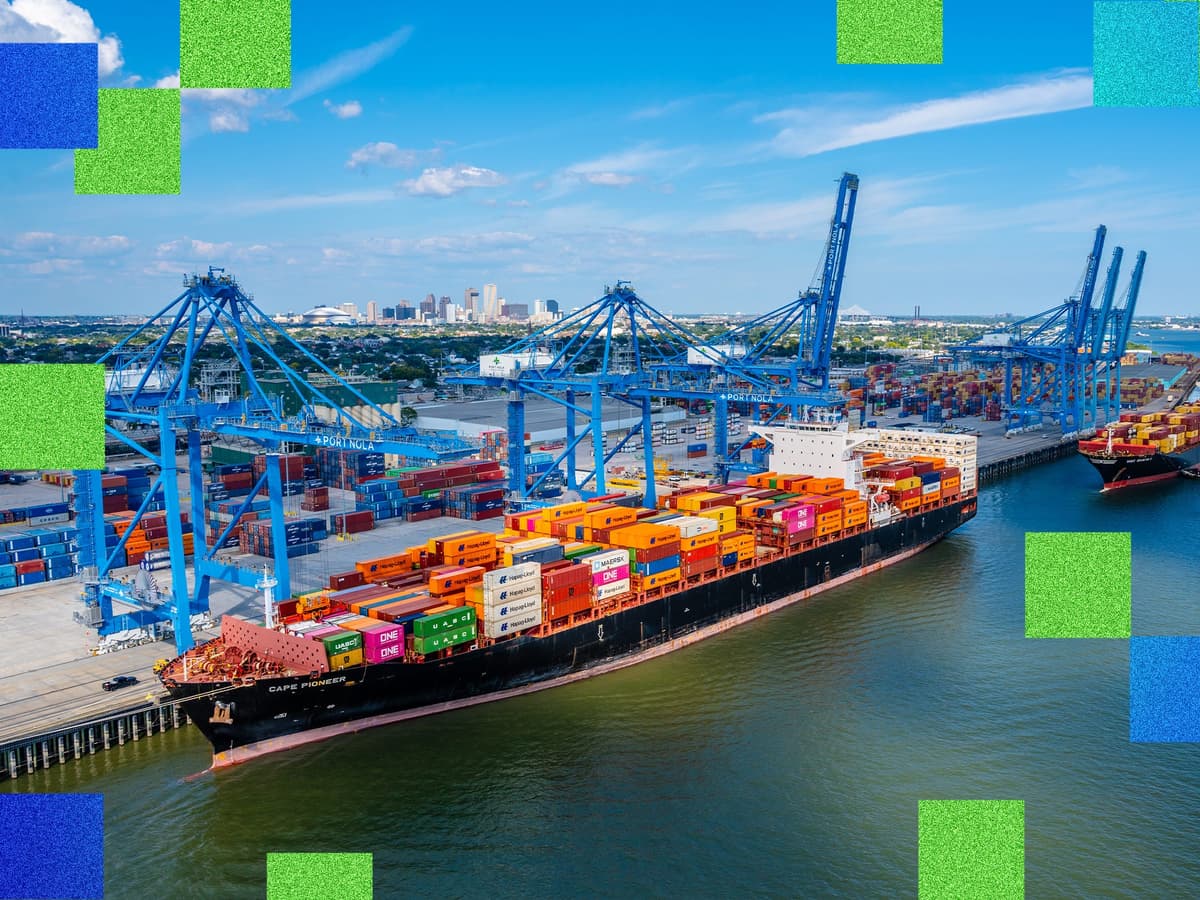
The Port of New Orleans has launched an AI system to manage the complex logistics of moving oversized industrial cargo—including wind turbine components and data center equipment—through inland rail networks.
The port partnered with the New Orleans Public Belt Railroad and logistics firm UTC Transoceanic in late May to deploy technology that uses digital twins and predictive modeling to assess whether massive shipments can safely travel specific routes. The system accounts for real-time variables such as temperature-induced shifts in railroad tracks, a factor recognized by the Federal Railroad Administration.
"The primary benefit is speed and certainty," said Kimberly Curth, Port NOLA's press secretary, in an interview with Business Insider.
Once operational, importers will input cargo dimensions and weight into the application. The AI compares those specifications against a digital model of the rail network to identify potential obstacles—bridge clearance heights, weight limits, or physical restrictions—and can suggest alternative routes when necessary.
Why it matters
Oversized cargo movements traditionally require weeks or months of engineering studies and coordination across multiple railroads. AI-powered route planning could compress that timeline to near-instantaneous assessments, potentially accelerating infrastructure projects and supply chain throughput. However, the technology's impact will depend on how quickly a historically risk-averse industry can integrate new systems across fragmented stakeholder networks.
Limited adoption across US ports
While other facilities are experimenting—the Port of Corpus Christi uses AI for vessel tracking, the Port of Los Angeles enhanced its truck appointment system, and Georgia Ports Authority is testing facial recognition for truck drivers—real-world deployments remain sparse.
Lauren Beagen, founder of The Maritime Professor and former project manager at Massachusetts Port Authority, said ports are "quietly testing" AI but haven't reached broad adoption across port communities.
The slow pace reflects deep-rooted caution. "Ports and terminals have never been risk takers," said Rene Alvarenga, vice president of products and AI at Kaleris, which provides terminal operating systems to 80 percent of global terminals. Cybersecurity concerns drive most terminals to maintain on-premise networks, complicating integration of cloud-based AI tools.
Maritime transportation's status as critical infrastructure adds another constraint: terminals can't afford extended downtime for software overhauls. Alvarenga estimates the sector lags other industries in AI adoption by roughly five years, with many operators still running systems from the late 2010s—before generative AI existed.
Fragmented systems create barriers
Amir Hoss, founder of gate automation provider EAIGLE, pointed to structural challenges beyond technology. Cargo ships, marine terminals, railroads, trucking companies, and chassis operators each maintain separate tech systems and data practices, creating friction at every handoff point. "It's arguably a bigger barrier than the technology itself," Hoss said.
Despite obstacles, use cases are emerging. Some port employees use ChatGPT or Claude for administrative tasks like email and invoicing, while terminals have added chatbots for container status inquiries, according to Beagen and Alvarenga.
Terminal operators are increasingly interested in AI copilots that could answer operational questions in natural language—such as how to reduce gate congestion—rather than requiring workers to search through technical manuals. Alvarenga predicts such applications will materialize at US terminals within three years.
At the Port of New Orleans, Curth emphasized that AI will support rather than replace human decision-making. Railroad personnel and logistics professionals will continue applying their judgment to oversized cargo movements. "The strongest applications combine advanced technology with human expertise," she said.
These details were first reported by Business Insider.
This is an original analysis by the Omega editorial team. Source reporting: AI Watch.
Want systems like this working for your business?
Book a Call
