Polyfunctional Robots to Reach 30% of Factory Workers by 2030
Gartner research shows adaptable, multi-task robots will reshape industrial operations faster than humanoid alternatives.
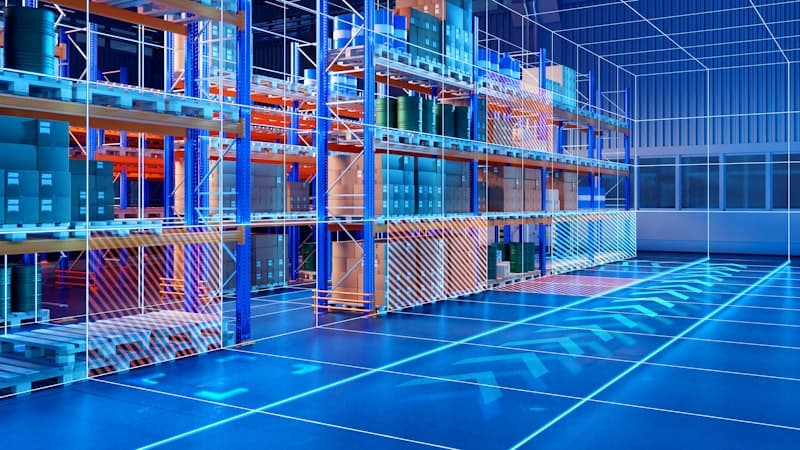
The shift from single-purpose to adaptable automation
The robotics conversation in manufacturing and warehousing has fixated on humanoid machines that mimic human form. But the more consequential development involves robots defined by functional flexibility rather than physical appearance. Polyfunctional robots—machines capable of performing multiple tasks through reprogramming and direct instruction—represent a practical path to automation in facilities built around human workers.
Gartner research indicates that by 2030, 30% of factory workers will engage with polyfunctional robots in live production environments, a sharp increase from less than 5% today. This projection signals a fundamental change in how industrial facilities approach automation, particularly in brownfield operations where redesigning workflows around fixed robotic systems proves costly or impractical.
Why it matters
Most existing warehouses and factories were designed for human workers, with narrow aisles, variable congestion patterns, and workstations that resist traditional fixed automation. Polyfunctional robots offer a way to introduce meaningful automation without wholesale facility redesigns, addressing labor constraints while preserving operational flexibility during demand fluctuations.
AI enables real-world adaptability
Advanced artificial intelligence capabilities make this flexibility possible. Multimodal sensor fusion improves how robots interpret physical environments, from identifying shelf locations to manipulating varied parts safely near human workers. Generative AI foundation models, including vision-language-action architectures, help robots plan movement in changing conditions. Natural language interfaces reduce the programming expertise required to instruct these machines.
In practice, a single robot might transport empty totes during peak shipping hours, support production line replenishment when order volume drops, and conduct area inspections between shifts. As physical AI capabilities mature, the same unit could learn related tasks through demonstration and refine performance using operational data.
Starting with process, not hardware
Successful deployment begins with workflow analysis rather than technology selection. Organizations should identify processes that are predictable, physically demanding, and difficult to staff consistently. A tote-recycling operation with part sequencing between fixed locations may serve as a better initial candidate than complex picking workflows with high product variation.
Leaders should also document how experienced workers handle operational variability—rerouting around congestion, pausing tasks when other teams need dock access. This operational knowledge defines what future robots must sense, decide, and escalate to human supervisors.
Digital twins can test deployment assumptions before physical implementation. Workforce planning deserves equal attention, as polyfunctional robots require supervisors and maintenance technicians who understand robotic workflows. Often the strongest candidates already work on the floor.
Timeline and business considerations
Fully capable polyfunctional robots that handle any operational task remain years away. Gartner analysis suggests the industry needs at least six to eight years to achieve the dexterity and intelligence required for broad self-learning capabilities, though this timeline may accelerate.
The business case requires discipline beyond falling hardware costs and robotics-as-a-service models. Organizations must account for maintenance, software updates, and integration with existing warehouse and manufacturing systems. Robots that perform well in controlled demonstrations may struggle with damaged packaging, crowded aisles, or last-minute work order changes.
Meaningful early gains will come from targeted deployments where AI-enabled perception and cognition reduce friction in daily operations. Organizations that map workflows, strengthen operational data collection, and test practical use cases now will be positioned to scale as the technology matures.
These details were first reported by Gartner Inc. in Supply & Demand Chain Executive.
This is an original analysis by the Omega editorial team. Source reporting: Automation Watch.
Want systems like this working for your business?
Book a Call
