Pentagon AI Data Center Plans Face Congressional Pushback
Lawmakers debate security restrictions and environmental impacts as Defense Department opens military land to private developers.
Congressional restrictions target foreign components
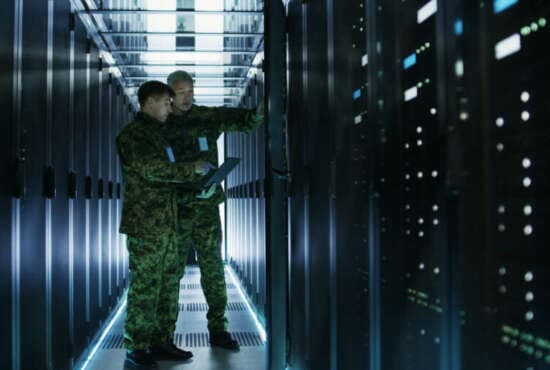
The Defense Department's strategy to lease military land for commercial AI data centers is encountering significant resistance in Congress. A provision advancing through the fiscal 2027 defense authorization bill would prohibit companies from installing data center equipment containing components manufactured by U.S. adversaries on DoD property, according to Federal News Network.
Rep. Cory Mills (R-Fla.) secured the amendment's inclusion in the House Armed Services Committee version, which passed this week. The measure targets printed circuit boards, advanced semiconductors, chipsets, and other components the Pentagon considers national security risks.
Army warns of investment flight
The Army has raised concerns that the proposed restrictions would create what it calls a "federal land penalty"—imposing requirements on military installation projects that wouldn't apply to similar facilities built on private land. The service argues this would establish an "unworkable standard" that could drive away commercial partners and more than $1.3 billion in private investment.
The stakes are substantial. The Army has already contracted with Carlyle Group to build a major data center at Fort Bliss, Texas, with initial operations expected in fiscal 2027. A second project at Dugway Proving Ground in Utah involves CyrusOne, owned jointly by KKR and BlackRock.
The Air Force is similarly opening unused land across five bases to private data center developers.
Environmental and community concerns mount
House appropriators have directed the defense secretary to assess data center projects' impacts before construction begins, citing strain on energy and water resources and community resistance. The assessment must examine energy grid demands, water usage, environmental effects, physical security implications, and cumulative community impacts.
Rep. Rashida Tlaib (D-Mich.) introduced standalone legislation this week that would ban AI data center construction on all federal land, citing air quality and utility cost concerns in her district.
During committee debate, Rep. Derrick Van Orden (R-Wis.) defended military land use, arguing it would preserve farmland that would otherwise be converted to data centers. Rep. Mike Rogers (R-Ala.), the Armed Services Committee chairman, opposed restrictions as potentially impeding Army negotiations and undermining U.S. data infrastructure advantages.
Why it matters
The Pentagon's pivot to hosting commercial AI infrastructure on military property represents a significant shift in how the Defense Department approaches technology modernization. The congressional debate reveals fundamental tensions between national security imperatives, supply chain concerns, environmental stewardship, and the race for AI dominance. How Congress resolves these competing priorities will shape both military readiness and the broader trajectory of U.S. AI infrastructure development.
These details were first reported by Federal News Network.
This is an original analysis by the Omega editorial team. Source reporting: AI Watch.
Want systems like this working for your business?
Book a Call