Open Machine CEO Runs Company With 34 AI Agents for $200/Month
Allie K. Miller uses a hierarchical system of specialized AI agents to handle product management, client work, and workflow analysis—all within a standard subscription cost.
A corporate hierarchy staffed entirely by AI
Allie K. Miller, CEO of Open Machine, has built what may be the most elaborate AI workforce deployment in a commercial setting: 34 autonomous agents organized in a management structure that mirrors traditional corporate hierarchies. The system operates within a $200 monthly subscription budget, according to details Miller shared with Yahoo Finance.
At the top sits Simon, an AI chief of staff that manages six direct reports—each named after characters from the television show Friends and assigned specific functional areas. Rachel handles client work, Monica runs operations, Ross manages education, Joey oversees product development, Chandler leads marketing, and Phoebe explores creative possibilities. Beneath these six agents, task-specific AI workers handle granular execution.
The watchdog that watches the watchers
The most revealing element of Miller's system is the 34th agent: a dedicated watchdog whose sole function is analyzing the AI workforce itself. This agent monitors for errors, identifies friction points, tracks patterns in human feedback, and flags memory gaps across the system.
Miller describes this as fundamentally different from traditional hiring. Organizations can now deploy AI agents for roles that would never justify a full-time human salary—a research analyst tracking competitor activity, for instance, or a quality control specialist reviewing workflow patterns. If an agent delivers no value, it can be deactivated without severance or restructuring costs.
The architecture of autonomous work
Miller emphasizes that effective AI workforce management requires building systems around three core elements: goal-setting mechanisms, context integration, and continuous optimization. Her agents connect to YouTube for historical content analysis, desktop applications for work-in-progress visibility, email for producer communications, and external platforms like Reddit for trend monitoring.
The key, she argues, is that she manages only one agent directly—Simon—who coordinates the rest. This approach scales management capacity without creating bottlenecks, allowing a single human executive to oversee dozens of specialized AI workers.
Economics that change the calculation
Miller's company spends approximately $6,000 to $7,000 per human employee annually on AI tooling, with the entire 34-agent workforce fitting within standard subscription pricing. This cost structure enables experimentation with specialized roles that traditional economics would prohibit.
Why it matters
Miller's deployment demonstrates that AI agents can function in coordinated systems rather than as isolated tools. The hierarchical structure and dedicated quality-control agent suggest organizations may need to rethink not just individual job functions but entire operational architectures. The economics—enterprise-grade AI labor at consumer subscription prices—create pressure on traditional staffing models, particularly for roles involving research, analysis, and workflow coordination.
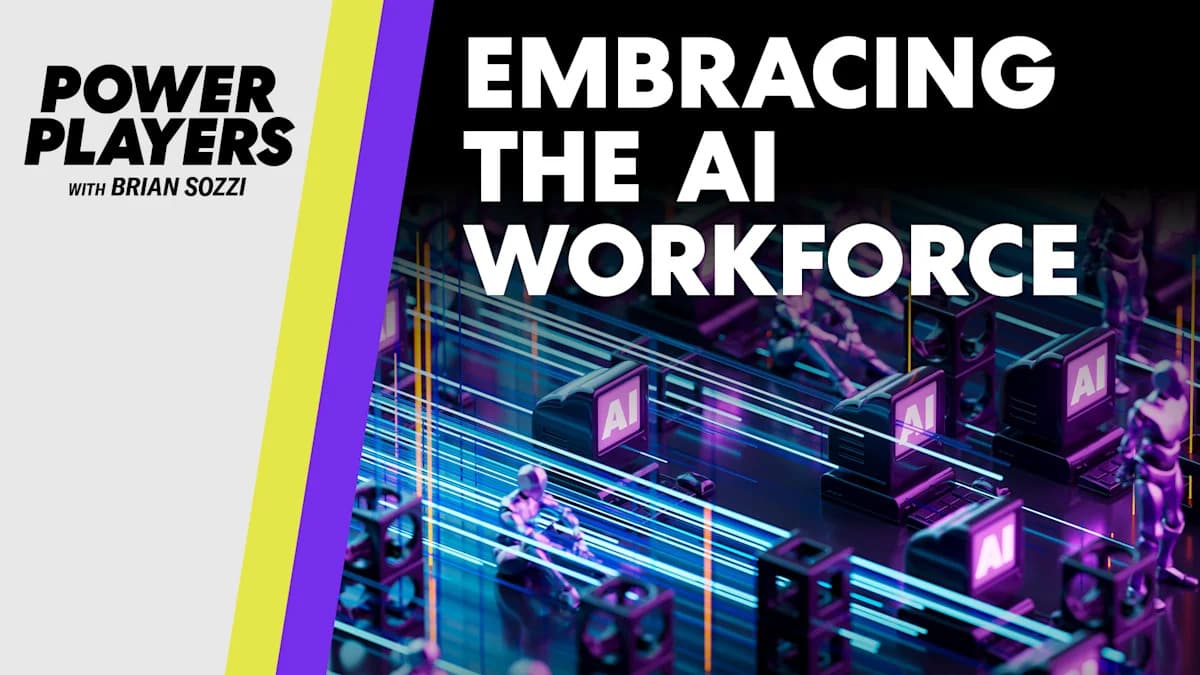
These details were first reported by Yahoo Finance in an interview with Executive Editor Brian Sozzi.
This is an original analysis by the Omega editorial team. Source reporting: AI Watch.
Want systems like this working for your business?
Book a Call