Oil Majors Deploy AI for Real-Time Artificial Lift Optimization
Chevron, ExxonMobil, and ConocoPhillips are moving beyond traditional surveillance to autonomous production systems that adjust well operations continuously.
Oil Majors Deploy AI for Real-Time Artificial Lift Optimization
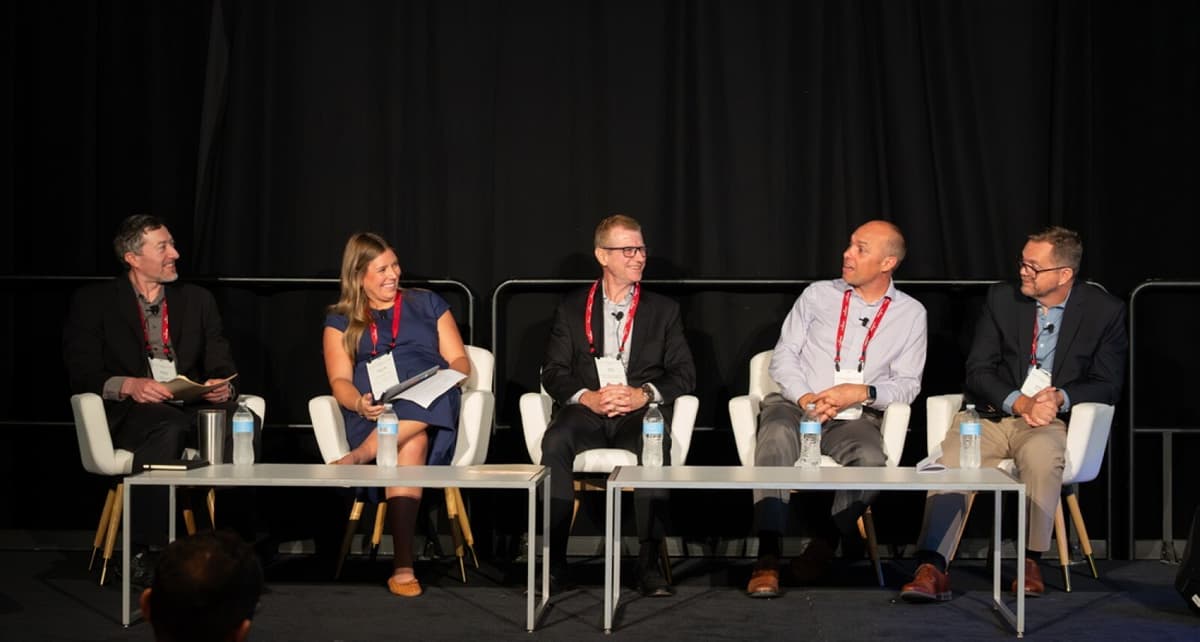
The oil and gas industry is shifting from reactive artificial lift management to autonomous optimization systems that can respond to changing field conditions faster than human engineers, according to executives speaking at the SPE Artificial Lift Conference and Exhibition in August.
Traditional workflows—where engineers review data, diagnose problems, and implement changes—cannot keep pace with dynamic reservoir conditions, equipment degradation, and interdependencies across production systems, said Peter Nesom, general manager for Chevron's Production Engineering Center of Excellence. By the time manual recommendations reach the field, conditions may have already shifted and optimization opportunities lost.
Why it matters
Artificial lift systems move the majority of global oil production to the surface, yet most still rely on periodic human intervention rather than continuous optimization. As operators manage thousands of wells simultaneously across complex, integrated facilities, the gap between potential and realized production value represents billions in lost revenue. AI-driven automation promises to close that gap while freeing engineers to focus on higher-value problem-solving.
Chevron's AI Assistant Manages 5,000 Wells
Chevron has deployed GEORGE—Generative Engineering, Orchestration, and Real-Time Operations Guidance Engine—across more than 5,000 wells. Nesom described the system as an intelligent digital assistant that partners with production engineers to handle analysis, optimization, and automation tasks across multiple problem types simultaneously.
The challenge, he explained, is combining deep engineering knowledge with the speed and persistence required to optimize interconnected production systems where every decision has downstream consequences.
ExxonMobil Rolls Out Closed-Loop ESP Control
ExxonMobil is implementing closed-loop electrical submersible pump control across its Permian Basin operations, according to Mark Agnew, chief wells and production engineer at ExxonMobil Technology & Engineering. The system performs approximately 20 checks and considers production facility constraints, separator limits, and other factors beyond individual well performance.
The closed-loop approach removes repetitive manual adjustments from engineers' workloads, Agnew said. The implementation has already produced measurable volume increases in the Permian. ExxonMobil is also applying machine learning to gas lift optimization in the basin.
ConocoPhillips Focuses on Failure Prevention
ConocoPhillips improved its gas lift processes by first addressing data quality, standardization, adoption, and governance before layering in artificial intelligence, said Jason White, the company's global production engineering chief. The AI systems now complete analyses far faster than human engineers.
White emphasized that preventing well failures—rather than simply responding to them—could save the industry substantial costs while maintaining production. He advocated keeping humans in the loop until AI tools prove trustworthy, but urged engineers to embrace available technologies or risk falling behind.
White noted that AI tools can handle routine tasks like email composition and note-taking, allowing engineers to focus on value creation rather than administrative work. "We're not in school anymore," he said. "Use the tools that are available to get the job done as quickly and efficiently as you can."
These details were first reported by the Journal of Petroleum Technology in coverage of the SPE Artificial Lift Conference.
This is an original analysis by the Omega editorial team. Source reporting: Automation Watch.
Want systems like this working for your business?
Book a Call