Nvidia Launches T3000 and T2000 Thor Modules for Edge Robotics
New compact AI compute modules target mass-market humanoid robots and autonomous machines with up to 865 teraflops in half the footprint of previous generation.
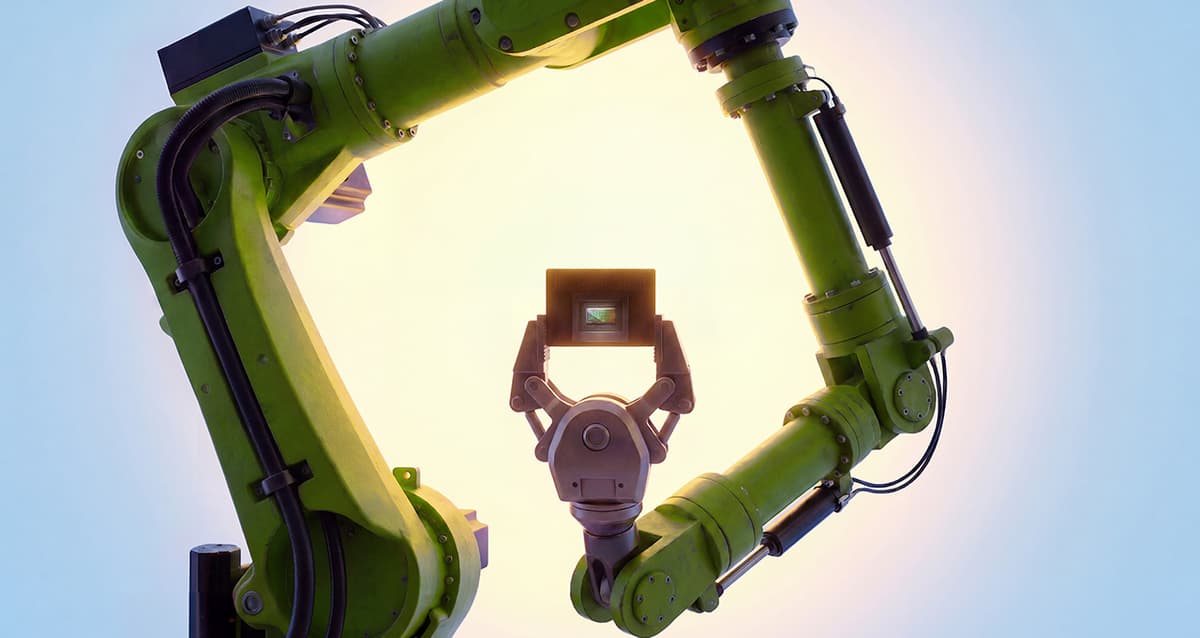
Nvidia has unveiled two new compute modules designed to accelerate the deployment of general-purpose robots and autonomous machines beyond research labs into commercial applications. The T3000 and T2000 modules, built on the company's Thor architecture, address the growing need for compact, power-efficient AI systems capable of running foundation models at the edge.
The hardware announcement comes as companies including 1X, Agile Robots, Amazon Robotics, Boston Dynamics, FANUC, Hitachi, and Techman Robot build on the Jetson AGX Thor platform for next-generation robotics systems.
T3000 Targets Humanoid Deployment
The Jetson and IGX T3000 modules deliver 865 FP4 teraflops of AI compute in a form factor roughly half the size and power consumption of the T5000. The module combines a Blackwell GPU, an eight-core Neoverse Arm CPU, 32GB of LPDDR5X memory with 273GB/s bandwidth, and 25 GbE connectivity.
Despite the reduced footprint, T3000 achieves comparable inference performance to T5000 for multimodal workloads including large language models, vision language models, vision language action models, and world foundation models. The IGX T3000 variant adds integrated functional safety features and supports the Halos for Robotics safety system for human-robot collaboration environments.
T2000 Expands Edge AI Access
The Jetson T2000 brings Thor architecture to a broader range of edge applications with 400 FP4 teraflops of compute and 16GB of memory. This entry-level option targets developers building visual AI agents, autonomous mobile robots, and industrial manipulators. With these additions, Nvidia's edge AI platform now spans from 70 TOPS to 2,000 teraflops.
Agent Skills Automate Memory Optimization
Nvidia introduced new agent skills that automate memory optimization across the Jetson portfolio, including Thor and Orin devices. The tools enable developers to achieve memory savings in days rather than weeks through automated software stack optimization.
Early adopters have reported substantial results. Humanoid robotics companies UBTech and Agile Robots reduced memory usage by up to 15GB, enabling migration from 64GB to 32GB modules. Smart retail provider SandStar cut memory requirements by 4GB, while intelligent transportation company NoTraffic achieved 30 percent memory reduction on Jetson TX2 NX.
Cosmos 3 Edge and Development Timeline
Nvidia expanded its Cosmos 3 world foundation model family with Cosmos 3 Edge, a 4-billion-parameter model optimized for Thor platforms. The model enables embodied systems to perform real-time vision analysis and on-device robot policy execution. Developers can post-train Cosmos 3 Edge for specific hardware and sensors in approximately one day.
Developers can begin work immediately using the Jetson AGX Thor developer kit in emulation mode. T3000 emulation support arrives later this month with JetPack 7.2.1, while T2000 emulation will follow in a future release. The physical T3000 and T2000 modules are scheduled for availability in the first quarter of 2027.
Why it matters
The shift from research prototypes to commercial robotics deployment requires compute platforms that balance performance with size, power, and cost constraints. By delivering flagship-level AI inference in a smaller, more efficient package, these modules address a critical bottleneck in scaling humanoid robots and autonomous systems for real-world applications. The automated memory optimization tools further reduce barriers by enabling developers to deploy on lower-cost hardware configurations without performance penalties.
These details were first reported by Nvidia in a company blog post.
This is an original analysis by the Omega editorial team. Source reporting: AI Watch.
Want systems like this working for your business?
Book a Call
