Modular Automation Reaches GMP Compliance in Pharma Production
A biopharmaceutical facility project demonstrates how Module Type Package standards can deliver plug-and-produce flexibility while meeting regulatory requirements.
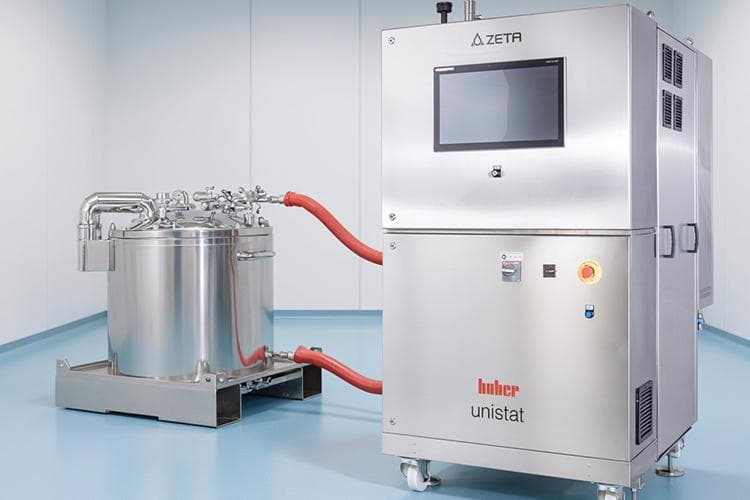
Pharmaceutical manufacturers face mounting pressure to adapt production lines quickly as therapies evolve, product lifecycles shorten, and demand fluctuates. Modular automation has long promised a solution, but implementing it within GMP-regulated environments has remained challenging—until now.
A recent biopharmaceutical facility project demonstrates that Module Type Package (MTP) standards can deliver genuine plug-and-produce capabilities while satisfying stringent regulatory requirements. The implementation reduced integration effort by up to 80% and completed module connection to the orchestration environment in approximately one hour.
Why it matters
Pharmaceutical production has historically required extensive custom engineering for each equipment addition, creating bottlenecks and vendor dependencies. Proving that standardized modular automation can meet GMP compliance requirements removes a major barrier to flexible manufacturing, potentially accelerating facility expansions and product changeovers across the industry.
How MTP Enables Plug-and-Produce
Module Type Package standardizes how process equipment integrates into higher-level automation systems through defined services and interfaces. This creates a common framework allowing modules from different suppliers to connect rapidly within a unified orchestration layer.
For pharmaceutical facilities, the benefits extend beyond speed. Manufacturers gain simplified plant expansion, consistent operator interfaces across equipment, standardized connections to manufacturing execution systems and historians, and reduced engineering dependencies between individual systems.
Bridging Standards and GMP Reality
The biopharmaceutical project involved integrating a Freeze & Thaw unit into a new production environment based on a Process Orchestration Layer. The system needed to function as an MTP-compliant Process Equipment Assembly while ensuring GMP compliance and long-term scalability.
ZETA developed the automation solution, covering process engineering, software development, commissioning, and qualification support. The FreezeController was designed as a modular unit with a CODESYS-based control system, standardized MTP interfaces, OPC UA communication, and ISA S88-based process logic for batch-oriented manufacturing.
The qualification strategy proved decisive. Rather than validating a largely customized automation application, the team employed standardized, prevalidated building blocks and tested the solution in advance within the orchestration environment. This approach supported classification as GAMP 5 Category 3 instead of Category 5, substantially reducing qualification complexity and effort.
Collaboration Across the Technology Stack
The project required close coordination among multiple technology partners. Turck provided a validated GMP-compliant control and function block library, while COPA-DATA supported orchestration and MTP validation through its zenon platform. Together, the partners translated evolving standards into a robust, compliant architecture.
Operators gained a harmonized interface across equipment, simplifying both training requirements and daily operations. The measurable results—one-hour module integration and 80% reduction in overall integration effort—demonstrate that modular automation has moved from concept to practical reality in GMP environments.
These details were first reported by Chemanager Online, which covered the project's implementation and outcomes.
This is an original analysis by the Omega editorial team. Source reporting: Automation Watch.
Want systems like this working for your business?
Book a Call
