Miso Robotics Acquires Zume Pizza IP to Expand Beyond Fry Stations
The Flippy maker is betting it can extract value from one of food robotics' most notorious failures by focusing on station-level automation instead of full restaurant concepts.
Miso bets on station-level approach
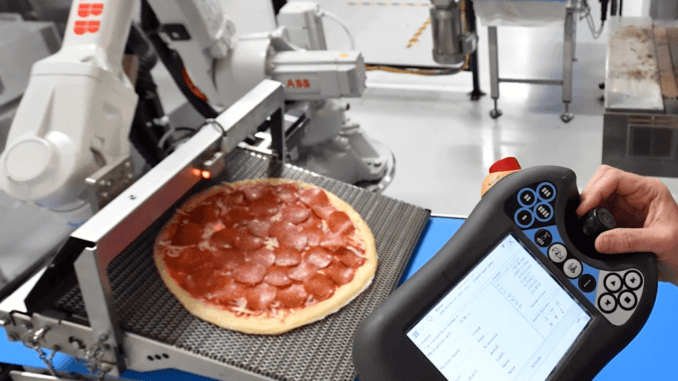
Miso Robotics, the Pasadena company known for its Flippy automated fry station, has acquired the technology assets and intellectual property of Zume Pizza, including hardware, software, and a patent portfolio spanning robotic food preparation, delivery, packaging, and sustainability. The transaction's financial terms were not disclosed.
The deal brings more than 300 patents into Miso's portfolio and represents a strategic bet that Zume's underlying technology can succeed when separated from the ambitious—and ultimately failed—business model that surrounded it. Zume, founded in 2015, once captured Silicon Valley's imagination with a concept combining robotic pizza production with mobile ovens that would bake pizzas in trucks during delivery. After raising hundreds of millions of dollars, including major backing from SoftBank, the company eventually shut down, becoming a cautionary tale of first-wave food robotics overreach.
Miso is not reviving Zume's mobile pizza concept. Instead, the company plans to apply the acquired technology to fixed-location kitchens, extending its automation platform beyond frying into pizza preparation while strengthening its intellectual property position in an increasingly competitive market.
Why it matters
This acquisition signals a maturation in restaurant robotics strategy. Rather than attempting to automate entire restaurant concepts—the approach that doomed many first-wave startups—companies like Miso are focusing on specific, high-friction kitchen stations where automation delivers measurable operational benefits. The deal also demonstrates how failed robotics ventures may still hold valuable technology when applied with greater operational discipline. For restaurant operators evaluating automation investments, the transaction suggests the market is shifting from novelty demonstrations toward practical, station-specific solutions that integrate with existing workflows.
Building a broader automation stack
The Zume acquisition follows Miso's recent purchase of Zignyl, an operations software company focused on restaurant insights and employee incentives. Combined with Zippy, Miso's AI-powered operations product, these deals point toward a strategy of owning more of the automation stack—from physical execution to workflow intelligence and performance data.
Miso has built its reputation on a narrower approach than many competitors. Flippy targets one of the most repetitive and physically demanding jobs in quick-service restaurants: the fry station. White Castle's early partnership helped prove the technology in production environments, while CaliExpress by Flippy later showcased a fully robotic restaurant concept combining kitchen automation with self-ordering and biometric payment.
The latest generation of Flippy has been redesigned for scale, with a smaller footprint and faster performance—refinements that matter as operators become less forgiving of technologies that look impressive in demonstrations but fail to fit existing kitchen constraints.
Pizza's automation challenge
Pizza represents both a logical target and one of the most unforgiving categories in food robotics. The category has standardized ingredients, repetitive assembly steps, and high order volumes, but multiple startups have struggled to commercialize pizza automation. The challenge extends beyond producing a technically acceptable pizza to fitting into existing kitchens, supporting different dough types and topping configurations, integrating with order flow, and justifying cost while maintaining reliability during peak periods.
The competitive landscape has evolved significantly. Sweetgreen's sale of its Spyce robotics subsidiary to Wonder for approximately $186 million reinforced that food robotics assets may hold more value when integrated into larger operating platforms than as standalone hardware startups. Other players like Aniai focus on automated grilling for high-volume operations, while Hyphen targets automated makelines for digital-order-heavy formats.
Second-wave pragmatism
Miso's advantage lies in its focus on high-friction kitchen stations where automation can be evaluated against clear operational metrics: labor savings, throughput, food quality, waste reduction, and worker safety. The patent portfolio may prove equally important, providing defensive positioning, licensing opportunities, and confidence for potential brand partners.
The acquisition should be viewed as part of the industry's second wave of automation—more pragmatic than the first, favoring companies that can commercialize narrow workflows, build support infrastructure, and demonstrate believable returns on investment. Miso now has the opportunity to prove that Zume's failure was about business model and timing rather than a verdict on every underlying technology the company developed.
These details were first reported by Restaurant Technology News.
This is an original analysis by the Omega editorial team. Source reporting: Automation Watch.
Want systems like this working for your business?
Book a Call