Miller Electric Launches AI-Powered Welding Robot for Variable Conditions
Copilot Builder with Blue iQ uses adaptive intelligence to handle part variation and fit-up inconsistencies that have kept many fabrication jobs manual.
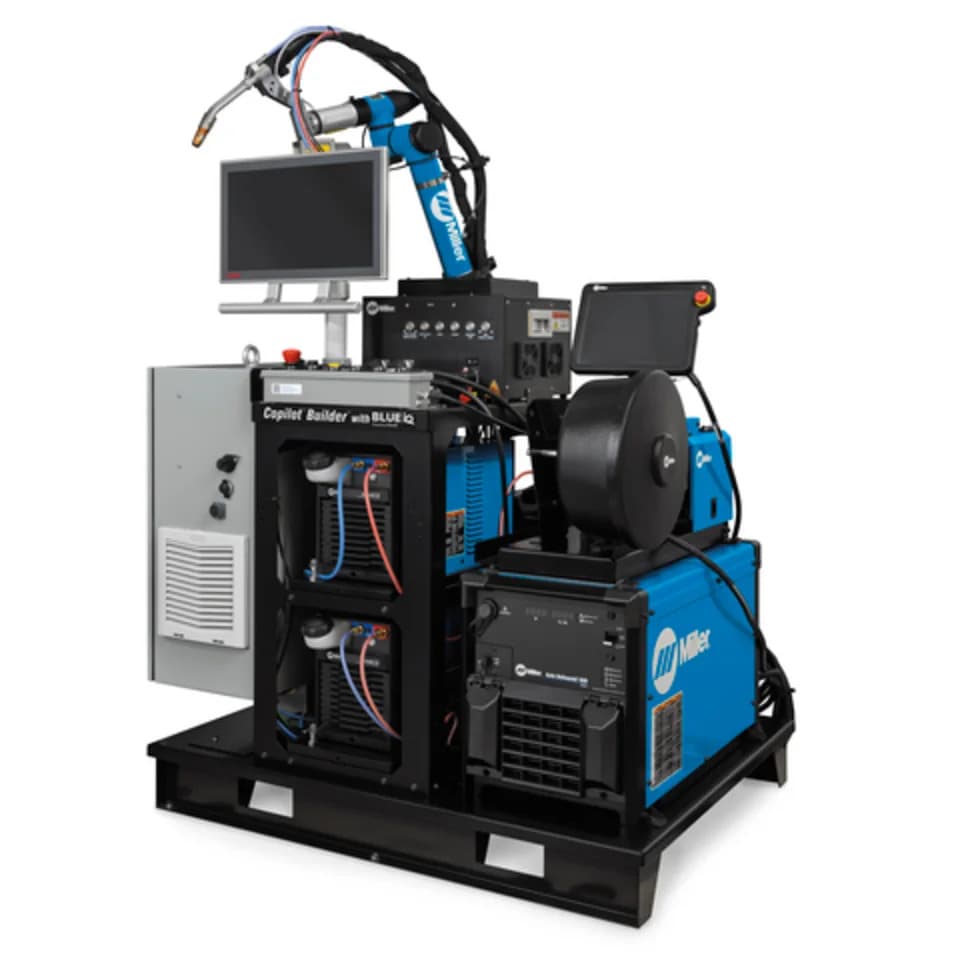
Miller Electric has introduced a welding automation system designed to handle the variability that has kept many fabrication applications out of reach for conventional robots.
The Copilot Builder with Blue iQ, announced in August 2026, incorporates NovAI™ technology from Novarc Technologies to adapt to changing weld conditions in real time. The system addresses challenges including part variation, inconsistent fit-up, tack welds, and the complexity of large-scale fabrications.
How adaptive intelligence changes the automation equation
Traditional robotic welding systems require predictable conditions and often demand extensive reprogramming or costly fixtures when parameters shift. The new platform takes a different approach by using AI-powered computer vision to perform real-time adaptive welding without prior joint scanning.
According to Sam Harvey, business unit director at Miller Electric, the system targets fabricators whose operations involve changing part fit-up, joint conditions, and production demands from job to job. The technology aims to expand the range of applications suitable for automation while preserving operational flexibility.
The system integrates with NovHub™, Novarc's centralized Enterprise Welding Intelligence platform, which connects weld data, video feeds, process parameters, and production records to generate actionable insights from production operations.
Why it matters
Fabrication shops serving data centers, shipbuilding, energy infrastructure, and heavy equipment face a documented shortage of skilled welders and programmers. This workforce constraint collides with the reality that many high-value welding jobs involve too much variation for conventional automation to handle economically. Adaptive intelligence systems that can respond to unpredictable conditions in real time represent a potential path to automating work that currently requires human judgment, without forcing manufacturers to standardize parts or invest heavily in fixturing.
Target industries and workforce implications
Soroush Karimzadeh, CEO and co-founder of Novarc Technologies, identified several sectors facing acute challenges: data center construction, shipbuilding, energy infrastructure development, and heavy equipment manufacturing. These industries contend with both skilled labor shortages and the part variability that complicates robotic welding.
The collaboration between Miller Electric and Novarc Technologies leverages what the companies describe as extensive welding data to power the Physical AI platform. The system is positioned as a tool to improve productivity and redeploy skilled workers to higher-value tasks rather than replace them entirely.
Details on the Copilot Builder with Blue iQ were first reported by Business Wire in a press release from Miller Electric.
This is an original analysis by the Omega editorial team. Source reporting: Automation Watch.
Want systems like this working for your business?
Book a Call
