Meta Tests Robots in Data Centers, Raising Deskilling Concerns
Pilot programs in Iowa and Ohio reveal a two-stage automation pattern economists have tracked for decades—now arriving in AI infrastructure itself.
Meta's Three-Vendor Robot Trials
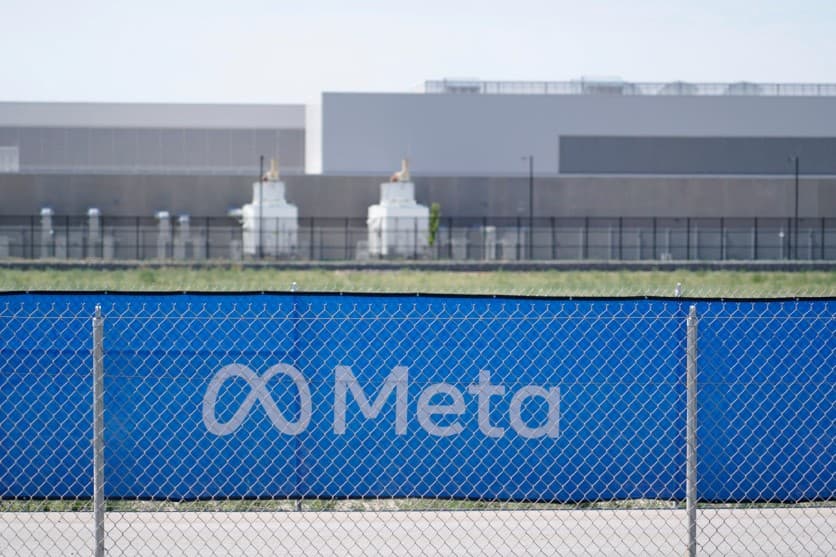
Meta is running active pilot programs at data centers in Altoona, Iowa and New Albany, Ohio, testing whether robots can handle routine physical maintenance tasks currently performed by on-site technicians. According to a detailed account published by Wired on August 28, 2026, three vendors are under evaluation: San Francisco's Watney Robotics, Quebec-based Kinova, and Swiss industrial giant ABB.
The tasks under evaluation are unglamorous but essential: swapping networking cables, power-cycling frozen servers, reseating hardware components, inspecting equipment, and moving server racks. At the Altoona campus, Watney's dual-arm robots are being tested for cable replacement—a task requiring bimanual coordination that defeats single-arm designs. At the New Albany Prometheus campus, ABB robots mounted on mobile platforms are handling component reseating. Kinova's Gen3 arm, originally developed for wheelchair-mounted assistive use, is being evaluated for the precise, low-force task of pressing physical power buttons to reboot frozen equipment.
Simpler automation is already deployed: self-driving tugger robots transport heavy server racks, and wheeled inventory robots scan equipment. At some facilities, a remotely controlled mechanical finger already presses power buttons—a hardwired precursor to the articulated arm approach.
Why it matters
The labor concern among Meta's data center workers follows a specific economic pattern first documented by Harry Braverman in his 1974 book Labor and Monopoly Capital. Braverman identified how industrialization doesn't simply replace workers—it restructures work in a predictable direction. Complex tasks are broken into components. The most repetitive components are mechanized. The remaining tasks are handed to lower-skilled, lower-paid workers following procedural instructions they didn't design.
Meta employees voiced concerns in internal chat groups about a two-stage squeeze: robots handle the most repetitive tasks while Meta simultaneously develops AI-generated instruction tools that would allow lower-skilled workers—sometimes called "smart hands" in the industry—to carry out more complex maintenance by following step-by-step AI guidance. The experienced technician who currently performs both sets of tasks faces pressure from both directions: machines for routine work, and AI-coached novice workers for the remainder, at a fraction of experienced technicians' pay.
Current Technical Constraints
The robots remain slower than skilled human technicians at every evaluated task. One unnamed Meta employee told Wired that a robot capable of reliably swapping cables could eventually displace as much as 80 percent of certain technician workloads—but emphasized this was personal speculation, not a Meta projection, and that current machines cannot yet match human speed.
Four documented engineering constraints prevent full replacement: battery life limits operational windows in aisles without charging infrastructure; visual inspection of hardware failures requires imaging and AI vision systems not yet reliable in variable lighting; dense cable arrangements confuse robot perception systems; and narrow server hall aisles (typically 24 to 48 inches wide) complicate navigation.
The Labor Shortage Counterargument
Meta pushed back on displacement concerns in a statement to Decrypt, arguing that "America is in the middle of its biggest infrastructure boom since World War II, and there's a major shortage of skilled workers to fill the roles; we need more workers, not fewer."
The construction labor shortage is real: the Associated Builders and Contractors estimated the US construction industry needs approximately 349,000 net new workers in 2026 alone—primarily electricians and mechanical trades workers needed to build data centers. But labor economists note that construction workers building new facilities are a different population from operations and maintenance technicians inside running facilities—the group Meta's pilots target.
Bill Gates published an essay on August 26 proposing that governments tax robots and AI tokens to offset displaced payroll revenue, arguing that current tax law tilts the playing field against human workers. When employers hire humans, they pay payroll taxes; when they purchase robots, those costs are typically written off as business expenses. Employers have cited AI and automation in 184,538 job cut announcements since 2023, according to Challenger, Gray and Christmas.
The global data center robotics market was estimated at $13.7 billion in 2024 and is projected to reach $44.2 billion by 2030, growing at a compound annual growth rate of 21.6 percent, according to a ResearchAndMarkets report. Meta's pilots represent the early visible phase of a new market category—infrastructure robotics—aimed specifically at the physical maintenance layer of large-scale compute facilities.
These details were first reported by Wired.
This is an original analysis by the Omega editorial team. Source reporting: Automation Watch.
Want systems like this working for your business?
Book a Call