JD.com Plans 3 Million Robots for Full Logistics Automation
China's e-commerce giant will deploy robots, autonomous vehicles and drones over five years while retraining 700,000 workers for technical roles.
JD.com Commits to Massive Robotics Deployment
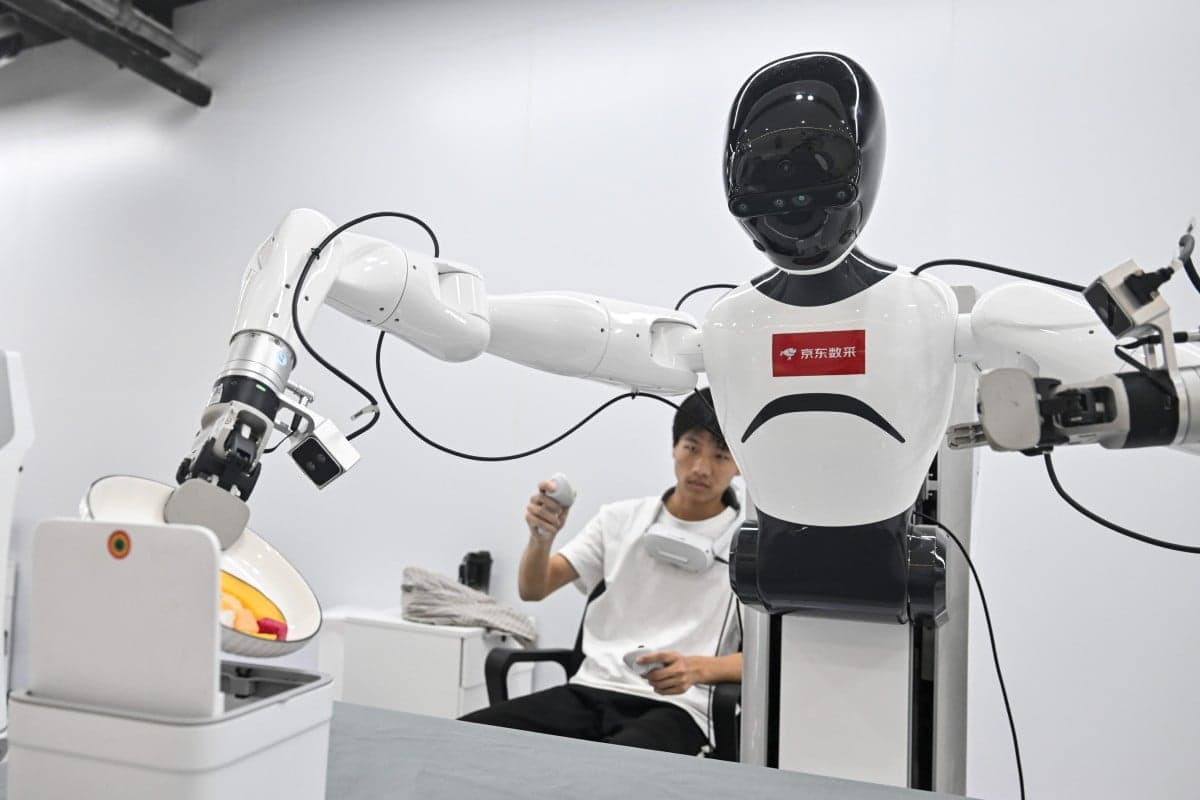
Chinese e-commerce company JD.com has announced an ambitious five-year plan to fully automate its logistics operations with 3 million robots, 1 million unstaffed vehicles, and 100,000 delivery drones. The initiative, unveiled at a Beijing event on Wednesday, represents one of the largest commitments to warehouse and delivery automation in the industry.
Cao Peng, chairman of JD.com's technology committee, outlined the scope of the deployment during the announcement by the company's logistics division. The automation push centers on the newly revealed Wolf Robot series, designed to handle the full spectrum of supply chain operations from warehouse picking to final delivery.
Technical Capabilities and Specialized Units
According to Liu Lige, head of embodied intelligence robots at JD Logistics, the Wolf Robot system will manage repetitive and physically demanding tasks with minimal human oversight. The robots will pick, sort, transport and deliver goods across the company's network.
The product line includes specialized variants engineered for demanding operational environments. Some units can function in cold storage facilities at temperatures as low as minus 20 degrees Celsius. The series also features automated pharmacy dispatchers and delivery drones designed for different use cases across JD's logistics infrastructure.
Why it matters
JD.com's automation strategy illustrates how major logistics operators are responding to labor costs and efficiency pressures through robotics, while the scale of deployment—3 million units—signals confidence in the technology's maturity. The company's parallel commitment to workforce retraining rather than layoffs offers a potential model for managing automation transitions in labor-intensive industries, though the success of such retraining programs remains to be proven at this scale.
Workforce Transition Strategy
The automation rollout directly affects JD.com's substantial workforce. The company and its ecosystem partners currently employ approximately 700,000 delivery and logistics personnel who handle frontline operations.
To address displacement concerns, founder Liu Qiangdong introduced the Nirvana Plan earlier this year. This initiative aims to retrain couriers and warehouse staff for technical positions, including robot servicing and maintenance roles. The company has stated its intention to retain frontline workers as automation expands, transitioning them into positions that support the robotic systems rather than eliminating their roles entirely.
The details were first reported by the South China Morning Post following JD Logistics' announcement event in Beijing.
This is an original analysis by the Omega editorial team. Source reporting: Automation Watch.
Want systems like this working for your business?
Book a Call