Inner Mongolia City Builds Massive AI Data Center on Wind Power
Ulanqab leverages its renewable energy resources and cool climate to host one of the world's largest AI computing facilities.
From Pastureland to Processing Power
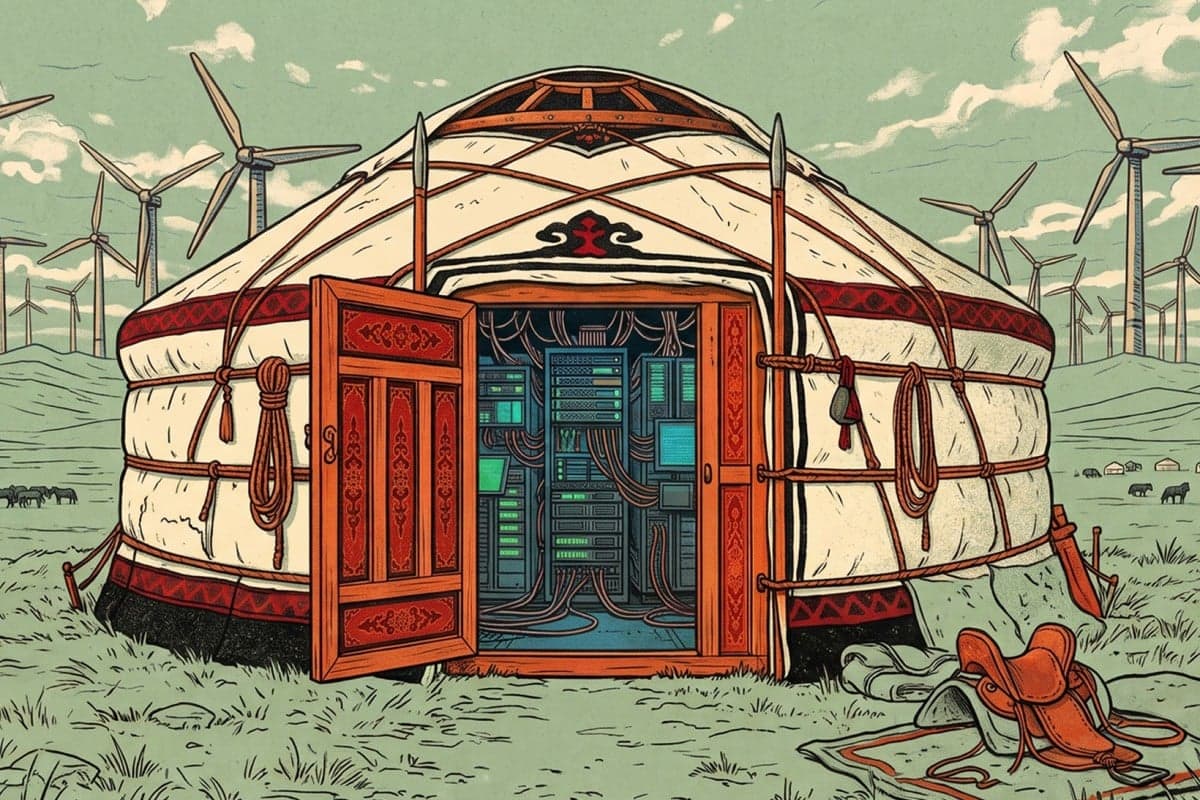
A city in Inner Mongolia historically known for livestock and potato farming is emerging as a critical hub for China's artificial intelligence infrastructure. Ulanqab, located several hundred kilometers northwest of Beijing, has transformed its natural advantages—abundant wind energy and a cool climate—into the foundation for massive computing operations.
Earlier this month, Envision Group, a Chinese renewable energy company, activated its Galaxy Campus in Ulanqab. The facility centers on a 120,000-square-meter AI data center, equivalent to roughly 20 football fields, according to the company.
Scale and Capacity
The campus is designed to house up to one million AI accelerators with a planned power capacity exceeding two gigawatts. That scale positions it among the largest AI computing facilities globally. For context, Colossus 2, the AI data center operated by Elon Musk's xAI in the United States, has a projected IT power capacity of 1.5 gigawatts, according to consultancy Epoch AI.
The location choice reflects strategic thinking about AI infrastructure requirements. Data centers consume enormous amounts of electricity and generate significant heat. Ulanqab's wind resources—the same strong breezes that once defined its pastoral economy—now provide renewable power at competitive rates. The region's naturally cool climate reduces cooling costs, a major operational expense for computing facilities.
Geographic Advantages
The Yinshan mountain range creates wind patterns that have shaped Ulanqab's economy for generations. Giant wind turbines now stand alongside grazing cattle on the sloping grasslands. The city's transformation illustrates how regions with renewable energy potential can capture value from the global AI boom's insatiable demand for computing power and electricity.
Why it matters
The concentration of AI computing infrastructure in locations with cheap renewable energy and natural cooling advantages could reshape the geography of technology development. As training and running large AI models becomes more energy-intensive, access to affordable, sustainable power sources may determine which regions can compete in AI development. Ulanqab's emergence demonstrates how China is positioning itself to meet domestic AI computing demands while managing energy costs and environmental concerns.
These details were first reported by the South China Morning Post.
This is an original analysis by the Omega editorial team. Source reporting: AI Watch.
Want systems like this working for your business?
Book a Call