Indian Robotics Startup Built Supply Chain Without China
Ati Robotics developed its own hardware in Bangalore, positioning itself to capitalize on new U.S. import restrictions.
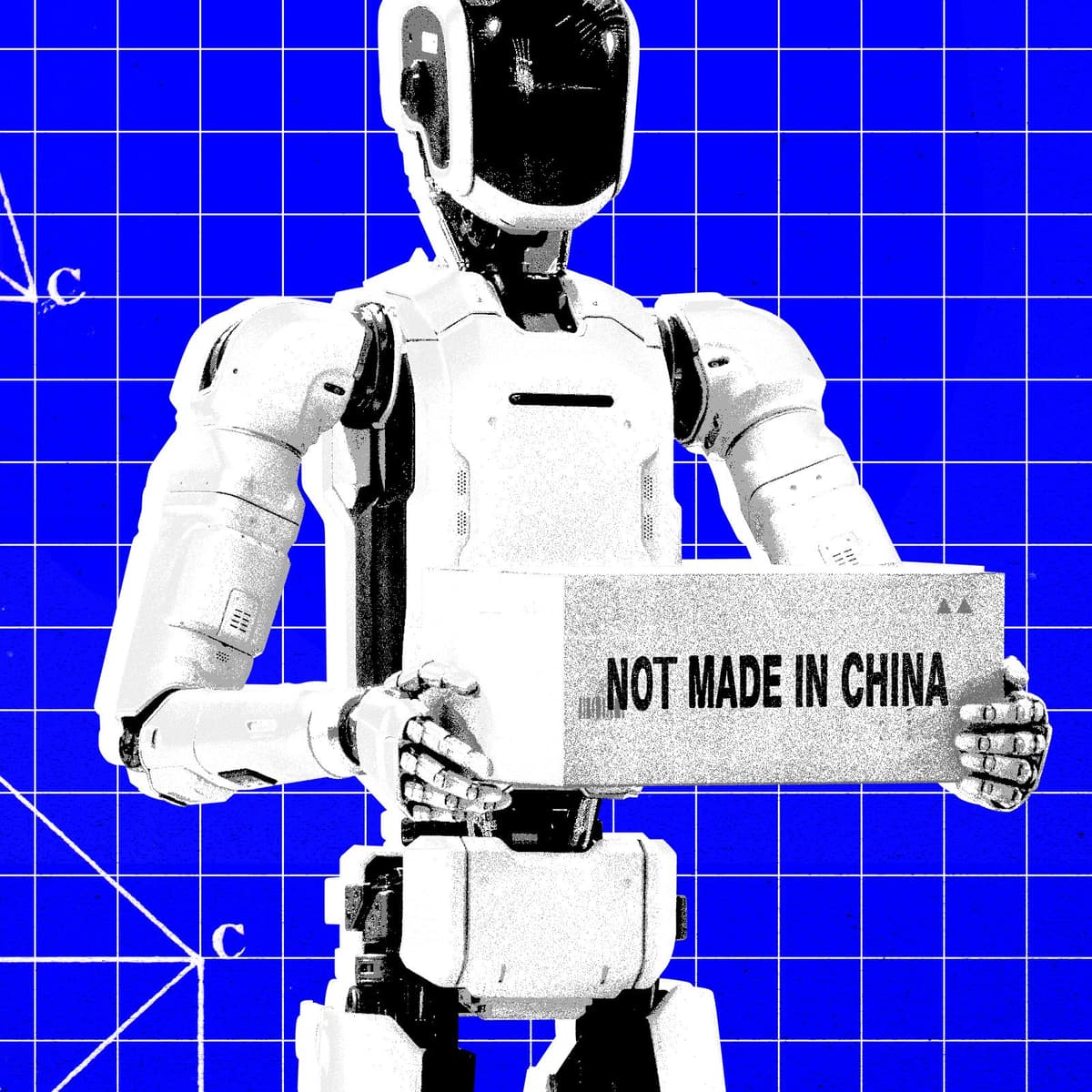
An Indian robotics company has emerged as an unexpected beneficiary of new U.S. restrictions on Chinese-made robots, having built its supply chain largely outside China through years of deliberate hardware development.
Ati Robotics, founded in 2017, assembles industrial robots in Bangalore that use significantly fewer Chinese components than most competitors. The company's 10,000-pound tugger is essentially China-free, while its pallet mover contains less than 5 percent Chinese parts, according to founder Saurabh Chandra.
The Federal Communications Commission recently banned new models of humanoid robots and other advanced devices from China over national security concerns. The decision affects many U.S. robotics startups that develop software but rely heavily on Chinese suppliers for hardware components.
Why it matters
While venture capital investment in robotics reached record levels this year, most startups remain dependent on Chinese manufacturing for critical components. The new import restrictions could force a fundamental restructuring of robotics supply chains, creating opportunities for companies that have already diversified their sourcing—and potentially slowing innovation at firms that haven't.
Building hardware in India
Ati originally developed motors for autonomous vehicles before pivoting to industrial robots including tuggers and pallet movers that transport materials through warehouses and factories. The company now has several hundred robots operating across more than 50 customer sites.
Chandra told WIRED that developing proprietary hardware was financially risky—many advisers warned against it—but the decision naturally reduced reliance on Chinese suppliers. The company leveraged India's electric vehicle supply chain, which produces components with similar power profiles to those needed for robotics at automotive scale and cost.
"Bangalore was undergoing this electric vehicle revolution in the two-wheeler, three-wheeler category," Chandra explained in the interview. "It turns out that the kind of vehicles we were making for the robotics industry happened to have a similar power profile."
Trade-offs and alternatives
Ati made deliberate engineering choices to avoid Chinese components. The company uses induction motors instead of Chinese-made brushless motors with rare-earth magnets, accepting slightly lower efficiency in exchange for supply chain independence. Battery cells—currently sourced from China—could be switched to South Korean or Japanese suppliers, Chandra noted.
The company's first humanoid robot, designed to move heavy bins, will enter service later this year. While some components like harmonic drives currently come from China, Chandra said alternatives exist in Germany, Taiwan, and Japan, though at higher cost.
Ati is establishing an assembly facility in Madison Heights, Michigan, where it plans to eventually manufacture robots domestically.
Industry impact
Chandra characterized the robotics industry's reaction to the import ban as denial, noting that some companies had lobbied unsuccessfully to prevent the restrictions. He suggested the regulations could encourage more domestic manufacturing of robots invented in the U.S.
"It's a bit of a tragedy that we are not making them in the US," he said. "Maybe more people will be encouraged to make them locally, which is not a bad thing."
Details of Ati's supply chain strategy and Chandra's comments were first reported by WIRED.
This is an original analysis by the Omega editorial team. Source reporting: WIRED.
Want systems like this working for your business?
Book a Call