Hyundai Deploys AI Across 70 Plants to Cut Errors and Downtime
The automaker's five-year digital transformation uses computer vision, reinforcement learning, and a custom AI platform to eliminate manual checks and preserve manufacturing expertise.
Hyundai Deploys AI Across 70 Plants to Cut Errors and Downtime
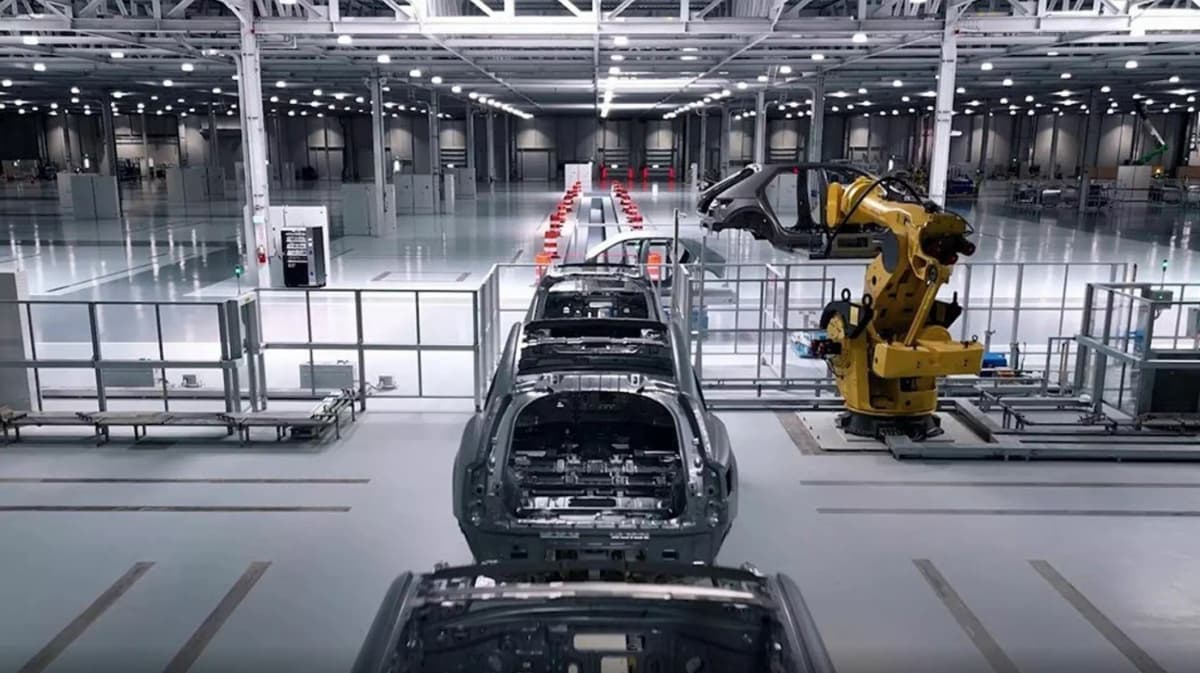
Hyundai Motor Group has rolled out AI-powered manufacturing systems across approximately 70 production facilities spanning Korea, the United States, Europe, India, and the Asia-Pacific region, part of a digital transformation initiative that began in 2019. The automaker showcased the scope of its progress at an August 11 event in Seoul, detailing how artificial intelligence now touches vehicle identification, production routing, knowledge management, and cross-functional data sharing.
Why it matters
As automotive manufacturing grows more complex—with individual vehicle configurations varying by VIN and production sequences constantly shifting—manual verification and tribal knowledge become bottlenecks. Hyundai's approach demonstrates how AI can scale expert judgment across global operations, reduce costly rework, and convert tacit employee knowledge into reusable digital assets. The financial impact is concrete: the company reports annual cost savings of approximately 5.24 billion Korean won (roughly $3.9 million) from AI recognition technology alone.
Computer vision eliminates VIN mismatches
One of Hyundai's most widely deployed AI applications uses cameras and computer vision to read vehicle identification numbers on assembly lines and verify them against system records in real time. Before this technology, workers performed visual checks manually, and occasional misidentifications led to paint application errors or vehicles assembled with incorrect specifications that surfaced only during final quality inspections.
"If a component intended for VIN #1 is mistakenly installed on a vehicle with VIN #2, the issue must be identified during the quality inspection process," HwaChang Sung, head of department for AI Transformation in Hyundai Motor Group's Project Management Office, told Automotive Manufacturing Solutions. "Otherwise, the vehicle would need to be reworked, or in the worst case, an incorrectly configured vehicle could be delivered to the customer."
The AI system now operates across Hyundai and Kia facilities, catching errors at the source before they propagate downstream.
Reinforcement learning optimizes vehicle routing
Hyundai has also deployed reinforcement learning to manage automated guided vehicles that move cars between production stages. When a vehicle is pulled from the line due to a defect or other disruption, transfer carts fall out of sequence. The AI system calculates the most efficient repositioning moves—a complex problem given that storage areas typically run near capacity and carts can only travel along predefined paths.
According to Sung, the technology has reduced production downtime by approximately 86 percent. The system combines a neural network that estimates minimum required moves with a search algorithm that identifies optimal cart sequences.
Platform turns expertise into reusable AI agents
Production engineers at Hyundai now build and test AI agents using an internal platform called E-Forest: Polaris. Engineers encode domain knowledge from quality management, scheduling, equipment maintenance, and logistics into agents that run in live production environments after passing proof-of-concept validation and enterprise AI governance reviews.
The platform is designed to capture individual expertise as digital assets that can be shared across the organization. One specialized application reorganizes training materials, manuals, and video content into a knowledge graph, allowing employees to visualize relationships between information sources and access production know-how more quickly.
"Tacit knowledge, which has traditionally resided within individual employees or specific production sites, and has been difficult to systematically utilise, can be transformed into explicit knowledge that is documented, structured and shareable across the organisation," Sung explained.
Unified data pipeline connects lifecycle stages
Underpinning these AI applications is Hyundai's Global One Data Pipeline, a company-built system that standardizes and connects data from research, production, quality management, sales, aftersales service, and marketing. The goal is to prevent data silos and enable information generated during development to inform production decisions, while customer feedback and connected vehicle data flow back into product planning.
Hyundai chose to develop the pipeline in-house to maintain control over automotive-specific data standards and respond quickly as new systems emerge. The company does use software-as-a-service solutions for enterprise resource planning and customer relationship management, but most IT systems come from internal teams at Hyundai Motor Company, Kia, and Hyundai AutoEver.
Sung emphasized that the digital transformation supports a human-centered work environment, with high-risk processes like welding and painting highly automated and wearable robots deployed to assist employees in ergonomically challenging tasks.
Details of Hyundai Motor Group's AI manufacturing initiatives were first reported by Automotive Manufacturing Solutions.
This is an original analysis by the Omega editorial team. Source reporting: Automation Watch.
Want systems like this working for your business?
Book a Call
