How Incremental Trust Drives Farm Automation Adoption
CNH Industrial's design leader explains why farmers embrace autonomous technology through gradual control, not revolutionary leaps.
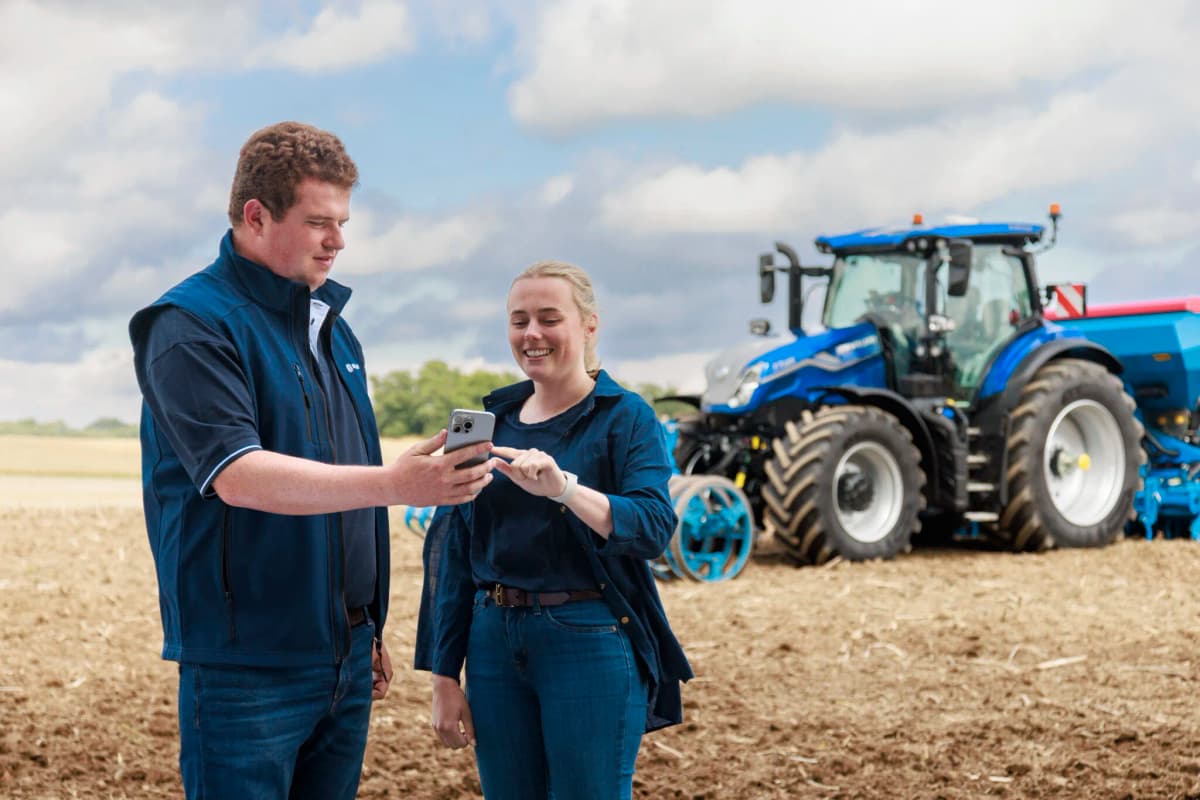
The trust barrier in agricultural automation
Farmers considering automated equipment face a predictable set of concerns: Will it work reliably? Is it too complex? Can I justify the training time and cost? Yet as agricultural operations face mounting pressure to increase output with fewer resources, adoption of autonomous systems becomes less optional.
The key to overcoming resistance isn't technological sophistication—it's building trust through incremental control transfer, according to Lisa Jackson, VP of UX and design at CNH Industrial. Farmers change behavior when current operational pain exceeds the perceived risk of ceding control to machines.
The autosteer precedent
Auto-guidance systems provide the clearest historical example. Early versions weren't flawless, but they addressed tangible daily problems: operator fatigue, field overlap, and human error. Farmers didn't adopt autosteer for its novelty—they adopted it because it delivered measurable operational improvements. Today, automated guidance represents standard practice across commercial agriculture.
Modern headland turn automation follows the same trust-building pattern. The system doesn't immediately assume control. Instead, operators perform turn sequences at field edges while the system observes. Only after watching and suggesting improvements does the technology request permission to execute hands-free turns.
Expanding the incremental model
CNH Industrial has extended this observation-first approach across multiple machine types and operations. Combine automation systems now select optimal settings from millions of possible configurations. Section control technology activates individual spray nozzles precisely where needed, eliminating overlap. Each system operates without constant operator intervention, representing capability advances built on earned trust rather than imposed change.
Field testing of CNH's autonomous tractors reveals how farmers instinctively monitor front-facing cameras to see what the machine "sees." Complete hands-off operation remains uncommon—the trust threshold hasn't been crossed industry-wide. But transformation occurs through accumulated small steps, each delivering tangible simplicity and value.
Why it matters
Agricultural automation represents a multi-billion dollar market where adoption rates depend less on technical capability than on user psychology. Equipment manufacturers that design for gradual trust-building—rather than revolutionary capability jumps—are more likely to achieve commercial scale. This incremental approach also reduces training costs and operational risk for farmers operating on thin margins.
The acceleration ahead
As machine perception improves, system reliability increases, and AI connects decisions across entire operations, the pace of change will accelerate. Not because farmers suddenly become more willing to adopt new technology, but because they've developed confidence in systems that demonstrably improve operations.
These insights were first reported by Lisa Jackson in iVT magazine's May/June issue.
This is an original analysis by the Omega editorial team. Source reporting: Automation Watch.
Want systems like this working for your business?
Book a Call
