Automation
Honeywell, C.H. Robinson CEOs: AI Demands Worker Reskilling
Industrial leaders report 60%+ productivity gains while emphasizing upskilling over replacement as automation reshapes factory floors and logistics operations.
Key takeaways
- C.H. Robinson achieved productivity gains exceeding 60% since late 2022 using AI to automate repetitive logistics tasks.
- Honeywell CEO Vimal Kapur says workers have 18 to 24 months to reskill as AI transforms industrial operations.
- C.H. Robinson expects $300 million in annual savings by applying its AI operating model to newly acquired RXO.
- Both CEOs emphasize AI augments rather than replaces workers, but requires leadership to undergo training alongside employees.
- Specialized AI agents now handle freight quotes, shipment processing, and scheduling at C.H. Robinson, freeing workers for complex problem-solving.
Industrial AI focuses on augmentation, not elimination
Two CEOs leading major industrial transformations say artificial intelligence will fundamentally change how their workers operate—but not eliminate their jobs. The catch: employees have roughly 18 to 24 months to acquire new skills or risk being left behind.
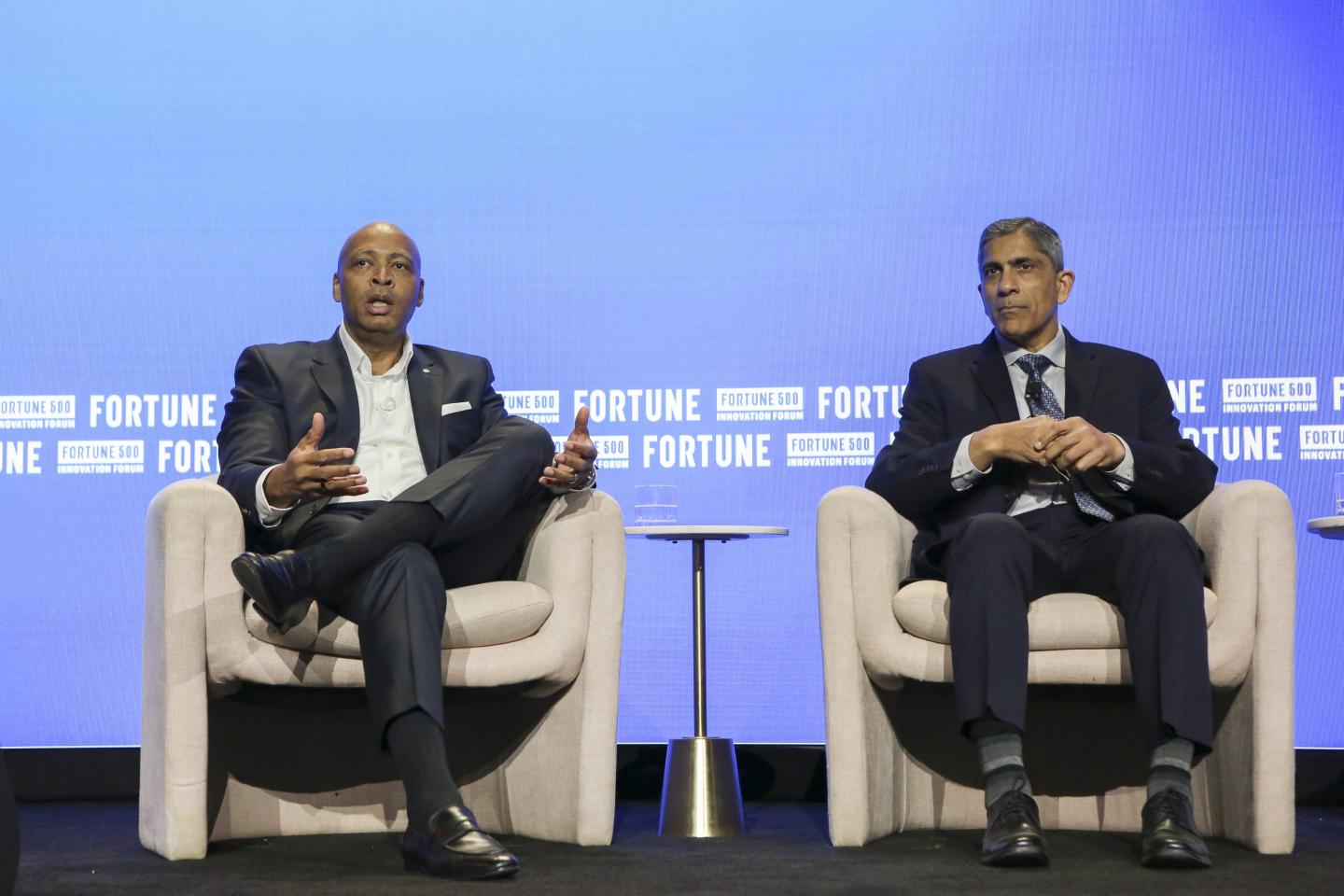
Honeywell CEO Vimal Kapur and C.H. Robinson CEO Dave Bozeman outlined their AI strategies at the Fortune 500 Innovation Forum in Detroit, offering concrete examples of how automation is reshaping century-old industrial operations. Their message diverges sharply from fears about humanoid robots replacing factory workers, focusing instead on making existing employees more capable.
Why it matters
As industrial companies race to implement AI, the reskilling timeline these executives describe—18 to 24 months—sets a concrete benchmark for workforce transformation. With C.H. Robinson already demonstrating 60% productivity improvements since late 2022, the competitive pressure on other industrial firms to adopt similar technologies intensifies. Companies that fail to simultaneously deploy AI and retrain workers risk falling behind operationally while potentially losing talent to more forward-thinking competitors.
Productivity gains already materializing
C.H. Robinson's experience demonstrates the immediate impact of targeted AI deployment. The 120-year-old logistics company has achieved productivity gains exceeding 60% since the end of 2022 by automating repetitive tasks, according to Bozeman.
The company developed specialized AI agents for its order-to-cash process—covering everything from customer orders to payment collection. These agents now generate freight quotes, process shipment orders, and schedule pickups and deliveries, freeing employees from administrative work to focus on complex supply-chain problems.
"Our people, when they look at it, do they want to do those mundane tasks every day? No, they don't," Bozeman said.
This automation strategy takes on added significance as C.H. Robinson prepares to integrate RXO, a rival freight broker it's acquiring for $5.8 billion. The deal, expected to close in the first quarter of 2027, will allow C.H. Robinson to apply its AI-powered operating model to a much larger operation. The company projects approximately $300 million in annualized cost savings within two years of closing, partly by extending its Lean AI model to RXO's operations.
Reskilling becomes non-negotiable
Kapur emphasized that implementing AI requires more than just deploying technology—it demands redefining entire processes and ensuring workers have necessary skills. For Honeywell, which has spent 140 years evolving across industries and recently spun off its advanced materials and aerospace divisions to focus on industrial automation, this represents another major transformation.
The CEO sees particular value in addressing skilled labor shortages. Rather than replacing industrial workers, AI can supplement their expertise and enable them to perform tasks requiring specialized training.
Kapur dismissed comparisons to past automation fears, noting that concerns in the 1980s about computers replacing engineers proved unfounded. The technology changed how engineers worked without eliminating the profession.
Crucially, Kapur said leadership must evolve alongside employees. "I personally took training on Copilot because if you don't learn yourself and immerse yourself, you can give a lot of free advice, but you don't know what the change really means," he said.
The executives' comments, first reported by Fortune, underscore a critical transition period for industrial companies as they balance technological adoption with workforce development.