Automation
Tony Fadell Brings AI Fabric Inspection to Fashion's Analog Mills
The iPod and iPhone designer is backing Smartex with $10 million to automate quality control in textile factories still operating like it's 1970.

Key takeaways
- Tony Fadell invested approximately $10 million in Smartex.AI and joined as chairman to bring AI-powered fabric inspection to textile manufacturing.
- Fashion supply chains remain largely manual and disconnected, with many factories lacking internet access and relying on subjective human quality control.
- H&M over-orders 2.5 billion meters of fabric annually to hedge against quality failures, representing $10 billion in costs that Smartex aims to reduce by $100 million.
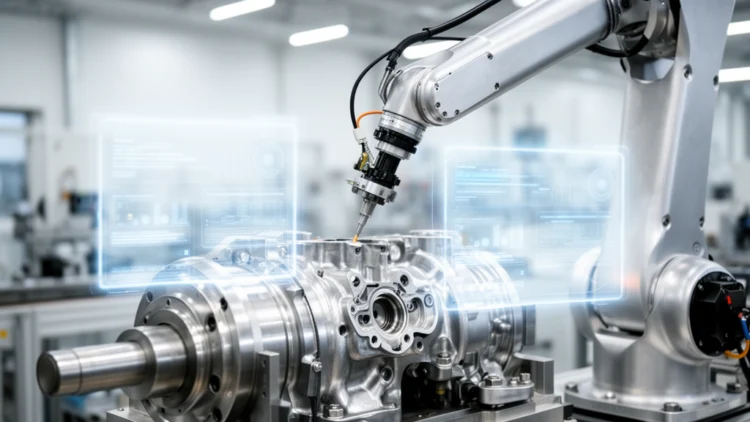
- Smartex Inspect uses physical AI cameras mounted on existing machinery to check fabric quality at three times human speed, drawing on a library of 50 billion fabric images.
- The company has deployed 800 monitoring systems across 10 countries and counts H&M as both an investor and launch customer.
The fashion industry projects an image of cutting-edge modernity, but its supply chain infrastructure tells a different story. Textile mills and garment factories supplying major brands operate much as they did five decades ago, according to Max Easton, CEO of Smartex.AI. Many facilities lack even basic internet connectivity, and critical quality control work remains entirely manual.
Now Tony Fadell—the designer behind the iPod, iPhone, and Nest doorbell—is stepping in as chairman of Smartex and backing the company with roughly $10 million in investment. The startup is launching physical AI systems designed to automate fabric inspection at speeds three times faster than human workers can manage.
The manual inspection bottleneck
Today's textile quality control relies on workers holding color swatches while watching fabric rolls pass by for hours, checking for defects like holes, misplaced needles, or incorrect yarn. The process is subjective and inconsistent—what passes inspection on a Friday afternoon might not meet standards on a Monday morning.
This variability forces major retailers to hedge their bets. H&M, an investor in Smartex and launch customer, over-orders fabric by approximately 5% annually—about 2.5 billion meters—simply to account for quality failures. At $4 per meter, that represents $10 billion in fabric costs, with Easton estimating Smartex could save H&M $100 million yearly by reducing this waste buffer.
How the technology works
Smartex is rolling out two products: Smartex Inspect, a camera system that mounts onto existing textile machinery to monitor material quality in real time, and Smartex IQ, which generates supply chain intelligence from the collected data. The company has already installed 800 of its earlier monitoring systems across 10 countries and employs about 65 people with revenues in the low millions.
The technical challenge extends beyond simply pointing cameras at fabric. The system must account for lighting variations, fabric movement speed, subtle color differences, and calibrate against each client's specific standards. Smartex has built a reference library of 50 billion fabric images to enable this precision.
Why it matters
Fabric represents 50% of the cost base for apparel companies, yet supply chain visibility remains nearly nonexistent. Brands often cannot predict when orders will arrive or confirm quality until delivery. This opacity creates cascading problems: pre-sold garments that cannot be manufactured because fabric arrives in unusable condition, excess inventory to compensate for unpredictable quality, and sustainability commitments undermined by systematic overproduction. Fadell frames the value proposition around four priorities H&M has identified: price, speed, quality, and sustainability—all areas where better data and consistency deliver measurable returns.
Smartex was valued at $55 million four years ago, though Easton declined to provide a current figure. The details were first reported by Fortune at Web Summit in Lisbon.