Global brands deploy AI and robotics to compete in China
L'Oréal and Swire Group embed automation across manufacturing, logistics and customer service as local rivals and price-sensitive consumers raise competitive stakes.
Global brands automate to survive China's competitive pressure
Multinational corporations operating in China are accelerating investments in artificial intelligence and robotics as they face intensifying competition from domestic brands and increasingly price-sensitive consumers willing to switch loyalties for better value.
The shift reflects what analysts describe as "life or die" competitive dynamics in the world's second-largest consumer goods market, where local companies have developed sophisticated technological capabilities and operational advantages that foreign brands can no longer ignore.
L'Oréal builds fully automated production lines
French cosmetics giant L'Oréal has expanded its automation infrastructure to support growing e-commerce operations and manufacturing needs. The company launched a smart operations center in Suzhou featuring automated sorting systems, mobile robots and intelligent storage designed to accelerate delivery times.
Last month, L'Oréal opened the second phase of its UPX smart manufacturing workshop in the same city. The facility integrates AI-powered quality inspection directly into production processes, with nine lines now operating under full automation.
"China's AI and robotics ecosystem is moving very quickly, and we want to grow and invest at the pace of local technology innovators," said Marc-Antoine Poulle, senior vice-president of operations for North Asia and China at L'Oréal, speaking at a June 11 ceremony marking three decades of the company's Suzhou manufacturing presence.
Swire deploys AI across retail and logistics
Swire Group has embedded artificial intelligence across multiple business lines, including customer service, logistics and aviation operations. At Beijing Taikoo Place, the company introduced TK Mates, an AI shopping assistant that operates through its digital membership platform.
The tool provides personalized fashion recommendations, product search capabilities and customized customer service, designed to maintain shopper engagement beyond physical mall visits.
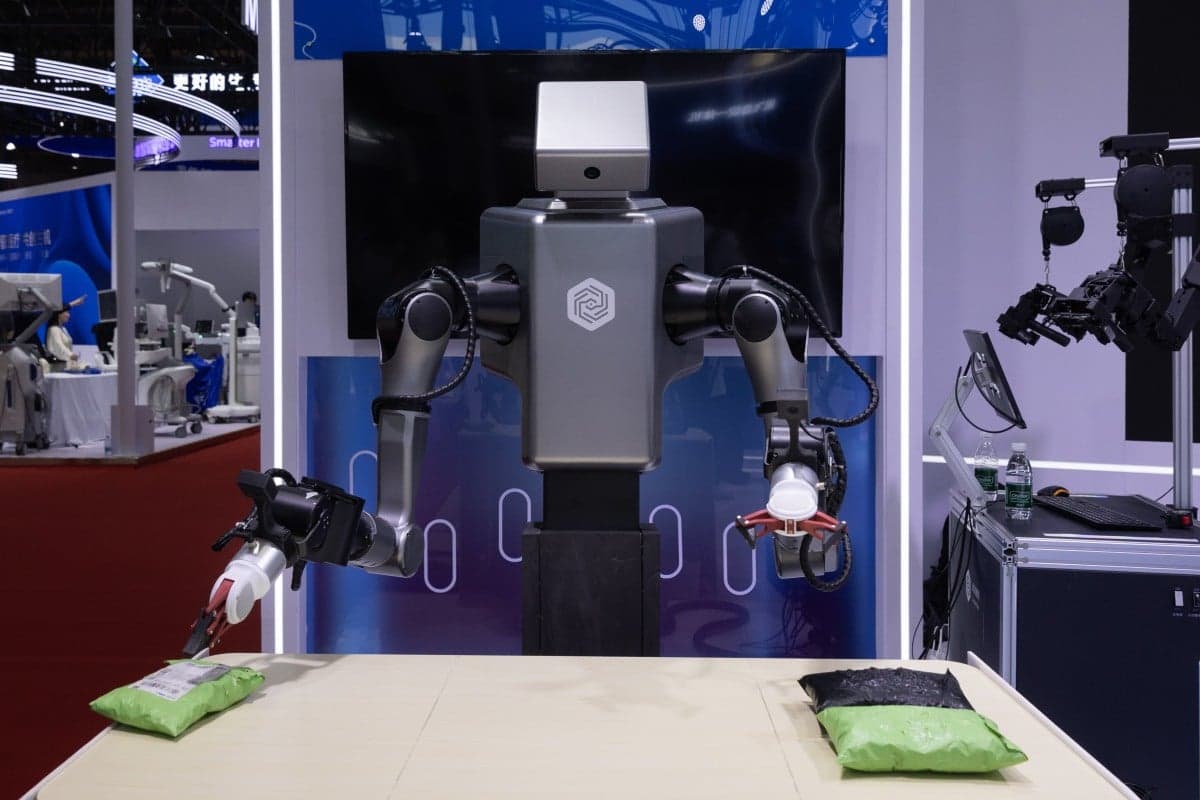
Swire Coca-Cola developed what it describes as the beverage industry's first smart robotic picking solution at its Zhengzhou manufacturing plant. The system combines sorting robots with automated guided vehicles to handle plastic-wrapped pallets, addressing a longstanding operational challenge in drink manufacturing and demonstrating broader applications of robotics to complex logistics tasks.
Why it matters
The automation push by multinational brands signals a fundamental shift in how foreign companies must operate in China's consumer market. Local competitors have built technological sophistication that matches or exceeds global standards, while Chinese consumers have become more discerning and less brand-loyal. For multinationals, matching the pace of China's technology ecosystem is no longer optional—it's a requirement for market survival. The investments also highlight China's role as a testing ground for advanced manufacturing and retail technologies that may eventually be deployed in other markets.
These details were first reported by the South China Morning Post.
This is an original analysis by the Omega editorial team. Source reporting: AI Watch.
Want systems like this working for your business?
Book a Call
