GitLab 19.2 Deploys AI Agents to Fix Security Bottlenecks
The DevSecOps platform now auto-remediates vulnerable dependencies and reviews code for logic flaws as AI-generated code outpaces manual security checks.
GitLab released version 19.2 of its DevSecOps platform on 16 July 2026, deploying AI agents to address what the company calls the AI paradox: coding assistants now generate code faster than security and review processes can absorb it.
The release moves four automation features into general availability or public beta, targeting the work that piles up downstream when AI tools accelerate development. According to Manav Khurana, GitLab's chief product and marketing officer, coding agents shifted the bottleneck from writing code to reviewing and securing it.
Automated dependency remediation
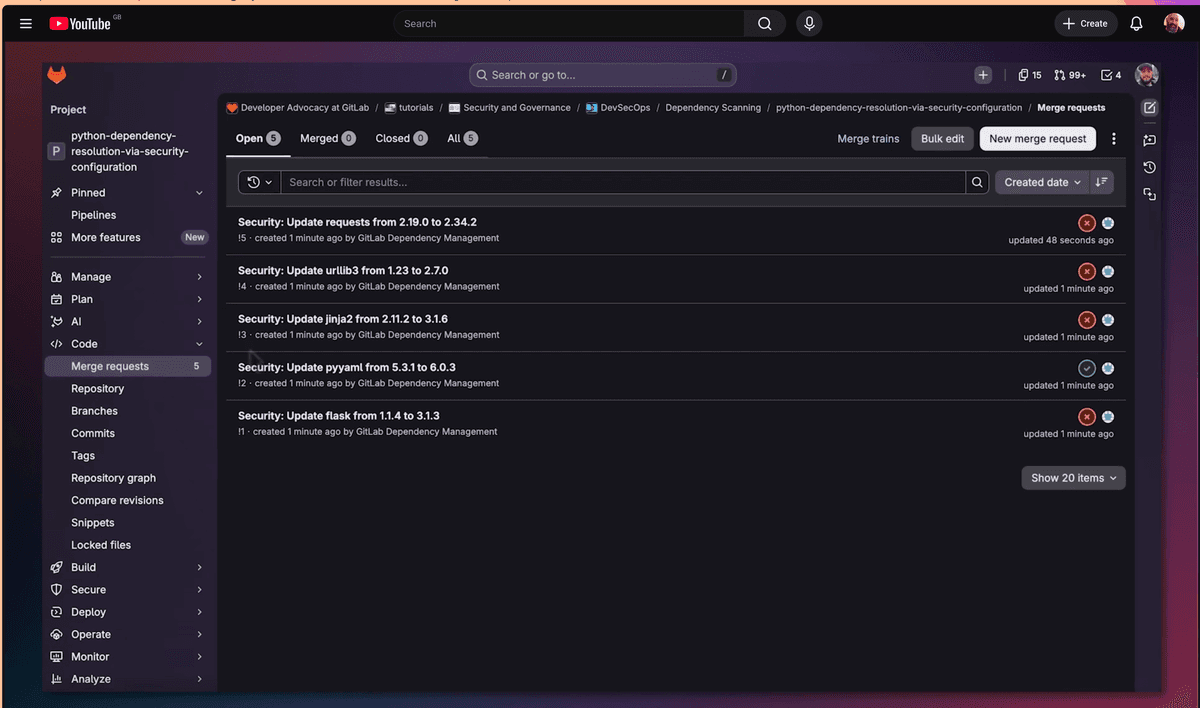
Dependency Scanning Auto-Remediation, now in public beta, opens a merge request when it detects a vulnerable package and proposes a safe version. When an update breaks the build, an agent iterates on the same merge request until tests pass—a capability GitLab calls Agentic Breaking Change Resolution.
The feature addresses a real volume problem. GitLab's release notes cite a Maven ecosystem study showing vulnerabilities reach roughly 63 percent of latest releases through transitive dependencies teams never directly selected, and approximately one in eight dependency updates introduces its own breaking change. A maintainer still reviews and approves every change before it merges.
Security review for logic flaws
Security Review Flow, also in public beta, hunts for vulnerabilities that pattern-matching scanners typically miss: broken authorization checks, mass assignment issues, and race conditions. Teams assign a Duo Security Review service account as a reviewer, and the flow posts findings as threaded comments with severity ratings and suggested fixes where possible. The system never approves merge requests autonomously.
GitLab Duo CLI reached general availability in this release, bringing agent capabilities into the terminal with awareness of project context, pipelines, and existing configurations. Custom Flows also hit general availability, allowing teams to build YAML-based automations triggered by GitLab events rather than waiting for built-in features.
Governance and audit controls
GitLab added an AI Audit Event Report in beta that records agent activity as dedicated audit events for compliance tracking. New MCP access controls govern which agents can run and what systems they can reach. The company commissioned a Forrester Consulting study claiming organizations using the Duo Agent Platform achieved 400 percent return on investment with payback under six months.
Why it matters
As AI coding assistants become standard tools, the constraint moves from writing code to verifying it safely reaches production. GitLab's approach keeps humans in the approval loop while automating the mechanical work of patching dependencies and flagging security issues. The audit controls and approval gates signal an attempt to make autonomous agents compatible with regulated environments where traceability matters. Whether teams adopt these agents at scale depends on whether the automation proves reliable enough to trust and transparent enough to audit.
Community reaction remains mixed. Some users on Reddit compared Duo unfavourably to Claude Code for interface quality, while others reported agentic mode becoming more reliable. Industry observer Alan Shimel questioned on LinkedIn whether GitLab can shift to AI-native workflows without losing the transparency that defined its culture.
These details were first reported by InfoQ, which has tracked GitLab's AI releases since the Duo Agent Platform reached general availability in January 2026.
This is an original analysis by the Omega editorial team. Source reporting: AI Watch.
Want systems like this working for your business?
Book a Call