Automation
Freight Rail Automation Faces Labor, Safety Hurdles in Congress
New CRS report outlines regulatory waivers already granted and four bills that could reshape crew requirements and autonomous testing.
Key takeaways
- FRA has approved waivers for autonomous railcar testing in Georgia and reduced visual inspections where automated systems operate, drawing labor union opposition.
- A final rule issued in April 2024 requires two-person crews on most trains, though Congress could modify crew requirements through pending legislation.
- Remote control locomotives were involved in 25% of yard accidents in 2025 despite operating under speed restrictions, according to CRS data.
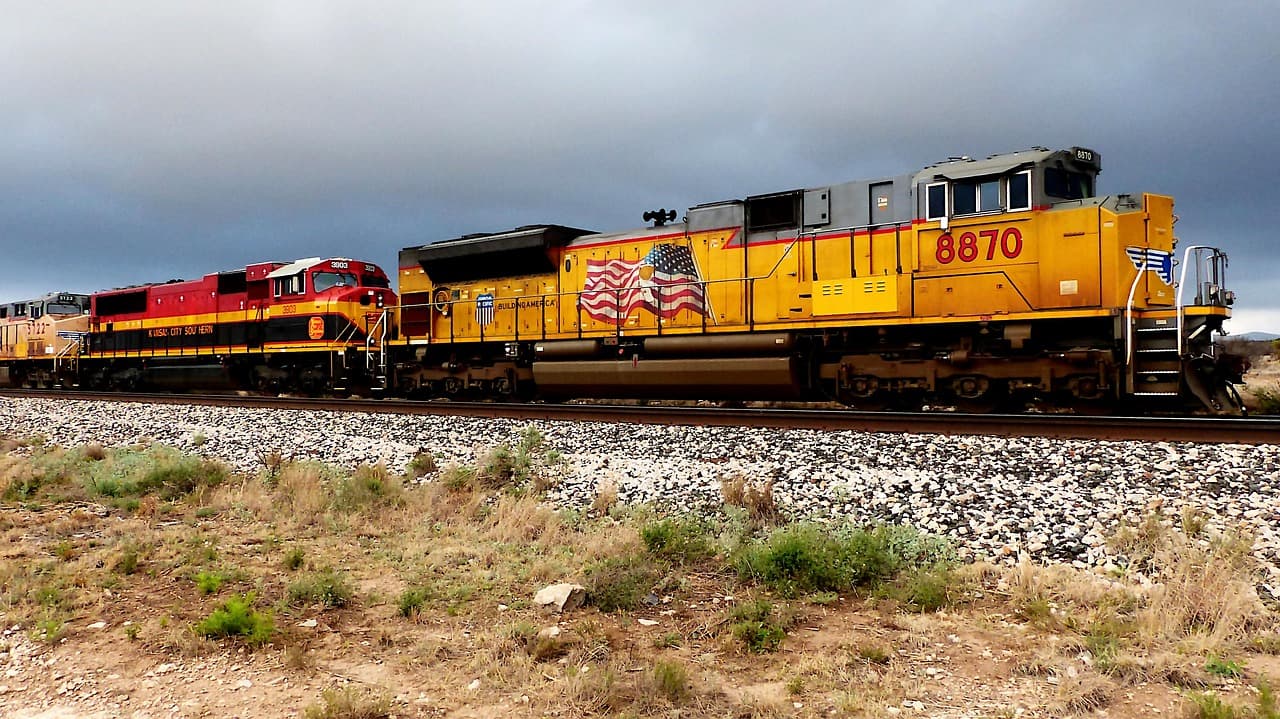
- Only H.R. 8870, the BUILD America 250 Act, has advanced beyond committee referral among four railroad bills addressing automation and safety.
- The Infrastructure Investment and Jobs Act authorized $225 million annually for FRA research including automation testing through 2026.
Automation advances meet regulatory crossroads
The Federal Railroad Administration has begun approving waivers that allow autonomous railcar testing and reduced visual track inspections where automated systems operate, setting the stage for a broader debate over freight rail automation that pits efficiency gains against labor and safety concerns.
A Congressional Research Service report details how FRA granted a waiver in February 2025 for Parallel Systems to test autonomous railcars in Georgia despite opposition from multiple labor unions. The agency also selected Columbia, Missouri, for a $16.2 million grant in 2026 to deploy Intramotev railcars. In December 2025, FRA approved a five-year waiver allowing railroads to reduce visual inspections where automated inspection technology is deployed.
Why it matters
The regulatory decisions and pending legislation will determine whether U.S. freight railroads can adopt automation technologies already proven overseas—Rio Tinto has operated driverless iron ore trains in Western Australia since 2019—or whether labor protections and safety standards will constrain deployment. The outcome affects billions in infrastructure investment and the structure of railroad employment.
Crew size rules remain contested
Train crews have historically been sized through collective bargaining, with two-person crews becoming standard. FRA proposed minimum crew requirements in 2016, withdrew the rule in 2019, then reinstated a two-person requirement after a federal court vacated the withdrawal. The final rule issued in April 2024 mandates at least two crew members on most trains.
Remote control locomotives currently operate under 2012 FRA regulations capping their speed at 15 miles per hour. According to CRS, roughly 25% of yard accidents in 2025 involved remote control locomotives, compared with 13% of accidents overall.
Four bills address automation and safety
CRS identified four railroad bills in the 119th Congress that could reshape automation policy:
H.R. 8870, the BUILD America 250 Act, would authorize surface transportation programs and direct the Transportation Secretary to consider performance-based rail safety rules. The House committee ordered it reported May 22 by a 62-2 vote, making it the only measure to advance beyond referral.
H.R. 9409, the Remote Control Locomotives Safety Improvement Act of 2026, would ban remote control locomotives on main lines and require human engineers in cabs outside yards. It was referred to the House Transportation and Infrastructure Committee on June 23.
H.R. 7784 and S. 3987, companion versions of the Secure Tracks Act, would establish minimum frequencies for both visual and automated track inspections. Both were referred to committee in early March.
Inspection technology faces scrutiny
Opponents of reduced visual inspections note that most defects found by human inspectors cannot be detected by automated vehicles currently in service. The Infrastructure Investment and Jobs Act of 2021 authorized an average of $225 million annually over five years for FRA research, including automation testing.
Unlike Rio Tinto's self-contained Australian network, the U.S. freight system lacks comparable long-haul operations where autonomous technology could be deployed without interacting with conventional traffic.
The details were first reported by the Congressional Research Service in a report published by Legis1.