Flock License Plate Cameras Flagged Wrong Car Twice in Weeks
Systemic flaws in AI plate readers and police verification led to coordinated stops of journalists driving loaner vehicles with similar plates.
Automated surveillance system errors led to repeated false stops
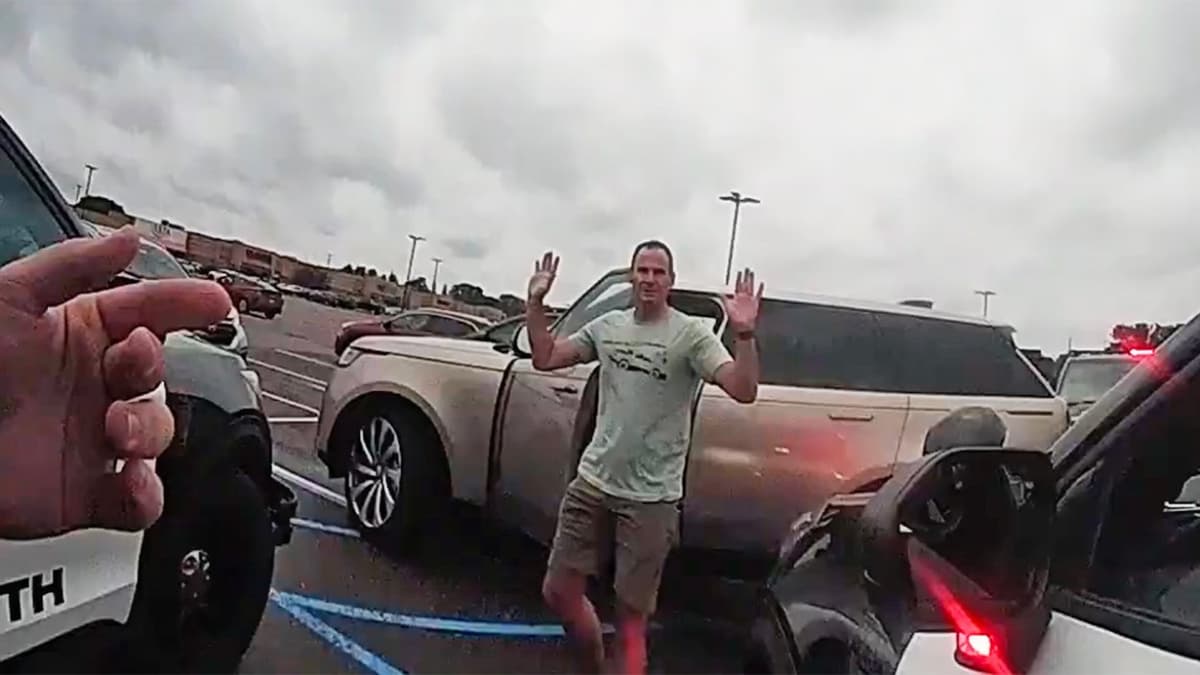
A journalist driving a loaner Range Rover was ambushed by four police cars in Plymouth, Minnesota after Flock Safety's automated license plate reader system flagged his vehicle as stolen. The incident wasn't an isolated glitch—it happened again to another automotive journalist weeks later, revealing fundamental problems in how AI-powered surveillance tools interact with law enforcement databases.
The Drive's investigation, which obtained body camera footage and interviewed both Flock executives and police officials, shows how a chain of errors turned routine errands into a coordinated takedown that could have turned deadly.
How the system failed
The sequence began when a New Jersey manufacturer plate—34 03 DTM—was reported stolen in California. The plate was actually lost during a Land Rover photo shoot, but someone at the Los Angeles Sheriff's Department entered it into the National Crime Information Center database as just "34 DTM," omitting the middle two digits that appear smaller on physical plates.
When Flock's cameras spotted the journalist's plate—34 10 DTM—the AI vision system ignored the "10" and flagged it as a match. Police received the alert, saw a photo clearly showing "34 10 DTM," but never verified the full sequence before tracking the vehicle for two days and initiating the stop.
Weeks later, journalist Tim Esterdahl was pulled over in Nebraska while driving a Range Rover with plate 34 08 DTM. Same pattern, same outcome.
Why it matters
Flock Safety processes 20 billion license plate reads monthly across thousands of U.S. jurisdictions. The company's Chief Communications Officer Joshua Thomas acknowledged the system maintains 99% accuracy—which means 200 million misreads per month. How many trigger aggressive stops that endanger civilians and officers remains unknown, because no comprehensive tracking exists.
The technology amplifies rather than corrects human error. Flock's system flags partial matches because law enforcement requested that capability for investigations with incomplete plate data. But the company provides no mechanism to distinguish partial from exact matches in automated alerts, leaving verification entirely to officers who may be unfamiliar with over 8,000 license plate formats nationwide.
Flock defends design, shifts responsibility
Joshua Thomas told The Drive that Flock's machine learning "correctly read what it was supposed to read"—it found the characters "34 DTM" as requested. The system doesn't evaluate whether additional characters make the match invalid.
"I think you're right," Thomas said when asked why automated NCIC alerts don't require perfect matches. "That's fair feedback that I should take back to our team."
Thomas emphasized that Flock alerts "do not equal probable cause" and compared the company's position to AI labs like OpenAI and Anthropic: they've built powerful tools, but proper use falls to others. Flock is working with FBI officials who manage NCIC to flag incomplete data, but no timeline exists for system-level changes.
Plymouth Police Chief Erik Fadden acknowledged his officers failed to verify the plate properly but said eliminating human error entirely is unrealistic. "Everything comes down to the fact that people sometimes make mistakes," he told The Drive.
The Plymouth City Council has opened discussions about Flock camera use following the incident. The city currently operates 18 cameras that have logged over 580,000 plate reads and 14,800 hotlist hits in 30 days.
Jaguar Land Rover is attempting to swap affected plates and correct the original California report, but the process hasn't kept pace with vehicles in circulation.
Details of both incidents and Flock's response were first reported by The Drive.
This is an original analysis by the Omega editorial team. Source reporting: The Verge.
Want systems like this working for your business?
Book a Call
