Government Equity Stakes in AI Companies Gain Bipartisan Traction
From Sanders to Trump, proposals to give the public ownership shares in AI firms are advancing—but the regulatory conflicts may outweigh the dividends.
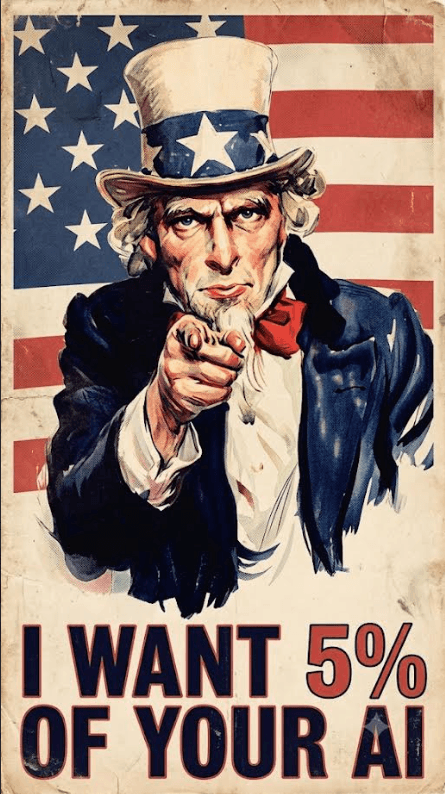
An unusual consensus is forming in Washington: the public should own a piece of the artificial intelligence industry. Senator Bernie Sanders and President Donald Trump have both endorsed versions of the idea, as have OpenAI and Anthropic themselves, though their proposals differ sharply in structure and scale.
The momentum follows a pattern established when the Treasury Department paid $8.9 billion for 9.9 percent of Intel in August 2025. By spring 2026, that stake had grown to roughly $36 billion in value, whetting the administration's appetite for similar deals. The Pentagon has already taken a 15 percent position in a rare-earth mining company.
The proposals on the table
Sanders has floated a roughly 50 percent government position in major AI firms, with proceeds flowing to a sovereign wealth fund that would pay dividends of approximately $1,000 per person. The Trump administration favors case-by-case equity stakes modeled on the Intel deal, framed as taxpayer windfalls. OpenAI has proposed voluntarily contributing about 5 percent of its equity—valued at roughly $42.6 billion—to a public wealth fund modeled on Alaska's Permanent Fund. Anthropic has suggested taxes on AI companies instead of equity, with proceeds funding worker support programs or universal basic income.
The public finance logic is straightforward. Decades of federally funded research laid the groundwork for modern AI. Training data came from millions of people who were never compensated. When contributed equity rather than purchased stakes are involved, the taxpayer risks nothing upfront but stands to benefit if the industry thrives.
Why it matters
Government ownership of companies it regulates creates structural conflicts that could undermine both effective oversight and fair competition. A regulator with financial stakes in specific firms has incentives to favor those companies when writing rules or awarding contracts, disadvantaging startups and distorting markets. The precedent also invites other governments—in Beijing, Brussels, and Gulf capitals—to take similar positions in their own AI champions, eroding claims that American platforms operate independently of state influence.
The regulatory trap
Three safeguards could separate productive public investment from regulatory capture. First, the stake must be limited in size. Second, a strict separation must exist between government ownership functions and regulatory authority. Third, proceeds should be earmarked for workers displaced by AI, not absorbed into general revenues.
History offers a cautionary example. The 1998 tobacco settlement paid states $206 billion over 25 years. States grew dependent on the annual payments, effectively becoming partners in sustaining an industry they were meant to regulate. Today, states spend only about three cents of every tobacco settlement dollar on anti-smoking programs.
A sunset clause—a fixed end date written into law—could prevent similar dependency in AI. The government would collect dividends during the industry's growth phase, then sell down its position on a published schedule over 10 to 15 years. Without such provisions, temporary co-ownership risks becoming permanent entanglement.
Government stakes also force officials to pick winners. Owning pieces of OpenAI or Anthropic gives Washington financial reasons to favor those companies over competitors, including startups that might otherwise challenge incumbents. In a fast-moving field where leadership changes rapidly, that dynamic could calcify market structure around politically favored players.
The proposals reflect legitimate concerns about who benefits from AI's economic transformation. But the conflicts inherent in government ownership—the difficulty of regulating industries you profit from, the precedent for state involvement globally, the pressure to favor specific companies—suggest the remedy may create worse problems than it solves.
These details were first reported by Oren Etzioni writing for GeekWire.
This is an original analysis by the Omega editorial team. Source reporting: AI Watch.
Want systems like this working for your business?
Book a Call
